| Credinciosii firesti | Credinciosii duhovnicesti |
| 1. Umblarea dupa lucrurile firii = moarte '' Si umblarea dupa lucrurile firii pamantesti, este moarte..." (Rom. 8:6) 2. Trairea dupa indemnurile firii pamantesti = a muri " Daca traiti dupa indemnurile ei, veti muri..." (Rom. 8:13) 3. Faptele firri pamantesti "...curvia, necuratia, desfranarea, inchinarea la idoli, vrajitoria, vrajbile, certurile, geloziile, maniile..." (Gal. 5:19-21) 4. Poftele firii pamantesti = impotriva Duhului " Caci firea pamanteasca pofteste impotriva Duhului..." (Gal. 5:17) 5. Gandurile firii pamantesti "...umflat de o mandrie desarta, prin gandurile firii pamantesti..." (Col. 2:18) 6. Slujirea pacatului, in firea pamanteasca = moarte "...dar cu firea pamanteasca slujesc legii pacatului " (Rom. 7:25) 7. Purtarea de grija pentru firea pamanteasca "...si nu purtati grija de firea pamanteasca pentru ca sa-i treziti poftele " (Rom. 13:14) 8. Semanarea in firea pamanteasca = putrezire " Cine seamana in firea lui pamanteasca va secera din firea pamanteasca putrezirea..." (Gal. 6:8) 9. In firea pamanteasca nu locuieste nimic bun " Stiu, in adevar, ca nimic bun nu locuieste in mine, adica in firea mea pamanteasca..." (Rom.7:18) 10. A fi lumesc = nici o crestere "...pentru ca tot lumesti sunteti " (vezi 1 Cor. 31:4) 11. Dezbracarea de firea pamanteasca = taiere imprejur " In El ati fost taiati imprejur...in dezbracarea de trupul poftelor firii noastre pamantesti... " (Col. 2:11) 12. Rastignirea firii pamantesti " Cei ce sunt ai lui Hristos Isus si-au rastignit firea pamanteasca impreuna cu patimile si poftele ei " (Gal. 5:24) | 1. Umblarea dupa lucrurile Duhului = viata si pace "...umblarea dupa lucrurile Duhului este viata si pace " (Rom. 8:6) 2. Trairea prin Duhul = umblarea prin Duhul " Daca traim prin Duhul, sa si umblam prin Duhul " (Gal. 5:25) 3. Roada Duhului "...dragostea, bucuria, pacea, indelunga rabdare, bunatatea, facerea de bine, credinciosia, blandetea, infranarea poftelor " (Gal. 5:22) 4. Umblarea prin Duhul = neimplinirea fotelor firii pamantesti "...umblati carmuiti de Duhul si nu impliniti poftele firii pamantesti " (Gal. 5:16) 5. Nazuinta Duhului lui Hristos " Si Cel ce cerceteaza inimile stie care este nazuinta Duhului..." (Rom. 8:27) 6. Libertatea in Duhul " Caci Domnul este Duhul; si unde este Duhul Domnului, acolo este slobozenia " (2 Cor. 3:17) 7. Omorarea faptelor trupului prin Duhul "...dar daca, prin Duhul, faceti sa moara faptele trupului, veti trai " (Rom. 8:13) 8. Semanarea in Duhul = viata vesnica "...dar cine seamana in Duhul va secera din Duhul viata vesnica " (Gal. 6:8) 9. Duhul lui Dumnezeu locuieste in duhul credinciosului "...Duhul adevereste impreuna cu duhul nostru..." (Rom. 8:16) 10. A fi duhovnicesc = putere de purtare " Purtati-va sarcinile unii altora..." (Gal. 6:2) 11. A fi plin de Duhul Sfant "...fiti plini de Duh " (Efes. 5:18) 12. A fi condus de Duhul " Daca sunteti calauziti de Duhul..." (Gal. 5:18) |

Showing posts with label doctrina. Show all posts
Showing posts with label doctrina. Show all posts
Thursday, 6 January 2011
Credinciosii firesti vs Credinciosii duhovnicesti


Saturday, 13 November 2010
Fecioarele înţelepte şi fecioarele neînţelepte [E. Frank][doc]
Sâmbătă, 1 octombrie 1988, ora 1930
Ewald Frank
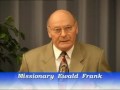
[...]Aş dori să mai citesc încă o dată acest text: „... dacă cerem ceva după voia Lui, ne ascultă. Şi dacă ştim că ne ascultă, orice i-am cere, ştim că suntem stăpâni pe lucrurile pe care I le-am cerut”.
Pentru fiecare temă biblică, există un număr mai mare de texte biblice. Unul dintre aceste texte este: „Tot ce veţi cere (după voia Lui) cu credinţă, prin rugăciune, veţi primi”. Aici ne este explicat acest lucru. Tot ce vom cere în voia lui Dumnezeu vom primi. S-ar putea ca dorinţele noastre proprii, să nu fie ascultate de fiecare dată, dar dacă ne vom ruga în voia lui Dumnezeu, atunci El ne va asculta.
Aş dori să vă spun tuturor din inimă un „Bun venit!” în Numele scump al Domnului nostru. Dumnezeu să vă binecuvânteze pe toţi din ţara noastră şi mai ales pe cei din alte ţări; Dumnezeu să ne binecuvânteze pe toţi! Odată am spus unui frate: „Dumnezeu să fie cu tine”. Iar fratele respectiv mi-a răspuns: „Ştii tu, mie mi-ar plăcea mai mult ca Dumnezeu să fie cu noi toţi, de aceea eu spun „Dumnezeu cu noi”. În felul acesta el m-a inclus şi pe mine, şi aceasta mi-a fost foarte preţios. Eu am fost foarte mulţumitor Domnului pentru o prezenţă atât de duhovnicească.
Dumnezeu este cu noi; acesta este numele Lui, Emanuel care înseamnă: „Dumnezeu este cu noi”. El nu este doar cu tine sau cu mine, ci Dumnezeu este cu noi; Emanuel, care, tălmăcit, înseamnă: „Dumnezeu este cu noi”. Şi dacă El este cu noi, atunci totul va fi foarte bine şi noi vom fi binecuvântaţi.
Dacă astăzi este cineva care este de prima dată în mijlocul nostru, atunci îi spunem din toată inima un „Bun venit!” Dacă este cineva de prima dată în mijlocul nostru, vă rog ridicaţi mâinile. Vă spunem un „Bun venit!” din toate inimile noastre. Dumnezeu să vă binecuvânteze! Voi, cei de aici din faţă, sunteţi cumva din Germania Democrată? Nu; voi sunteţi de aici. Bine.
Tinerii vor veni cu siguranţă în vreo doi sau trei ani, şi totul va fi altfel. Voi ştiţi foarte bine că am spus acest lucru acum câţiva ani în urmă, şi noi aşteptăm ca această schimbare să aibă loc, mai ales în Europa de Est. Deja am văzut şi am trăit anumite lucruri. Pentru noi va fi ceva de neînchipuit, şi totuşi adevărat. Dumnezeu poartă de grijă şi astfel, Cuvântul Lui este propovăduit până la marginile pământului, fiindcă El a făgăduit-o. Dacă noi ne vom ruga pentru asemenea lucruri, atunci cu siguranţă o vom face în Numele Lui, şi nu doar în Numele Lui, ci şi în voia Lui.[...]

freie-volksmission.de
Wild-Voice 2010
Sunday, 18 July 2010
În Numele Domnului Isus [external source]
”Şi orice faceţi, cu cuvântul sau cu fapta, să faceţi totul în Numele Domnului Isus, şi mulţumiţi, prin El, lui Dumnezeu Tatăl…” Coloseni 3:17
Mi se pune des întrebarea: unde mergi la biserică?
Eu care nu mă duc nicăieri ”la biserică”, nu pot răspunde altfel decât: nicăieri. De fapt răspund de fiecare dată așa cum Duhul îmi dă atunci.
Această întrebare ”unde mergi la biserică?” are de fapt alt substrat: ”ce ești?”, ”cum te definești pe tine?”, ”unde poți fi încadrat?” concret, ”de ce cult aparții?” Răspunsul scutește de cercetare. Ah, ești penticostal, oo, ești baptist, se lămurește lumea repede. Știe de unde să te ia și mai ales unde să te pună.
Dar de fapt, definirea cuiva cu numele unui cult înseamnă declararea autorității lui, de cine ascultă, cine-l comandă, cui se supune dpdv religios.
Aceasta de fapt și înseamnă:”în Numele cuiva….”, autoritatea sub care face acele lucruri.
”Au pus pe Petru şi pe Ioan în mijlocul lor, şi i-au întrebat: “Cu ce putere, sau în numele cui aţi făcut voi lucrul acesta?” FA 4:7
Aici intervine mărturia Domnului. Când declarăm: în numele bisericii, definim ceva cât de cât tangibil, se bănuiește că este vorba de un grup de oameni. Dar noi nu suntem chemați să mărturisim o biserică, nici chiar una perfectă. Cele imperfecte nu merită mărturisite, cea cerească, perfectă este de neînțeles pentru cei ce nu cunosc taina lui Cristos, Adunarea. Suntem chemați să-l mărturisim pe Domnul Isus, Numele Lui, Singurul Nume, nu biserica sau mai grav, un cult.
Să ne definim viața ca creștini(în Cristos), nu ca altceva, oricât de pioasă sau acceptată de lume ar fi acea autoritate. Realitatea dovedește că oamenii care nu-L cunosc pe Domnul, oricât de religioși ar fi, vor fugi sub umbrela unei autorități înțelese de către lume, numai să nu sufere prigonire din pricina crucii lui Cristos. Și e mai bine așa, chivotul se apară singur. Ucide pe cei ce-i încalcă regulile, frânge mâinile lui Dagon, produce tumori în filisteni, etc.
E o realitate binecuvântată, mulți fac multe În Numele Lui, dar dacă ștergi poleială de Nume cristic, vei găsi arama vre-unui profet fals, rugina vre-unei religii vechi sau smalțul ciobit al vre-unui cult aprobat. Numele mai presus de orice Nume, autoritatea Lui stă peste cei ce își trag întreaga sevă din El. Nu din vițe străine.
Cel ce are înțelepciunea turnării unui conținut în vas o are și pe aceea a etichetării corecte.
Cel ce se definește pe sine ca ”gelos” nu va fi convins de nimic să toarne Har acolo unde pe vas scrie altceva, alt Nume, iubit de doritorii de ”har”.
Să nu ne înșelăm că suntem creștini dacă nu putem deslipi de pe noi etichetele false care nu aduc slava lui Dumnezeu și care împiedică pe Domnul să ne binecuvinteze cu Har. Ignoranța nu este o scuză.
Mi se pune des întrebarea: unde mergi la biserică?
Eu care nu mă duc nicăieri ”la biserică”, nu pot răspunde altfel decât: nicăieri. De fapt răspund de fiecare dată așa cum Duhul îmi dă atunci.
Această întrebare ”unde mergi la biserică?” are de fapt alt substrat: ”ce ești?”, ”cum te definești pe tine?”, ”unde poți fi încadrat?” concret, ”de ce cult aparții?” Răspunsul scutește de cercetare. Ah, ești penticostal, oo, ești baptist, se lămurește lumea repede. Știe de unde să te ia și mai ales unde să te pună.
Dar de fapt, definirea cuiva cu numele unui cult înseamnă declararea autorității lui, de cine ascultă, cine-l comandă, cui se supune dpdv religios.
Aceasta de fapt și înseamnă:”în Numele cuiva….”, autoritatea sub care face acele lucruri.
”Au pus pe Petru şi pe Ioan în mijlocul lor, şi i-au întrebat: “Cu ce putere, sau în numele cui aţi făcut voi lucrul acesta?” FA 4:7
Aici intervine mărturia Domnului. Când declarăm: în numele bisericii, definim ceva cât de cât tangibil, se bănuiește că este vorba de un grup de oameni. Dar noi nu suntem chemați să mărturisim o biserică, nici chiar una perfectă. Cele imperfecte nu merită mărturisite, cea cerească, perfectă este de neînțeles pentru cei ce nu cunosc taina lui Cristos, Adunarea. Suntem chemați să-l mărturisim pe Domnul Isus, Numele Lui, Singurul Nume, nu biserica sau mai grav, un cult.
Să ne definim viața ca creștini(în Cristos), nu ca altceva, oricât de pioasă sau acceptată de lume ar fi acea autoritate. Realitatea dovedește că oamenii care nu-L cunosc pe Domnul, oricât de religioși ar fi, vor fugi sub umbrela unei autorități înțelese de către lume, numai să nu sufere prigonire din pricina crucii lui Cristos. Și e mai bine așa, chivotul se apară singur. Ucide pe cei ce-i încalcă regulile, frânge mâinile lui Dagon, produce tumori în filisteni, etc.
E o realitate binecuvântată, mulți fac multe În Numele Lui, dar dacă ștergi poleială de Nume cristic, vei găsi arama vre-unui profet fals, rugina vre-unei religii vechi sau smalțul ciobit al vre-unui cult aprobat. Numele mai presus de orice Nume, autoritatea Lui stă peste cei ce își trag întreaga sevă din El. Nu din vițe străine.
Cel ce are înțelepciunea turnării unui conținut în vas o are și pe aceea a etichetării corecte.
Cel ce se definește pe sine ca ”gelos” nu va fi convins de nimic să toarne Har acolo unde pe vas scrie altceva, alt Nume, iubit de doritorii de ”har”.
Să nu ne înșelăm că suntem creștini dacă nu putem deslipi de pe noi etichetele false care nu aduc slava lui Dumnezeu și care împiedică pe Domnul să ne binecuvinteze cu Har. Ignoranța nu este o scuză.
Tuesday, 16 March 2010
Sa iesim afara din tabara
Evrei 13:11.”… Trupurile dobitoacelor, al căror sânge este adus de Marele Preot Locul preasfânt, pentru păcat, sunt arse de tot afară din tabără.”
Ceea ce s-a întâmplat în Vechiul Legământ cu poporul israel, a fost doar umbra realităţilor din Noul Legământ, a fost pilda desăvârşită pentru noi, ca să înţelegem duhovniceşte adevărul de viaţă pe care trebuie să-l trăim. Versetul de mai sus ne învaţă o lecţie de mare însemnătate, pe care trebuie să ne-o însuşim, dacă vrem să propăşim duhovniceşte. “… Trupurile dobitoacelor (…) sunt arse de tot, afară din tabără.”
Duhul taberei este potrivnic Duhului lui Dumnezeu. Întotdeauna a fost aşa.
Toate lucrurile mari cu privire la poporul Său, Dumnezeu le-a făcut în afara taberei.
În afara taberei a dat El Legea (Exod 19:12), în afara taberei, Moise s-a rugat pentru biruinţa poporului asupra vrăjmaşului (comp. Exod 17: 8 -13), în afara taberei era cortul întâlnirii (Exod 33: 7), în afara taberei se duceau trupurile dobitoacelor care erau arse de tot, pentru păcat (Exod 29:14).
Şi Domnul Isus, S-a adus jertfă pentru păcatul nostru, tot afară din tabără (Evrei 13:12-13).
Una din jertfele pe care trebuie să le aducă credincioşii Noului Legământ, este trupul: “… aduceţi trupurile voastre ca o jertfă vie…” (Romani 12: 1). Dar această ardere de tot este primită de Dumnezeu, numai atunci când este adusă în afara oricărei tabere, adică în afara duhului de tabără (de partidă).
Şi câte tabere sunt astăzi în lume!
Câte nenorociri a adus duhul de tabără în lucrarea lui Dumnezeu!
Scumpii mei fraţi! Nu confundaţi Turma lui Hristos, Trupul Lui, Mireasa Lui, cu niciuna din taberele existente. Ieşiţi cu duhul vostru din orice tabără, căci atunci – numai atunci, jertfele voastre sunt primite de Dumnezeu.
Duhul taberei întotdeauna desparte; Duhul lui Dumnezeu uneşte.
Duhul taberei întotdeauna învrăjbeşte; Duhul lui Dumnezeu împrieteneşte.
Duhul taberei întotdeauna întinează; Duhul lui Dumnezeu curăţeşte şi sfinţeşte.
Duhul taberei aduce tulburare; Duhul lui Dumnezeu aduce pace.
Duhul taberei este minciună şi întuneric, Duhul lui Dumnezeu este adevăr şi lumină.
Cine este stăpânit de duhul taberei (de partidă), nu mai poate fi stăpânit de Duhul lui Dumnezeu.
Domnul Isus a fost întotdeauna în afara oricărei tabere religioase şi astăzi este la fel. Numai cine iese afară la El, îl află şi-l cunoaşte cu adevărat.
Numai acela îi poate sluji cu adevărat şi-I poate aduce jertfe cu adevărat.
Numai atunci putem respira aerul curat al adevărului, când ieşim, duhovniceşte, din orice tabără.
Moise a văzut pe Domnul când era în afara taberei (Exod 33: 21 – 22) şi faţa lui a primit strălucire numai în afara taberei (Exod 34:29).
Nu putem vedea adevărul şi nu putem primi strălucirea lui pe faţa noastră, decât în afara taberei. Doamne Isuse, fă-mă asemănător Ţie şi în această privinţă! Dacă Tu n-ai putut aduce jertfa de răscumpărare pentru mine decât în afara oricărei tabere, fă-mă să înţeleg acest adevăr şi să-l pot trăi cu putere întotdeauna, spre slava Numelui Tău şi pentru propăşirea cauzei Tale! Amin!
Nicolae Moldoveanu, Hristos Marele Preot, Ed Stephanus, 1993, pag 393
vesteabuna.wordpress.com
Ceea ce s-a întâmplat în Vechiul Legământ cu poporul israel, a fost doar umbra realităţilor din Noul Legământ, a fost pilda desăvârşită pentru noi, ca să înţelegem duhovniceşte adevărul de viaţă pe care trebuie să-l trăim. Versetul de mai sus ne învaţă o lecţie de mare însemnătate, pe care trebuie să ne-o însuşim, dacă vrem să propăşim duhovniceşte. “… Trupurile dobitoacelor (…) sunt arse de tot, afară din tabără.”
Duhul taberei este potrivnic Duhului lui Dumnezeu. Întotdeauna a fost aşa.
Toate lucrurile mari cu privire la poporul Său, Dumnezeu le-a făcut în afara taberei.
În afara taberei a dat El Legea (Exod 19:12), în afara taberei, Moise s-a rugat pentru biruinţa poporului asupra vrăjmaşului (comp. Exod 17: 8 -13), în afara taberei era cortul întâlnirii (Exod 33: 7), în afara taberei se duceau trupurile dobitoacelor care erau arse de tot, pentru păcat (Exod 29:14).
Şi Domnul Isus, S-a adus jertfă pentru păcatul nostru, tot afară din tabără (Evrei 13:12-13).
Una din jertfele pe care trebuie să le aducă credincioşii Noului Legământ, este trupul: “… aduceţi trupurile voastre ca o jertfă vie…” (Romani 12: 1). Dar această ardere de tot este primită de Dumnezeu, numai atunci când este adusă în afara oricărei tabere, adică în afara duhului de tabără (de partidă).
Şi câte tabere sunt astăzi în lume!
Câte nenorociri a adus duhul de tabără în lucrarea lui Dumnezeu!
Scumpii mei fraţi! Nu confundaţi Turma lui Hristos, Trupul Lui, Mireasa Lui, cu niciuna din taberele existente. Ieşiţi cu duhul vostru din orice tabără, căci atunci – numai atunci, jertfele voastre sunt primite de Dumnezeu.
Duhul taberei întotdeauna desparte; Duhul lui Dumnezeu uneşte.
Duhul taberei întotdeauna învrăjbeşte; Duhul lui Dumnezeu împrieteneşte.
Duhul taberei întotdeauna întinează; Duhul lui Dumnezeu curăţeşte şi sfinţeşte.
Duhul taberei aduce tulburare; Duhul lui Dumnezeu aduce pace.
Duhul taberei este minciună şi întuneric, Duhul lui Dumnezeu este adevăr şi lumină.
Cine este stăpânit de duhul taberei (de partidă), nu mai poate fi stăpânit de Duhul lui Dumnezeu.
Domnul Isus a fost întotdeauna în afara oricărei tabere religioase şi astăzi este la fel. Numai cine iese afară la El, îl află şi-l cunoaşte cu adevărat.
Numai acela îi poate sluji cu adevărat şi-I poate aduce jertfe cu adevărat.
Numai atunci putem respira aerul curat al adevărului, când ieşim, duhovniceşte, din orice tabără.
Moise a văzut pe Domnul când era în afara taberei (Exod 33: 21 – 22) şi faţa lui a primit strălucire numai în afara taberei (Exod 34:29).
Nu putem vedea adevărul şi nu putem primi strălucirea lui pe faţa noastră, decât în afara taberei. Doamne Isuse, fă-mă asemănător Ţie şi în această privinţă! Dacă Tu n-ai putut aduce jertfa de răscumpărare pentru mine decât în afara oricărei tabere, fă-mă să înţeleg acest adevăr şi să-l pot trăi cu putere întotdeauna, spre slava Numelui Tău şi pentru propăşirea cauzei Tale! Amin!
Nicolae Moldoveanu, Hristos Marele Preot, Ed Stephanus, 1993, pag 393
vesteabuna.wordpress.com
Wednesday, 9 December 2009
Whose God is Allah? [news]

Religion can be a tense affair in Malaysia.
Roughly two thirds of the population is Muslim, and religious minorities have repeatedly accused the government of undermining their rights.
The interception by Malaysian authorities of thousands of Bibles bound for Christians in the country has produced the latest flashpoint.
The reason - the Bibles use the word Allah to describe God, and that's been banned by the government.
It says the risk of causing upset to Muslims is too great.
Muslim groups claim that Christian use of a word so closely associated with Islam in Bibles and children's books could be aimed at winning converts.
Religion is closely associated with ethnicity in Malaysia, with ethnic Malays obliged to be Muslim.
Ethnic Indians and Chinese who practise Hinduism and Buddhism are welcome to convert to Islam, but Muslims are not allowed to adopt another faith.
The Malaysian government confiscated 5,000 Bibles earlier this year as they were imported from Indonesia, and it has now intercepted another 10,000.
But Christian leaders - representing a little under 10% of the population - say Malays have been using the word Allah to refer generally to God for hundreds of years.
Christians are now fighting back.
An Evangelical church launched a legal action in an attempt to win the right to refer to God as Allah in children's books.
The Roman Catholic Church has also gone to court after its newspaper in Malaysia was threatened with the loss of its licence if it continued to use the word.
Christians are turning the issue into one about how minorities are treated in Malaysia.
The Christian Federation of Malaysia says the country's constitution guarantees freedom of religion, and it's asking whether that can still be meaningful if Christians are denied Bibles which use their own language.
SWISS DECIDE ON MINARETS
When the treatment of Christian minorities in Muslim-majority countries becomes an issue, Christian-majority countries are apt to compare it unfavourably with the equality they give to Muslims.
There are about 100 mosques across Switzerland

But strict equality - at least in the architectural arena - is up for debate in one Christian-majority country: Switzerland.
Later this month the Swiss will vote in a referendum on whether to ban the construction of minarets in the country.
The proposal came from right-of-centre groups and is backed by Switzerland's biggest political party, the far-right Swiss People's Party.
There are about 100 mosques serving some 300,000 Swiss Muslims and small minarets are not unknown - although they're not used for calls to prayer.
Muslims have found allies among Switzerland's Jewish population, who have claimed that the plan would threaten religious harmony and hold up the integration of Muslims.
As in Malaysia, the constitution is being invoked by opponents of the proposal.
The two largest Jewish groups said the referendum infringed religious freedom, a concept enshrined in the Swiss constitution.
ITALIANS CROSS ABOUT CRUCIFIXES
Part of the Swiss People's Party's argument against minarets is that they are a symbol of political power - more than they are about religion.
Now with a ruling from the European Court of Human Rights against the use of crucifixes in Italian schools, the same claim is being made for this symbol of Christianity.
Soile Lautsi wants to give her children a secular education and objected to the
 presence of a crucifix in every classroom at their school in northern Italy.
A law dating back to the 1920s requires crucifixes to be hung in Italian schools.
The European Court said the compulsory display of a symbol of a given religion in public buildings violated the rights of parents to educate their children as they wished.
A law from the 1920s requires crucifixes to be hung in Italian schools
The ruling has produced an angry response from politicians and church leaders who say the crucifix is much more than a religious symbol in Italy.
Education Minister Mariastella Gelmini said the crucifix was a "symbol of our tradition", not a mark of Catholicism.
The Reverend Frederico Lombardi said the European court should not interfere in what was a profoundly Italian issue, and said it was wrong to imply that the crucifix could be a sign of division or exclusion.
Soile Lautsi's case is similar to one brought in 1995 by a parent in the German state of Bavaria.
A German constitutional court decided it was against religious freedom for crucifixes to be imposed in classrooms.
The Bavarian parliament came up with a new law, requiring the removal of crucifixes - but only if a parent insisted.
The US Supreme Court has also had to decide whether religious symbols break the constitution, and its separation of church and state.
It recently ruled against the positioning of framed copies of the 10 Commandments in two courtrooms in Kentucky, because they had a "predominantly religious purpose".
However, the court did acknowledge that even the 10 Commandments - taken from the Book of Exodus in the Bible - could be displayed, if it was done to illustrate the country's legal history.
It said a monument outside a government building in Texas could continue to display the Commandments, which the Bible describes being given to Moses by God.
But even without court rulings some Italian Christians suspect that long-established traditions are under threat by the changing atmosphere.
Among the casualties, they complain that schools are abandoning nativity plays for fear of offending people from other faiths.
By Robert Pigott | © bbc.cok.uk
Tuesday, 8 December 2009
Traditii
Fiecare om se naşte într-o anumită credinţă sau religie, şi cei mai mulţi dintre ei rămân în aceasta până la sfârşitul vieţii lor, fără să se gândească să verifice corectitudinea sau incorectitudinea acesteia. Ei nu cunosc singurul etalon valabil – absolutul Cuvântului lui Dumnezeu. A rămâne credincios tradiţiilor moştenite, face parte din prejudecăţile generale. De asemenea, mulţi dintre cei care îşi îndeplinesc datoriile lor religioase vor de fapt să fie lăsaţi în pace cu Isus Hristos şi cu subiecte biblice. Un număr din ce în ce mai mare de oameni ajung la concluzia că sunt înşelaţi şi minţiţi, în politică şi în religie, cu sau fără Dumnezeu. Cauza acestei stări se află în diferitele religii. Cei mai mulţi oameni trăiesc cu impresia că liderii lor religioşi vor face totul pentru ei şi-i vor călăuzi corect. De la naştere până la moarte sunt trataţi cu ritualuri şi ceremonii, fără să audă vreodată mesajul de mântuire, fără să trăiască personal mântuirea şi fără să găsească pacea cu Dumnezeu.
Confesiunile creştine cu structurile lor organizate nu fac excepţie. Toate manifestă o aparentă evlavie, dar acum trebuie supuse “probei Cuvântului”, trebuie comparate cu singurul etalon valabil, al bisericii apostolice primare. A sosit ceasul adevărului. O referire la Hristos, apostoli şi Biblie nu este de ajuns. Toate bisericile, până la grupările cele mai mici, folosesc texte biblice care sunt modelate după conceptul lor. Această stare este apoi numită «unitate în diversitate». De fapt creştinismul tradiţional de astăzi nu mai are nimic comun cu biserica primară a lui Isus Hristos. Nici biserica romano-catolică nu-şi are originea în Hristos sau în Petru, cum cred şi învaţă unii, ci s-a format treptat din vremea lui Constantin şi a Conciliului de la Niceea, din 325 d. Hr., în «Imperium Romanum». În decursul timpului, aşa numita biserică de stat a devenit o organizaţie cu ierarhie proprie. Primele secole au trecut fără vreun papă sau biserică de stat. În anul 380 cezarii romani Teodosiu şi Graţian au pus capăt libertăţii religioase. Un an mai târziu, la Conciliul de la Constantinopol, creştinismul a fost declarat “religia de stat”, obligatorie pentru toţi cetăţenii Imperiului Roman. Acest proces a fost încheiat de cezarul Iustinian (527-565), care i-a făcut pe preoţi funcţionari de stat.
Aceeaşi Biblie este interpretată astăzi în sute de feluri, în tradiţia părinţilor bisericii. În loc să se rămână la cuvintele autentice ale descoperirii, care au fost călăuza divină a creştinismului primar, acestea au fost înlocuite în mod constant cu învăţături omeneşti noi, explicaţii, crezuri, dogme care nu au nici o bază în sfânta Scriptură. Nu-i aşa că toate cultele şi-au ridicat propriile împărăţii pe care le-au proclamat “Împărăţia lui Dumnezeu”? În ciuda tuturor acestor lucruri, totuşi rămâne valabil că Isus Hristos Îşi zideşte Biserica Lui în mijlocul lumii bisericilor, şi o va şi desăvârşi în curând. Dumnezeu are cu omenirea un plan pe care El îl îndeplineşte. Pentru a-l înţelege corect, trebuie să ne eliberăm de toate tradiţiile moştenite şi să ne întoarcem la Cuvântul lui Dumnezeu. Domnul nostru nu cere o credinţă oarbă. De fapt, credinţa adevărată are doi ochi sănătoşi şi două picioare stabile. Ea stă pe temelia autentică, Vechiului şi Noul Testament, în care este descris de la început până la sfârşit planul de mântuire al omenirii.
reasezare.wordpress.com
Monday, 7 December 2009
Christianity [Britannica Student Article]
Introduction
On a late afternoon, in about the year AD 30, two men were walking from Jerusalem to the nearby village of Emmaus. Their conversation centered on notable events that had occurred the previous week. As they journeyed, they were joined by a stranger who seemed ignorant of these events. Surprised, they asked him: “Are you the only person staying in Jerusalem not to know what has happened there in the last few days?” So they explained to him about a certain Jesus of Nazareth, “a prophet powerful in speech and action before God and the whole people. Our chief priests and rulers handed him over [to the Roman authorities] to be sentenced to death, and [they] crucified him. But we were hoping that he was the man to liberate Israel.” Even more amazing, they went on to say, were reports from some women who visited his tomb that he was alive again, raised from the dead.
Suddenly the stranger spoke: “How dull-witted you two are! And how slow to believe all that the prophets said. Was not the messiah bound to suffer thus before entering upon his glory?” Then he went on to clarify from the Hebrew scriptures all the passages that referred to himself. For the stranger was Jesus of Nazareth, of whom the two had been speaking.
Based on the life, death, and coming to life again of this man Jesus—also called the Christ—there has developed the world's largest religion, Christianity. It claims more than one billion members in all parts of the world. In the late 20th century, it is divided into hundreds of groups, or denominations, the largest of which are the Roman Catholic church, the Eastern Orthodox churches, and innumerable Protestant churches.
Expectation and Reality
The two men on the road to Emmaus were not disinterested bystanders. They were followers (called disciples, or learners) of Jesus who had known him for at least three years. During this period they had listened to all he said and had witnessed his amazing actions, such as healing the sick, giving sight to the blind and hearing to the deaf, and even bringing individuals back to life. They had become convinced that he was “the one who was to redeem Israel.”
Israel wanted and expected redemption. This small Jewish nation, located in the eastern part of the Roman Empire, had for centuries looked forward to a time when their God would, through some decisive action, free it from outside domination and establish it as the preeminent nation in the world. One way he might do this was by sending a messiah (Christos in Greek) who would deliver them from their enemies and become their king. The word messiah means “the lord's anointed,” someone God has set aside for a specific task.
Christians believe that Jesus, from the small town of Nazareth in Galilee, was that messiah. They also believe that what he accomplished far exceeded the expectations of Israel. The Jews looked for a messiah exclusively for themselves, though his power would be such as to draw other nations to a belief in their God. Christians believe that Jesus, as God's agent, accomplished something that was intended to benefit the whole world directly without being tied to the fate of any single nation. His work is to be considered inclusive of everyone in all times and places.
The Man and the Message
With all the differences in beliefs in the many denominations of Christianity, it is impossible to set out one list of teachings that apply to all Christians everywhere. The reason for this is fairly simple. Jesus, along with his life and work, are for Christians objects of faith; and the objects of faith are thought of by different people in different ways and differently in various periods of history. No one has ever succeeded in distilling an “essence of Christianity.” But the early followers of Jesus came the closest in their assertion that “Jesus is lord.” By this they seemed to mean that he was more than a man. He was also, in some incomprehensible way, God. And by his ministry, death, and resurrection he had accomplished a universal salvation available to all who believe in him.
What Jesus said and did can be gleaned from the first four books of the Bible's New Testament . These books—Matthew, Mark, Luke, and John—are not biographies; they are called Gospels, a word that means “good news,” because they are his followers' written testimonies of what his life was all about.
The Gospels depict a man who was thoroughly imbued with the whole tradition of Israel's religion from the time of Abraham onward.
From what Jesus said and did, his followers came to believe that God was perhaps acting through him in a very special way. Very possibly he was the one long awaited who would inaugurate God's kingdom on Earth. It was reasonable that they should think this, for they too were Israelites; and they saw in his words and deeds what portended to be the dawning of a new age. What dashed their hopes was his ignoble death, for crucifixion was a punishment reserved for criminals. Then came the great surprise: He was raised from the dead and appeared to them again over a period of 40 days. This stunning event required a complete reassessment of what Jesus was all about.
It is this reassessment that forms the basis for the writings of the New Testament. The Gospels themselves are part of it, but it is more strikingly conveyed by the other 23 books, all written by his followers over the subsequent decades after he had left them.
For he had left them. How and where to could only be explained as his returning to the God who had sent him. But he did not leave them forever: He promised that he would one day return, and he gave them a mission to perform—to carry the message about his life and work to the whole world.
The Assembly of Believers: the Church
First, a word about terminology. The small group of Jesus' followers that gathered in Jerusalem after his departure did not call themselves anything. The word Christian came into use years later and was at first a derogatory term applied by outsiders. When the books of the New Testament were written, the word used to name the believers was simply assembly. The Greek word is ecclesia and denotes any assembly of people, though it often had political connotations. Much later, probably in the 3rd or 4th century, the word church came into use to denote the specific kind of assembly that the believers composed. The term church is also of Greek origin, from the word kuriakon, meaning “belonging to the lord.” It is now the most common term applied to groups of Christians as well as to the totality of the world's Christian membership. The word is also frequently applied to denominations, a usage now so common as to be unavoidable. Denominations are, however, institutional arrangements based on specific viewpoints and traditional practices. They exist as a result of long historical development, doctrinal diversity, and geographical separation.
During the first decades of the church's existence, there were four significant accomplishments: The assembly of believers separated themselves from the religion of Israel; they formulated an extensive assessment of what the life, death, and resurrection of Jesus meant; new congregations of believers were founded in all parts of the Roman Empire; and the believers improvised organizational arrangements and forms of worship that were to remain influential.
Separation from Israel.
The early Christians were all Jews. They remained in Jerusalem and partook of the religious observances in the Temple. They differed from their fellow Jews only in that they believed that the Messiah had come. Had they remained quiet about their conviction, they might well have remained a sect within Judaism. However, they insisted on preaching to all who would listen that the Jesus whom the Jewish authorities had persecuted was the one Israel had long awaited. This preaching aroused great hostility on the part of religious leaders, and the early Christians were persecuted.
Yet these Christians had no thought of venturing beyond the confines of Israel with their message. It was only with the appearance of a man named Saul of Tarsus that the assembly of believers enlarged its horizons to include the whole known world. Saul, a strict Jew, was a persecutor of the church. He was nevertheless converted, and, after changing his name to Paul, began what is called the mission to the gentiles. (The word gentile is simply a cover-all term for all non-Jewish peoples.) It was this man who, more than any other, pulled the church out from temple and synagogue and set it apart as a separate institution.
But the separation was, for Paul, more than a physical one. It was also doctrinal. Christians, he asserted, did not have to become Jews. They were not subject to all the rites, rituals, and laws of Israel's religion. This, perhaps more than any other factor, aroused the intense hostility of the Jews and led to a definitive separation of the two camps.
Assessment.
The books of the New Testament, particularly the writings of Paul, contain the early church's testimonies about who Jesus was and what his life meant. The first issue that had to be settled was whether Jesus was for Israel only. The answer, already noted, was no. That he was for Israel in some sense was undoubtedly true, because he is presented as the one who had fulfilled every prophecy and promise in Israel's scriptures (called by Christians the Old Testament). The first verse of the Book of Hebrews states: “When in former times God spoke to our forefathers, he spoke in fragmentary and varied fashion through the prophets. But in this, the final age, he has spoken to us in the Son whom he has made heir to the whole universe, and through whom he created all orders of existence.” In this verse, and in many other places, the New Testament makes clear that Jesus was the full and final revelation from God for all people.
This represented a whole new way of thinking about God. Somehow this Jesus was one with the creator. This notion is abhorrent to both Judaism and Islam, which are strictly monotheistic religions for whom God is one and cannot be divided. But the Christians had to deal with this problem, and from what they believed about Jesus they could come to no other conclusion. They claimed it to be true, even though they could not understand or explain it. They simply believed it and stated it in their early confession: Jesus is lord.
How could this man have achieved such status? The writers of the New Testament answer: by his death and resurrection. But how could these events, occurring as they did in a remote part of the Roman Empire, have a universal significance? Paul himself admitted that the notion was scandalous; it was offensive to Israel because the Jews could never conceive of their messiah being put to death; and it was likely to appear as plain nonsense to gentiles who had no knowledge of Israel's beliefs. Yet it was stated as true by all early Christians. They believed that Jesus, by his death, had paid a universal penalty for all human unbelief and disobedience toward God. They further asserted that the resurrection was the first act by which God was restoring the whole creation. Creation was, in the words of some modern Christians, being “born again,” being reconstituted and remade after God's original intention. This was the message the earliest Christians took, first to Israel, then to the rest of the world.
Mission to the gentiles.
Paul and his associates took this message to most of the urban centers of the Mediterranean world. By the end of the 1st century there were strong congregations in Alexandria, Ephesus, Antioch, Corinth, Thessalonica, and even at Rome, the capital of the empire. Jerusalem, the mother church, was dispersed when the Roman legions destroyed the city in AD 70 during a Jewish uprising.
Organization and worship.
It is unlikely that the early Christians intended to devise structures that would endure for centuries. But any institution, to operate successfully, must organize itself. Of first importance in the church were the apostles, those who had been with Jesus during his lifetime. To their number Paul was later added. They were the living and authoritative voices that could be appealed to on all questions of belief . To assist them, deacons, or attendants, were appointed to help in preaching and in the everyday operation of the congregations. Later, there developed other leaders called elders (in Greek, presbyteroi, from which the modern Presbyterian denomination gets its name) and leaders called episkopoi (literally meaning “overseers”—the word episcopal is derived from it—normally translated as bishops).
The early church had no clergy; it had people who performed specific functions—leading worship, preaching, collecting offerings, and feeding and clothing the poor among them. But as centuries passed, the three functions of bishop, elder (priest), and deacon became arranged in a hierarchy. The bishop became the overseer for a city or region. He was, as well, the authoritative person in matters of doctrine. In time these functionaries came to be set apart from the rest of the membership by a process called ordination—suggesting that they were a special order within the church. One of the problems that troubles modern denominations is the relation between these ordained offices and the regular members of the denomination, called the laity. Some denominations have attempted to erase the distinction, while others have held rather rigidly to the traditional forms.
In its worship life, Christianity borrowed greatly from Jewish forms. Christians used prayers, sang psalms, read from the scriptures (the Old Testament) and from some of Paul's letters, and listened to someone expound the scripture passages for the day. The day was Sunday, to commemorate the resurrection, which had taken place on the first day of the week.
In addition, Christians used two rites that had been commanded of them by Jesus himself. These rites, often called sacraments, or holy acts, were baptism and the Lord's Supper (or Eucharist, meaning “thanksgiving”). Baptism, an immersion in water to represent the washing away of sin, was the initiating rite by which one became a member of the church. The Lord's Supper was originally a community meal, followed by the receiving of bread and wine. This meal was a remembrance of Jesus' last meal with his disciples before he died. Today these rites are so variously defined by the many denominations that no single interpretation of them is possible.
God's Presence in the Church
Before Jesus left his disciples, he promised them that they would not be alone and helpless in the world. He said that after he was gone he would send them a helper, a teacher, a comforter to sustain them and aid in carrying out the church's mission. He called this helper the Holy Spirit. It would be the Holy Spirit's purpose to “guide them into all truth” and to bring to remembrance all that Jesus had said and done. The books of the New Testament are vivid in their conviction that this spirit was indeed living and working through the first Christians. They were spared neither pain, persecution, nor death; but they were convinced that God's spirit was sustaining them in all their endeavors.
The faith that the Holy Spirit was working among them again forced the early Christians to broaden their understanding of God. They concluded that he had revealed himself as the creator of all things, as Jesus the redeemer, and lastly as the spirit that sustained and preserved the church. To explain this impenetrable mystery, early Christian thinkers devised the doctrine of the Trinity. This doctrine was never an explanation of God. All it could do was set forth the firm belief that, for Christians, God was somehow at the same time one and three.
Life of Discipleship
Essentially Jesus commended to his followers the same type of life he led: selfless obedience to the will of God. He called himself a servant and said that they were to be servants as well. They were to fear nothing, not even death. He summed up what their basic attitude was to be by saying, “You shall love the Lord your God above all things and your neighbor as yourself.” They were to do good to all people and to carry the message concerning him everywhere. Above all, they were not to be just people who believed certain doctrines. Their obedience was to be an active participation in the life of the world.
Paul summed up the characteristics of the individual Christian by saying: “Put on the garments that suit God's chosen people . . . compassion, kindness, humility, gentleness, patience. Be forbearing with one another, and forgiving. The nature of the individual Christian's obedience and quality of life was generally left to private judgment within these parameters. Christians over the centuries have found a great variety of ways to express their individual faithfulness.
A Short History
The history of Christianity is filled with conflict, controversy, and division. It also has countless instances of brilliant creativity in worship, architecture, painting, sculpture, music, and literature. And in all ages churches have sought to carry out the mission entrusted to them by Jesus. Within this article only a very brief summary of the history can be given.
Early period to AD 380.
Christianity became established in nearly all parts of the Roman Empire and in the Middle East during the first two centuries. As it continued to grow and expand, it became the object of persecution by the Roman authorities. The severest persecutions came during the reigns of the emperors Domitian (AD 96), Marcus Aurelius (161–180), Decius (249–251), and Valerian (253–260). Worst of all was the attempt by the Emperor Diocletian (284–305) to extinguish Christianity altogether. But in 313 Constantine the Great issued an edict of toleration for all religions. In 380, Theodosius I made Christianity the official religion of the Roman Empire.
Middle Ages.
Although the church was empire-wide, two cities came to be more influential than others in guiding its affairs: Rome and Constantinople (now Istanbul). Many theological disputes arose in the centuries after Constantine, and these were usually settled by councils . The Roman church, headed by its bishop, the pope, gradually diverged in both belief and practice from the church at Constantinople, headed by its patriarch. The Roman church became dominant in Western Europe, while the church at Constantinople dominated the East. In 1054 the two churches broke off relations with each other.
Modern period.
Early in the 16th century a split occurred in the Roman church. Since that time the church in the West has been divided primarily between the Roman Catholic and Protestant segments. The term Protestantism has come to refer to nearly any denomination that is not affiliated with either the Roman Catholic or Eastern Orthodox branches. Among the older Protestant denominations are the Lutheran, Anglican, Presbyterian, Reformed, Methodist, and Baptist.
In the 20th century there have been attempts to revitalize and reunify the church. The World Council of Churches, founded in 1948, is an organization made up of most denominations except for the Roman Catholic. In the 1960s the Roman Church, in its Second Vatican Council, strove for spiritual renewal and modernization. Thus, after many centuries, most of the denominations that make up the worldwide church are in contact with one another. Many are involved in cooperative projects, and others have undertaken actual merger negotiations. The Roman and Orthodox churches resumed contact in 1965.
Additional references about Christianity
- Barrett, C.D. Understanding the Christian Faith (Prentice, 1980).
- Barth, Karl. The Word of God and the Word of Man (Peter Smith, 1958).
- Dawson, Christopher. Christianity in East and West (Sugden, 1981).
- Frend, W.H.C. The Rise of Christianity (Fortress, 1984).
- Gaustad, E.S. A Religious History of America (Harper, 1966).
- Johnson, Paul. A History of Christianity (Atheneum, 1976).
- Lewis, C.S. Mere Christianity (Macmillan, 1964).
- Marty, Martin. Christianity in the New World (Winston Press, 1984).
To cite this page:
- MLA Style: "Christianity." Britannica Student Library. Encyclopædia Britannica 2009 Student and Home Edition. Chicago: Encyclopædia Britannica, 2009.
- APA Style: Christianity. (2009). Britannica Student Library. Encyclopædia Britannica 2009 Student and Home Edition. Chicago: Encyclopædia Britannica.
Christianity Beliefs: Creationism and intelligent design
Christians who take the Bible literally believe the world was created by God in seven days. In recent years, some Christians have put forward the idea of an 'intelligent designer' as an alternative to the science of evolution.
Introduction
Virtually all religions include an explanation for life on Earth in their scriptures. In the UK, and even more so in the USA, the creationism debate largely involves Christians.
In March 2006, Rowan Williams, the Archbishop of Canterbury, joined the evolution versus creationism debate when he said in an interview with the Guardian newspaper that he did not believe that creationism - the scriptural account of the origins of the world - should be taught in schools.
So what is creationism all about - what does it mean, and why does it matter so much to many religious people? And what is intelligent design and how does it differ from creationism?
Creationism
The main points of creationism are these:
- All life was created by the actions of God
- Some Creationists say God did this in a single creative event
- Some Creationists don't limit creation to one event
- All the forms of life existing today were created by the actions of God
- The organisms created by God can't produce new forms of organism - only God can do this
- The most common theory follows the accounts in the Biblical Book of Genesis, but most religions have their own creation story
- Modern creationism uses scientific evidence to support scripture
- Most scientists say the creationism theory is false and unscientific
Intelligent design (also called neo-Creationism)
- The current state of life on Earth has come about through the actions of an intelligent Designer
- This is because
-Some living things contain certain types of complexity that are best explained as the result of an intelligent cause
- Some aspects of the universe show positive evidence of having been designed by some form of intelligence
- This designer need not be God but most proponents of intelligent design seem to have God in mind
- This theory has been accused of being creationism in disguise
- Although a few scientists have supported intelligent design, the majority of those working in the field regard the theory as false and unscientific
Creationism in depth
Creationism teaches that:
- everything in the universe has God as its ultimate cause
- the nature of life on Earth is the direct result of God's creative actions
An alternative way of putting the same idea is:
- the universe and everything in it could not have come into being without a supreme being causing it to happen
Creationism is largely based on religious belief, but gains much support from what its protagonists see as the failures of other theories to explain the evidence properly.
Different religions and cultures have different creation theories, but this article deals with the Jewish/Christian version.
Forms of creationism
Forms of creationism
Creationism teaches that life on Earth is the result of God's creative action, and not the result of blind scientific processes. Creationism doesn't attempt to explain how God did this:
It comes in a variety of forms, and the most common are listed below. But there are other forms of Creationism which include different combinations of the ideas mentioned:
Young Earth creationism
Young Earth creationism teaches that:
- The Book of Genesis is literally true
- the Earth and all forms of life were created by God in 6 days, around 10,000 years ago.
Scientists are almost unanimous in saying that as the Earth is 4 billion years old, and that the Young Earth theory is false.
Old Earth creationism
Old Earth creationism teaches that:
- The Earth is as old as scientists say (around 4 billion years)
- The universe, Earth, and life were created by processes in which God played an active part
- There have been countless divine acts of creation throughout history
- God acts both by direct creation and by guiding the processes he created
- Humanity was directly created by God
- The difference between this theory and Theistic Evolution is that in Theistic Evolution God doesn't play an active part after the original creation of the universe and the forces that operate in it.
Gap creationism
Gap creationism adds a new idea:
- There were two creations - one before Adam, and a second one, which included Adam and Eve, after a lengthy time gap
- This theory reconciles the age of the Earth with the story in Genesis
Most scientists say that the geological evidence shows that this theory is false.
Day-Age creationism
Day-Age creationism adds an element that reconciles the long period of time shown by the fossil record with the story in Genesis.
- Each 'day' in the Biblical '6 days' of creation wasn't really a day, but a period of millions of years
- The theory is supported by Biblical references that show that one of 'God's days' is a lot longer than 24 hours
Progressive creationism
Progressive creationism accepts the scientific timetable of creation, and gives evolution a small part to play in the story of life.
- God created the various 'kinds' (some people would say 'species' but other categories have been suggested) of plant and animal one after another - according to the timetable shown by the fossil record
- The scientific timetable of creation reflects the timetable that God used to create life on earth
- God created each kind of organism as we find it
- Different forms of organism are separate creations, not the result of evolution from an earlier form
- Some created organisms do become extinct
- Micro-evolution can take place within a kind of organism to produce subtle variations
- Lions, tigers and cats within the cat family
- Different sizes of beak within the Galapagos finches
Islamic Creationism
Creationism is not just a Christian issue. Muslim creationists base their thinking on similar scientific arguments and on passages such as this in the Qur'an:
Intelligent design
Intelligent design
The Intelligent Design theory claims that some sort of supernatural designer was involved in the creation of life on Earth. It differs from Creationism because it divorces Creationist ideas from their roots in Scripture.
The argument in favour of Intelligent Design has two parts:
- Evolutionary theory doesn't fully explain the origin and development of life on Earth
- Life on Earth - and more generally the universe - shows so much order, purpose and design that there must have been a designer
The important part of the Intelligent Design theory is "design", and the idea that the Universe and life must somehow be designed is a very old one, going right back to Aristotle.
Thomas Aquinas in the 13th century used the argument to try and prove the existence of God:
- wherever complex design exists, there must have been a designer
- nature is complex
- therefore nature must have had an intelligent designer
Most intelligent design arguments avoid any reference to scripture and try to eliminate anything that might look as if it was derived from religious belief.
This may be partly to ensure that the theory doesn't fall foul of the separation of Religion and State in the US constitution, since there seems no inherent reason why the designer shouldn't be 'God'.
In this discussion, Harry McDonald, President of Kansas Citizens for Science defends Darwinism, and Doctor William Harris, a medical academic, attacks the theory
In the case of Kitzmiller v. Dover (USA 2005) the key issue was whether intelligent design was or was not science, because if it wasn't science then it would be a religious theory like creationism, and so could not be taught in US publically funded schools under the constitutional provision of the separation of religion and state. Judge John E Jones III ruled that ID was not science.
The modern concept of intelligent design owes much to Phillip Johnson, an American professor of Law. Johnson published the book Darwin on Trial (1991), and in 1996 established the Center for Science and Culture at the Discovery Institute.
Johnson put ID forward not as a creationist theory, but as a theory that acknowledged that there was more to the development of life on Earth than could be explained by a totally naturalistic account.
The theoretical foundations of ID were provided by Michael Behe (author of Darwin's Black Box: The Biochemical Challenge to Evolution, 1996), William Dembski and others.
The implications
Why is this subject important for Religion and Ethics?
This subject has a number of implications for religious beliefs and ethics.
In the US and UK, significant groups of Christians believe that evolution is an unproved theory which may devalue religious belief, and want schools to teach pupils that creationism or intelligent design are alternative theories that should be considered.
USA
This argument is very important in the USA because publicly funded schools must be religiously neutral under the Constitution, and so neither creationism nor intelligent design can be taught in such schools if they amount to religious theories.
Proponents of intelligent design and creation science have made several attempts to get these theories taught in school science lessons as alternatives to evolution, but American court decisions have generally concluded that both creationism and intelligent design are religious theories rather than scientific ones, and so are barred from the school system.
Creationism might be losing the battle in the courts, but it's very much alive in other aspects of US life. One example: the $25m Creation Museum in Kentucky.
UK
A poll for the BBC Horizon programme in January 2006 revealed that fewer than 50% of Britons accept the theory of evolution as the best description for the development of life.
Furthermore, more than 40% of those questioned believe that creationism or intelligent design should be taught in school science lessons.
Over 2,000 participants took part in the survey, and were asked what best described their view of the origin and development of life:
- 22% chose creationism
- 17% opted for intelligent design
- 48% selected evolution theory
- and the rest did not know.
Some Christian schools in the UK teach creationism as well as evolution.
In 2006 one UK examination board admitted that a biology course due to be introduced that September would encourage schools to consider alternatives to the theory of evolution.
© bbc.co.uk
Introduction
Virtually all religions include an explanation for life on Earth in their scriptures. In the UK, and even more so in the USA, the creationism debate largely involves Christians.
In March 2006, Rowan Williams, the Archbishop of Canterbury, joined the evolution versus creationism debate when he said in an interview with the Guardian newspaper that he did not believe that creationism - the scriptural account of the origins of the world - should be taught in schools.
I think creationism is, in a sense, a kind of category mistake, as if the Bible were a theory like other theories. Whatever the biblical account of creation is, it's not a theory alongside theories. It's not as if the writer of Genesis or whatever sat down and said well, how am I going to explain all this... 'In the beginning God created the heavens and the earth...' - Rowan Williams in The Guardian, 21 March 2006
So what is creationism all about - what does it mean, and why does it matter so much to many religious people? And what is intelligent design and how does it differ from creationism?
Creationism
The main points of creationism are these:
- All life was created by the actions of God
- Some Creationists say God did this in a single creative event
- Some Creationists don't limit creation to one event
- All the forms of life existing today were created by the actions of God
- The organisms created by God can't produce new forms of organism - only God can do this
- The most common theory follows the accounts in the Biblical Book of Genesis, but most religions have their own creation story
- Modern creationism uses scientific evidence to support scripture
- Most scientists say the creationism theory is false and unscientific
Intelligent design (also called neo-Creationism)
- The current state of life on Earth has come about through the actions of an intelligent Designer
- This is because
-Some living things contain certain types of complexity that are best explained as the result of an intelligent cause
- Some aspects of the universe show positive evidence of having been designed by some form of intelligence
- This designer need not be God but most proponents of intelligent design seem to have God in mind
- This theory has been accused of being creationism in disguise
- Although a few scientists have supported intelligent design, the majority of those working in the field regard the theory as false and unscientific
Creationism in depth
Creationism teaches that:
- everything in the universe has God as its ultimate cause
- the nature of life on Earth is the direct result of God's creative actions
An alternative way of putting the same idea is:
- the universe and everything in it could not have come into being without a supreme being causing it to happen
Creationism is largely based on religious belief, but gains much support from what its protagonists see as the failures of other theories to explain the evidence properly.
Different religions and cultures have different creation theories, but this article deals with the Jewish/Christian version.
Forms of creationism
Forms of creationism
Creationism teaches that life on Earth is the result of God's creative action, and not the result of blind scientific processes. Creationism doesn't attempt to explain how God did this:
We do not know how God created, what processes He used, for God used processes which are not now operating anywhere in the natural universe. This is why we refer to divine creation as Special Creation. We cannot discover by scientific investigation anything about the creative processes used by God. - Gish, Evolution? The Fossils Say No!, 1979
It comes in a variety of forms, and the most common are listed below. But there are other forms of Creationism which include different combinations of the ideas mentioned:
Young Earth creationism
Young Earth creationism teaches that:
- The Book of Genesis is literally true
- the Earth and all forms of life were created by God in 6 days, around 10,000 years ago.
Scientists are almost unanimous in saying that as the Earth is 4 billion years old, and that the Young Earth theory is false.
Old Earth creationism
Old Earth creationism teaches that:
- The Earth is as old as scientists say (around 4 billion years)
- The universe, Earth, and life were created by processes in which God played an active part
- There have been countless divine acts of creation throughout history
- God acts both by direct creation and by guiding the processes he created
- Humanity was directly created by God
- The difference between this theory and Theistic Evolution is that in Theistic Evolution God doesn't play an active part after the original creation of the universe and the forces that operate in it.
Gap creationism
Gap creationism adds a new idea:
- There were two creations - one before Adam, and a second one, which included Adam and Eve, after a lengthy time gap
- This theory reconciles the age of the Earth with the story in Genesis
Most scientists say that the geological evidence shows that this theory is false.
Day-Age creationism
Day-Age creationism adds an element that reconciles the long period of time shown by the fossil record with the story in Genesis.
- Each 'day' in the Biblical '6 days' of creation wasn't really a day, but a period of millions of years
- The theory is supported by Biblical references that show that one of 'God's days' is a lot longer than 24 hours
For a thousand years in your sight are like a day that has just gone by... - Psalm 90:4
With the Lord a day is like a thousand years, and a thousand years are like a day. - 2 Peter 3:8
Progressive creationism
Progressive creationism accepts the scientific timetable of creation, and gives evolution a small part to play in the story of life.
- God created the various 'kinds' (some people would say 'species' but other categories have been suggested) of plant and animal one after another - according to the timetable shown by the fossil record
- The scientific timetable of creation reflects the timetable that God used to create life on earth
- God created each kind of organism as we find it
- Different forms of organism are separate creations, not the result of evolution from an earlier form
- Some created organisms do become extinct
- Micro-evolution can take place within a kind of organism to produce subtle variations
- Lions, tigers and cats within the cat family
- Different sizes of beak within the Galapagos finches
Islamic Creationism
Creationism is not just a Christian issue. Muslim creationists base their thinking on similar scientific arguments and on passages such as this in the Qur'an:
And God has created every animal from water. Of them there are some that creep on their bellies, some that walk on two legs and some that walk on four. God creates what he wills for verily God has power over all things. - Qur'an
Intelligent design
Intelligent design
The Intelligent Design theory claims that some sort of supernatural designer was involved in the creation of life on Earth. It differs from Creationism because it divorces Creationist ideas from their roots in Scripture.
The argument in favour of Intelligent Design has two parts:
- Evolutionary theory doesn't fully explain the origin and development of life on Earth
- Life on Earth - and more generally the universe - shows so much order, purpose and design that there must have been a designer
The important part of the Intelligent Design theory is "design", and the idea that the Universe and life must somehow be designed is a very old one, going right back to Aristotle.
Thomas Aquinas in the 13th century used the argument to try and prove the existence of God:
- wherever complex design exists, there must have been a designer
- nature is complex
- therefore nature must have had an intelligent designer
Most intelligent design arguments avoid any reference to scripture and try to eliminate anything that might look as if it was derived from religious belief.
This may be partly to ensure that the theory doesn't fall foul of the separation of Religion and State in the US constitution, since there seems no inherent reason why the designer shouldn't be 'God'.
In this discussion, Harry McDonald, President of Kansas Citizens for Science defends Darwinism, and Doctor William Harris, a medical academic, attacks the theory
In the case of Kitzmiller v. Dover (USA 2005) the key issue was whether intelligent design was or was not science, because if it wasn't science then it would be a religious theory like creationism, and so could not be taught in US publically funded schools under the constitutional provision of the separation of religion and state. Judge John E Jones III ruled that ID was not science.
The modern concept of intelligent design owes much to Phillip Johnson, an American professor of Law. Johnson published the book Darwin on Trial (1991), and in 1996 established the Center for Science and Culture at the Discovery Institute.
Johnson put ID forward not as a creationist theory, but as a theory that acknowledged that there was more to the development of life on Earth than could be explained by a totally naturalistic account.
The theoretical foundations of ID were provided by Michael Behe (author of Darwin's Black Box: The Biochemical Challenge to Evolution, 1996), William Dembski and others.
The implications
Why is this subject important for Religion and Ethics?
This subject has a number of implications for religious beliefs and ethics.
In the US and UK, significant groups of Christians believe that evolution is an unproved theory which may devalue religious belief, and want schools to teach pupils that creationism or intelligent design are alternative theories that should be considered.
USA
This argument is very important in the USA because publicly funded schools must be religiously neutral under the Constitution, and so neither creationism nor intelligent design can be taught in such schools if they amount to religious theories.
Proponents of intelligent design and creation science have made several attempts to get these theories taught in school science lessons as alternatives to evolution, but American court decisions have generally concluded that both creationism and intelligent design are religious theories rather than scientific ones, and so are barred from the school system.
Creationism might be losing the battle in the courts, but it's very much alive in other aspects of US life. One example: the $25m Creation Museum in Kentucky.
UK
A poll for the BBC Horizon programme in January 2006 revealed that fewer than 50% of Britons accept the theory of evolution as the best description for the development of life.
Furthermore, more than 40% of those questioned believe that creationism or intelligent design should be taught in school science lessons.
Over 2,000 participants took part in the survey, and were asked what best described their view of the origin and development of life:
- 22% chose creationism
- 17% opted for intelligent design
- 48% selected evolution theory
- and the rest did not know.
Some Christian schools in the UK teach creationism as well as evolution.
In 2006 one UK examination board admitted that a biology course due to be introduced that September would encourage schools to consider alternatives to the theory of evolution.
© bbc.co.uk
Thursday, 3 December 2009
Religion - An Introduction
Religion is one of the most pervasive of all human behaviours, being found across all continents and cultures and throughout the entire span of human history(1).
What is Religion?
It is impossible to answer the question 'What is religion?' without resorting to personal opinion. Like 'What is good?', the question is one of values which are perhaps not open to scientific enquiry at all. This is quite an intractable problem. Although most of us hav e an idea of what religion is, we might struggle to explain it. When asked, many would say that religion is a way of life based on belief in God. However, do we mean the god of classical theism, the god of Judaism, Christianity and Islam, or something more general, more nebulous? And what of those traditions, such as certain branches of Buddhism, that effectively sidestep the god question altogether? All this goes to show how our pre-existing values and perceptions colour our attempts to answer the question of 'What is religion?'
Many scholars, from various disciplines, have attempted to answer the question in as objective a manner as possible. What follows is an introduction to some of those answers. We begin by taking a detailed look at the work of the religious scholar Ninian Smart before going on to explore the views of psychologists, sociologists and evolutionary biologists. We close by comparing cults, sects, superstitions and religions.
Smart's Seven Dimensions of Religion
Ninian Smart (1927 - 2001), Professor of Comparative Religions at the University of California and Professor Emeritus of Religious Studies at the University of Lancaster, England, suggested that there are certain aspects or dimensions of religion. In 'The World's Religions' (Cambridge 1989), Smart suggested that there were seven dimensions:
The Practical and Ritual Dimension
The Experiential and Emotional Dimension
The Narrative or Mythic Dimension
The Doctrinal and Philosophical Dimension
The Ethical and Legal Dimension
The Social and Institutional Dimension
The Material Dimension
Smart pointed out that some religions emphasise certain dimensions more than others and that in some religions one or more dimensions may be almost non-existent.
The practical and ritual dimension: This covers acts of worship, both private and corporate, prayer, preaching, sacrifice and meditation. It also includes practices such as yoga. Examples include the celebration of the Eucharist in Christianity, participating in the Hajj, or pilgrimage to Mekkah (Mecca) in Islam, or offering puja in Hinduism.
The experiential and emotional dimension: Bringing together a range of religious phenomena ranging from conversion experiences to shamanistic trances. It also includes less dramatic feelings, such as a sense oneness and stillness, which are often reported by believers as occurring during moments of quiet reflection. Such experiences are frequently taken as a private affirmation of the individual's faith.
The narrative, or mythic, dimension: This incorporates the stories that form the starting point for a great deal of religious teaching. Creation myths are brought together with devotional material and accounts of the lives of significant individuals. Both printed texts and oral traditions are included. The Christian Bible and the Sikh Guru Granth Sahib are examples of texts that belong to the narrative and mythic dimension.
The doctrinal and philosophical dimension: Referring to the official teachings of the world's religions. As religions develop, their narratives and myths both inform and are explained by more complex and intellectually rigorous doctrines or official teachings; within Christianity one could point to the doctrine of the Trinity, in Islam tawhid (the oneness of God).
The ethical and legal dimension: This covers religious rules and laws that stem from the narrative and doctrinal aspects of each tradition. By following the various laws or commandments, the believer seeks to lead a virtuous life. In the Jewish Torah there are 613 mitzvah or commandments and in Islam there is the sharia law. In Polynesian traditions there is the concept of tapu (taboo) that limits or forbids a wide range of activities, for example limiting who may, or may not, collect shellfish from a given location or at certain times of year.
The social and institutional dimension: This includes the living embodiment of each religion; its followers. The institutional aspect refers to the organised structures and hierarchies often to be found within religious traditions. In Buddhism, the sangha is the name given to both a specific community of monks or nuns and to the wider community of Buddhists. In Roman Catholicism the papacy falls within the social and institutional dimension.
The material dimension: The last of Smart's dimensions. Religions of all sorts have created physical expressions of their faith, be it buildings, works of art or dramatic performances. Buddhism has given rise to massive statues, Orthodox Christianity has produced beautiful icons and Hinduism boasts awe inspiring mandirs or temples.
Although Smart does not provide us with a succinct definition of religion, his phenomenological approach does provide us with an insight into the nature of religion. It is a system that can also be applied to secular or humanistic world-views such as nationalism or Marxism. However, Smart himself recognised that, although such systems share many of the characteristics of a religion, they are not religions or even quasi-religions. And it is what Marxism and the like 'lack' that highlights what is special about religion: the transcendent.
All religions, whether theistic or atheistic, seek to transcend the divide between the normal, mundane world of everyday life and another spiritual, eternal and mysterious dimension that is said to lie beyond normal human experience. Christians, Muslims, Jews and other theists believe that we can all experience God. Theravadan Buddhists, who gloss over the question of whether there is a god, seek the transcendent in Nirvana (Nibbana) in which the self ceases to exist and achieves total quiescence. In contrast non-religious world-views, for example Marxism, lack this transcendent element. Although some may contend that followers of Marxism, and even some devoted football fans, may have experiences of bliss or exhilaration that are akin to those described by religious adherents, they would not describe them as transcending the divide between the mundane and the mystical. Therefore, Marxism and similar systems fall outside of what we can usefully consider to be religions.
So in summary: religions are coherent systems of beliefs and practices that arise from particular world-views. Such world-views incorporate a distinction between that which is normal and mundane and that which is spiritual or transcendent.
A Religious Perspective
Smart approached the question as a religious studies specialist. He attempted to stand outside each religious system he was studying in order to provide a dispassionate description of what he observed. This 'religious studies' approach needs to be contrasted with a purely 'religious' one. By this we mean the approach that is adopted by someone coming from within a particular religious tradition.
Each religion will have its own unique history and traditions about its origins. Most will speak of a founder who, inspired by a special revelation (coming generally though not exclusively from a god) sets out to share their understanding of the truth. Theistic (god based) religions will ultimately credit their god(s)/goddess(es) with the creation of their faith and it is this belief that is frequently used as the basis to claims of uniqueness and authority. When asked to explain the existence of other, competing traditions, some will respond by stating that, at best, these traditions are man-made, or at worst the work of some malevolent spiritual being, akin to but not equal to their god. For example, within the Christian tradition there are many who believe that God, and in particular God the Son, is the ultimate founder of their faith and that all other religions are attempts by the Devil to lead people away from the truth and into error.
A Psychological Perspective
Psychologists seek to explain the origins of religion in terms of individual or collective consciousness (and the unconscious). Both Sigmund Freud and Karl Jung sought to explain the origins of religion in terms of human needs and drives. Freud thought religion derived from adults' need for a father figure when they achieved independence from their actual fathers. Jung, who was less dismissive of religion, believed that all conceptions of the divine were related to an ancient archetype that was inherent within all human minds. Religion helped each developing personality assimilate this archetype as the individual mind evolved.
Steven Pinker, author of The Language Instinct, How the Mind Works and The Blank Slate, has suggested that religious belief is a by-product of certain evolutionary adaptations to the human brain. Pinker says we should distinguish between the psychological motives of those who are leaders and those who are followers as they are quite different. He has also suggested that our propensity to believe in god(s) may be related to our intuitive psychology, ie, we have evolved to be able to impute minds to other people, therefore it would not be unreasonable to impute minds to other, invisible beings, given that we cannot see other peoples' minds.
Neuroscience is another area that has begun to shed light on the nature of religion. Andrew Newberg of the Pennsylvania School of Medicine has used scanning techniques to observe what takes place in the brains of subjects while they pray or meditate. He has found that areas associated with concentration and emotion are activated and, at the same time, areas associated with the sense of self are deactivated. This may explain the sense of otherness and oneness often reported by people who have had religious experiences.
In another interesting development, Michael Persinger, professor of behavioural neuroscience at Laurentian University, Ontario, has used powerful electromagnetic fields to stimulate certain areas of the brain. When subjects have had their temporal lobes stimulated they have reported feelings like those described by mystics down the ages.
A Sociological Perspective
Sociologists explain religion in terms of its role within society. Karl Marx's analysis led him to conclude that religion was a powerful agent of social control. He believed that the position of ruling elites both stemmed from and was maintained by religious beliefs; the divine right of kings being a prime example. Marx believed that religion would naturally fade away in a socialist society. It is interesting to note that in both Soviet Russia and China religion did not disappear.
Emile Durkheim took a functionalist approach to the subject of religion and concluded that it was an all important factor in creating and sustaining a harmonious society. Durkheim saw religion as the cement that bound society together. Through shared beliefs and practices religion creates a sense of social identity and reinforces the moral values of the society. Rites of passage are important as a means of initiating individuals into the wider society and embedding a sense of responsibility. Like Marx, Durkheim recognised that religion played a role in social control but he saw this in a positive light, arguing that religion helped to maintain the community's shared values.
Max Weber adopted a social action approach to the study of religion and explored how religion could be an agent of change rather than a conservative agent inhibiting change. Weber examined the relationship between Calvinism, a form of Protestant Christianity, and the development of capitalism. Weber concluded that, although Calvinism was not the only contributing factor, it created a context in which one's position in society was not fixed and in which hard work was actively encouraged. The result, according to Weber, was significant social change.
Feminist sociologists have identified religion as a key factor in the subordination of women. They state that practically all religions stem from and maintain patriarchal societies. The use of masculine language to describe and address the god(s) has helped to reinforce the dominance of men. In the same way the exclusion of women from the leadership of many traditions has compounded women's sense of inferiority. Religion has often denigrated women; at best they are seen as morally weak and at worst they are believed to be inherently evil. Women's ambitions have been constrained by the assertion that it is their religious duty to obey their husbands and to serve them, and their children, in the home. Feminist sociologists have also highlighted the role of religion in the subjugation of female sexuality. Women have been denied a positive view of their own bodies and sexuality and instead have been presented with virginal role models.
An Evolutionary Perspective
Many scientists, from a wide variety of disciplines, influenced by Darwinian evolution have sought to explain religion in evolutionary terms.
Some writers have tried to suggest that the pervasiveness of religious beliefs is due to the existence of a 'god gene'. Supporters of the theory, such as Dean Hamer (The God Gene: How Faith is Hardwired into Our Genes), suggest that human religious behaviour is the result of a genetic adaptation. Twin research conducted at the University of Minnesota in the late 1970s and early 1980s seemed to suggest that some people have a genetic predisposition towards spirituality. Religious supporters of the idea argue that, as creatures we are 'hardwired' to reach out to our creator; God made us to want to love him.
Richard Dawkins, the world-famous author, ethologist and evolutionary biologist, has put forward the concept of the 'meme'. Memes mutate and evolve in much the same way as genes, but unlike genes that are bundles of genetic material within the cells of living organisms, memes are bundles of ideas, such as tunes, or jokes, scientific theories or religious beliefs. While genes are passed on through sexual reproduction, memes are passed on in communication, and ultimately, through imitation. Religious beliefs, according to Dawkins, are among some of the most powerful memes ever and, although he rightly offers no explanation of the origins of the god meme, his concept provides a theoretical framework that explains the development and amazing persistence of religious beliefs: religion is highly infectious.
Cults, Sects and Superstitions
Finally it would seem sensible to explore the differences between religions, cults, sects and superstitions. Certainly, if we refer to Smart's dimensions there is little or no difference between a religion and a sect or a cult. All of them have rites and rituals, doctrines and laws, social structures and material artefacts, and their members often describe religious experiences.
One definition of a god is simply 'a cult figure'; by this criterion, Santa Claus and Elvis Presley are gods(2). The term cult has been used to describe many smaller, non-traditional religious groups. These groups often have new or innovative beliefs that set them apart from the prevailing religious worldviews. In recent times it has become rather derogatory, being applied to groups that are deemed to be beyond the acceptable bounds of social behaviour. This may be because of devotion to a dominant leader, eg, David Koresh, leader of the ill-fated Branch Dravidians, or deviant sexual practices, such as those performed by 'The Family', also known as 'the Children of God'.
Sects are groups that break away from an existing religion but are not as divergent as a cult. Often such schisms are the result of disputes about beliefs or practices. In many cases, if they do not disappear, sects go on to become recognised denominations within the broader context of the 'parent' religion. The various Protestant Churches are examples of Christian sects that eventually gained mainstream acceptance, and in Hinduism one can cite the example of the Hare Krishna movement (The International Society for Krishna Consciousness).
There are tremendous similarities between cults, sects and religions but the same cannot be said of superstitions. Whereas cults, sects and religions are cohesive systems of beliefs and practices, superstitions are independent, stand alone beliefs, that do not form a coherent whole. However, they reflect rudimentary world-views not too dissimilar to some of those of mainstream religions. There is a common belief that there are unseen powers, acting both for and against us and that it is possible, through the use of certain rituals and invocations, to manipulate these powers.
Conclusion
Perhaps religion, along with sex and politics, should not be discussed in polite company because of the controversy it provokes. Religion addresses the most fundamental questions about what it is to be human. Religion, whether we are believers or not, goes to the very heart of who we believe we are. It is no surprise therefore, that when we encounter views that challenge our self-perception it evokes a strong emotional response within us. Because of this inherent power, religion has brought out both the very best and the very worst in human nature. Great acts of love, service and self-sacrifice have been credited to religious belief. It has been the driving force behind some of the world's most wonderful works of art, music and architecture but, ironically, it has also been the source of much that is evil. In order to truly understand mankind and the history of human thought one must take note of the role played by religion. To disregard religion as unimportant would be to misunderstand the power of its influence over human affairs. Whatever the status of religion in the modern world, it shows little sign of going away.
2 This designation, blasphemous to Islam, Christianity, and Judaism alike, is little or no exaggeration of the attitudes and practices of these figures' most faithful devotees.
© www.bbc.co.uk
What is Religion?
It is impossible to answer the question 'What is religion?' without resorting to personal opinion. Like 'What is good?', the question is one of values which are perhaps not open to scientific enquiry at all. This is quite an intractable problem. Although most of us hav
 e an idea of what religion is, we might struggle to explain it. When asked, many would say that religion is a way of life based on belief in God. However, do we mean the god of classical theism, the god of Judaism, Christianity and Islam, or something more general, more nebulous? And what of those traditions, such as certain branches of Buddhism, that effectively sidestep the god question altogether? All this goes to show how our pre-existing values and perceptions colour our attempts to answer the question of 'What is religion?'
Many scholars, from various disciplines, have attempted to answer the question in as objective a manner as possible. What follows is an introduction to some of those answers. We begin by taking a detailed look at the work of the religious scholar Ninian Smart before going on to explore the views of psychologists, sociologists and evolutionary biologists. We close by comparing cults, sects, superstitions and religions.
Smart's Seven Dimensions of Religion
Ninian Smart (1927 - 2001), Professor of Comparative Religions at the University of California and Professor Emeritus of Religious Studies at the University of Lancaster, England, suggested that there are certain aspects or dimensions of religion. In 'The World's Religions' (Cambridge 1989), Smart suggested that there were seven dimensions:
The Practical and Ritual Dimension
The Experiential and Emotional Dimension
The Narrative or Mythic Dimension
The Doctrinal and Philosophical Dimension
The Ethical and Legal Dimension
The Social and Institutional Dimension
The Material Dimension
Smart pointed out that some religions emphasise certain dimensions more than others and that in some religions one or more dimensions may be almost non-existent.
The practical and ritual dimension: This covers acts of worship, both private and corporate, prayer, preaching, sacrifice and meditation. It also includes practices such as yoga. Examples include the celebration of the Eucharist in Christianity, participating in the Hajj, or pilgrimage to Mekkah (Mecca) in Islam, or offering puja in Hinduism.
The experiential and emotional dimension: Bringing together a range of religious phenomena ranging from conversion experiences to shamanistic trances. It also includes less dramatic feelings, such as a sense oneness and stillness, which are often reported by believers as occurring during moments of quiet reflection. Such experiences are frequently taken as a private affirmation of the individual's faith.
The narrative, or mythic, dimension: This incorporates the stories that form the starting point for a great deal of religious teaching. Creation myths are brought together with devotional material and accounts of the lives of significant individuals. Both printed texts and oral traditions are included. The Christian Bible and the Sikh Guru Granth Sahib are examples of texts that belong to the narrative and mythic dimension.
The doctrinal and philosophical dimension: Referring to the official teachings of the world's religions. As religions develop, their narratives and myths both inform and are explained by more complex and intellectually rigorous doctrines or official teachings; within Christianity one could point to the doctrine of the Trinity, in Islam tawhid (the oneness of God).
The ethical and legal dimension: This covers religious rules and laws that stem from the narrative and doctrinal aspects of each tradition. By following the various laws or commandments, the believer seeks to lead a virtuous life. In the Jewish Torah there are 613 mitzvah or commandments and in Islam there is the sharia law. In Polynesian traditions there is the concept of tapu (taboo) that limits or forbids a wide range of activities, for example limiting who may, or may not, collect shellfish from a given location or at certain times of year.
The social and institutional dimension: This includes the living embodiment of each religion; its followers. The institutional aspect refers to the organised structures and hierarchies often to be found within religious traditions. In Buddhism, the sangha is the name given to both a specific community of monks or nuns and to the wider community of Buddhists. In Roman Catholicism the papacy falls within the social and institutional dimension.
The material dimension: The last of Smart's dimensions. Religions of all sorts have created physical expressions of their faith, be it buildings, works of art or dramatic performances. Buddhism has given rise to massive statues, Orthodox Christianity has produced beautiful icons and Hinduism boasts awe inspiring mandirs or temples.
Although Smart does not provide us with a succinct definition of religion, his phenomenological approach does provide us with an insight into the nature of religion. It is a system that can also be applied to secular or humanistic world-views such as nationalism or Marxism. However, Smart himself recognised that, although such systems share many of the characteristics of a religion, they are not religions or even quasi-religions. And it is what Marxism and the like 'lack' that highlights what is special about religion: the transcendent.
All religions, whether theistic or atheistic, seek to transcend the divide between the normal, mundane world of everyday life and another spiritual, eternal and mysterious dimension that is said to lie beyond normal human experience. Christians, Muslims, Jews and other theists believe that we can all experience God. Theravadan Buddhists, who gloss over the question of whether there is a god, seek the transcendent in Nirvana (Nibbana) in which the self ceases to exist and achieves total quiescence. In contrast non-religious world-views, for example Marxism, lack this transcendent element. Although some may contend that followers of Marxism, and even some devoted football fans, may have experiences of bliss or exhilaration that are akin to those described by religious adherents, they would not describe them as transcending the divide between the mundane and the mystical. Therefore, Marxism and similar systems fall outside of what we can usefully consider to be religions.
So in summary: religions are coherent systems of beliefs and practices that arise from particular world-views. Such world-views incorporate a distinction between that which is normal and mundane and that which is spiritual or transcendent.
A Religious Perspective
Smart approached the question as a religious studies specialist. He attempted to stand outside each religious system he was studying in order to provide a dispassionate description of what he observed. This 'religious studies' approach needs to be contrasted with a purely 'religious' one. By this we mean the approach that is adopted by someone coming from within a particular religious tradition.
Each religion will have its own unique history and traditions about its origins. Most will speak of a founder who, inspired by a special revelation (coming generally though not exclusively from a god) sets out to share their understanding of the truth. Theistic (god based) religions will ultimately credit their god(s)/goddess(es) with the creation of their faith and it is this belief that is frequently used as the basis to claims of uniqueness and authority. When asked to explain the existence of other, competing traditions, some will respond by stating that, at best, these traditions are man-made, or at worst the work of some malevolent spiritual being, akin to but not equal to their god. For example, within the Christian tradition there are many who believe that God, and in particular God the Son, is the ultimate founder of their faith and that all other religions are attempts by the Devil to lead people away from the truth and into error.
A Psychological Perspective
Psychologists seek to explain the origins of religion in terms of individual or collective consciousness (and the unconscious). Both Sigmund Freud and Karl Jung sought to explain the origins of religion in terms of human needs and drives. Freud thought religion derived from adults' need for a father figure when they achieved independence from their actual fathers. Jung, who was less dismissive of religion, believed that all conceptions of the divine were related to an ancient archetype that was inherent within all human minds. Religion helped each developing personality assimilate this archetype as the individual mind evolved.
Steven Pinker, author of The Language Instinct, How the Mind Works and The Blank Slate, has suggested that religious belief is a by-product of certain evolutionary adaptations to the human brain. Pinker says we should distinguish between the psychological motives of those who are leaders and those who are followers as they are quite different. He has also suggested that our propensity to believe in god(s) may be related to our intuitive psychology, ie, we have evolved to be able to impute minds to other people, therefore it would not be unreasonable to impute minds to other, invisible beings, given that we cannot see other peoples' minds.
Neuroscience is another area that has begun to shed light on the nature of religion. Andrew Newberg of the Pennsylvania School of Medicine has used scanning techniques to observe what takes place in the brains of subjects while they pray or meditate. He has found that areas associated with concentration and emotion are activated and, at the same time, areas associated with the sense of self are deactivated. This may explain the sense of otherness and oneness often reported by people who have had religious experiences.
In another interesting development, Michael Persinger, professor of behavioural neuroscience at Laurentian University, Ontario, has used powerful electromagnetic fields to stimulate certain areas of the brain. When subjects have had their temporal lobes stimulated they have reported feelings like those described by mystics down the ages.
A Sociological Perspective
Sociologists explain religion in terms of its role within society. Karl Marx's analysis led him to conclude that religion was a powerful agent of social control. He believed that the position of ruling elites both stemmed from and was maintained by religious beliefs; the divine right of kings being a prime example. Marx believed that religion would naturally fade away in a socialist society. It is interesting to note that in both Soviet Russia and China religion did not disappear.
Emile Durkheim took a functionalist approach to the subject of religion and concluded that it was an all important factor in creating and sustaining a harmonious society. Durkheim saw religion as the cement that bound society together. Through shared beliefs and practices religion creates a sense of social identity and reinforces the moral values of the society. Rites of passage are important as a means of initiating individuals into the wider society and embedding a sense of responsibility. Like Marx, Durkheim recognised that religion played a role in social control but he saw this in a positive light, arguing that religion helped to maintain the community's shared values.
Max Weber adopted a social action approach to the study of religion and explored how religion could be an agent of change rather than a conservative agent inhibiting change. Weber examined the relationship between Calvinism, a form of Protestant Christianity, and the development of capitalism. Weber concluded that, although Calvinism was not the only contributing factor, it created a context in which one's position in society was not fixed and in which hard work was actively encouraged. The result, according to Weber, was significant social change.
Feminist sociologists have identified religion as a key factor in the subordination of women. They state that practically all religions stem from and maintain patriarchal societies. The use of masculine language to describe and address the god(s) has helped to reinforce the dominance of men. In the same way the exclusion of women from the leadership of many traditions has compounded women's sense of inferiority. Religion has often denigrated women; at best they are seen as morally weak and at worst they are believed to be inherently evil. Women's ambitions have been constrained by the assertion that it is their religious duty to obey their husbands and to serve them, and their children, in the home. Feminist sociologists have also highlighted the role of religion in the subjugation of female sexuality. Women have been denied a positive view of their own bodies and sexuality and instead have been presented with virginal role models.
An Evolutionary Perspective
Many scientists, from a wide variety of disciplines, influenced by Darwinian evolution have sought to explain religion in evolutionary terms.
Some writers have tried to suggest that the pervasiveness of religious beliefs is due to the existence of a 'god gene'. Supporters of the theory, such as Dean Hamer (The God Gene: How Faith is Hardwired into Our Genes), suggest that human religious behaviour is the result of a genetic adaptation. Twin research conducted at the University of Minnesota in the late 1970s and early 1980s seemed to suggest that some people have a genetic predisposition towards spirituality. Religious supporters of the idea argue that, as creatures we are 'hardwired' to reach out to our creator; God made us to want to love him.
Richard Dawkins, the world-famous author, ethologist and evolutionary biologist, has put forward the concept of the 'meme'. Memes mutate and evolve in much the same way as genes, but unlike genes that are bundles of genetic material within the cells of living organisms, memes are bundles of ideas, such as tunes, or jokes, scientific theories or religious beliefs. While genes are passed on through sexual reproduction, memes are passed on in communication, and ultimately, through imitation. Religious beliefs, according to Dawkins, are among some of the most powerful memes ever and, although he rightly offers no explanation of the origins of the god meme, his concept provides a theoretical framework that explains the development and amazing persistence of religious beliefs: religion is highly infectious.
Cults, Sects and Superstitions
Finally it would seem sensible to explore the differences between religions, cults, sects and superstitions. Certainly, if we refer to Smart's dimensions there is little or no difference between a religion and a sect or a cult. All of them have rites and rituals, doctrines and laws, social structures and material artefacts, and their members often describe religious experiences.
One definition of a god is simply 'a cult figure'; by this criterion, Santa Claus and Elvis Presley are gods(2). The term cult has been used to describe many smaller, non-traditional religious groups. These groups often have new or innovative beliefs that set them apart from the prevailing religious worldviews. In recent times it has become rather derogatory, being applied to groups that are deemed to be beyond the acceptable bounds of social behaviour. This may be because of devotion to a dominant leader, eg, David Koresh, leader of the ill-fated Branch Dravidians, or deviant sexual practices, such as those performed by 'The Family', also known as 'the Children of God'.
Sects are groups that break away from an existing religion but are not as divergent as a cult. Often such schisms are the result of disputes about beliefs or practices. In many cases, if they do not disappear, sects go on to become recognised denominations within the broader context of the 'parent' religion. The various Protestant Churches are examples of Christian sects that eventually gained mainstream acceptance, and in Hinduism one can cite the example of the Hare Krishna movement (The International Society for Krishna Consciousness).
There are tremendous similarities between cults, sects and religions but the same cannot be said of superstitions. Whereas cults, sects and religions are cohesive systems of beliefs and practices, superstitions are independent, stand alone beliefs, that do not form a coherent whole. However, they reflect rudimentary world-views not too dissimilar to some of those of mainstream religions. There is a common belief that there are unseen powers, acting both for and against us and that it is possible, through the use of certain rituals and invocations, to manipulate these powers.
Conclusion
Perhaps religion, along with sex and politics, should not be discussed in polite company because of the controversy it provokes. Religion addresses the most fundamental questions about what it is to be human. Religion, whether we are believers or not, goes to the very heart of who we believe we are. It is no surprise therefore, that when we encounter views that challenge our self-perception it evokes a strong emotional response within us. Because of this inherent power, religion has brought out both the very best and the very worst in human nature. Great acts of love, service and self-sacrifice have been credited to religious belief. It has been the driving force behind some of the world's most wonderful works of art, music and architecture but, ironically, it has also been the source of much that is evil. In order to truly understand mankind and the history of human thought one must take note of the role played by religion. To disregard religion as unimportant would be to misunderstand the power of its influence over human affairs. Whatever the status of religion in the modern world, it shows little sign of going away.
---------------------------------------------------------
1 Archaeologists have identified many prehistoric sites and objects as religious. Though no one can say for certain when religion first appeared, there is strong evidence that it has been in existence since the Neolithic era if not earlier.2 This designation, blasphemous to Islam, Christianity, and Judaism alike, is little or no exaggeration of the attitudes and practices of these figures' most faithful devotees.
© www.bbc.co.uk
Tuesday, 1 December 2009
Religions of the world : Christianity - The world's largest religion [ Original christianity and the following epochs ]
In the church history, the various epochs which followed the begin-fling of the Christendom are very well described by the historians. We shall therefore in this exposition deal only briefly with these eras. The time span could be arranged like this: firstly, the time of the church at its beginning up to the year 100 A.D., then the following space of the post-apostolic time with the developments right until the council ofNicaea 325 A.D., the establishing of the Roman state church, the space into the dark ages, the Reformation as a new beginning, the revival movements after, the introduction to the full gospel and the bringing back of the church into its original position before the return of Christ.
The church historical writings do not give an unanimous picture. Many had some presumptions which they spoke about, others made legends of them and then there were of course those who thought they were facts. It is also obvious that a Catholic oriented writing is totally different from a protestant one. An overall picture about the different epochs and the developments therein is necessary to be able to compare things with the original at the very beginning. Only from the apostles have we received the apostolic doctrine. A brochure which was found in a convent in 1883 and was peradventure backdated to the years 80-120 A.D. carries the title “Doctrine of the twelve apostles” or “Didache”. It has certainly nothing to do or in common with the apostles of the Lord. So also the so-called apostolic creed which came into existence 300 years after the apostles and was formulated at various councils. This can certainly not be attributed to the apostles. In such a way, without intending it, the false things began to creep in. Only in the Book of Acts and in the epistles written by the apostles of the New Testament, we do have the true teaching. The apostles were men who had heard the Word directly from their Lord and by His commission gave unto us what they had received from Him. Through them, the New Testament church has received the pure, unfalsified Word of God which alone carries His seal. Paul was called in a supernatural way, chosen to be a special tool and
was placed with the original apostles of the Lord. He could say that to him a direct commission was given. Therefore, he could make the statement, “For Ihave received ofthe Lord which I also delivered unto you... “(I Cor. 11:23). He has written the majority of all the epistles, exactly 100 chapters with 2,325 verses where as Peter has written only 8 chapters with 166 verses. Paul had received the gospel in the same way as the prophets have received the Word by divine revelation (Gal. 1: 11-12). Therefore, he had to give the admonition which goes right through the bones, “But though we, or an angel from heaven, preach any other gospel unto you than that which we have preached unto you let him be accursed” (Gal. 1: 8).
Whatever does not agree with the original gospel preached by the original apostles is under a curse. Ifwe look at it like this we are facing the fact that there exists a Christianity falsified and under a curse. This must have been the Christianity the critics were looking at when writing. The four evangelists give testimony of the Redeemer. They described His life, His ministry, and actually everything from His birth until His death, His resurrection and His ascension to heaven. The Synoptists
Matthew, Mark and Luke give a complementary report and an overall picture. John does not refer even to Bethlehemnor to the genealogies but he directly flies into the heights and shows in his very first verse in the first chapter who Christ really is. The four gospels record the accomplished salvation on the earth, God being in Christ reconciling the world unto Himself. These records are trustworthy because the reportswere given by true eye and ear witnesses as a testimony for all (II Pet.1: 16-18; I Jn. 1:1-3).
The Book of Acts introduces to us how the original church was supernaturally founded by the outpouring of the Holy Ghost (chapter 2). It was indeed an event that came right from heaven. In his first sermon, the Spirit filled apostle Peter spoke, by the commission of God, to those who would be converted and come to the faith. He spoke about the necessity of repentance and the Biblical water baptism (vs. 38) and also about the experience of receiving the baptism of the Holy Ghost as experienced by the hundred-and-twenty. He proclaimed, “For the prom ise is unto you, and to your children, and to all that are afar off even as many as the Lord, our God, shall call” (Acts 2: 39). God alone saves and adds to the church those who believe (Acts 2:47). The original church consisted of men and women who truly had an experience with God. Those who believed and were baptised in water were also in a supernatural way baptised with the Holy Ghost as members into the Body of Christ (I Cor. 12: 13) in which the spiritual gifts are in operation (I Cor. 12 + 14) and also the fruits of the Holy Spirit (Gal. 5: 22-23). As God was in Christ, His Body being the temple He dwelled in and did all He was pleased to do, so also the original church with the
redeemed was the body of the Lord (I Cor. 12: 12). He is the Head (Col. 1: 18). So He could continue His service through His church. He said, “As the Father hath sentme, even so send Iyou” (Jn. 20:21). Through the great commission, many things were to be taken care of. So He placed apostles, prophets, teachers, pastors and evangelists into the church (Eph. 4: 11).
In the original church, were not dignitaries but there were only men of God who were called by the highest calling and in dignity they served the Lord and His people under the leading and inspiration of the Holy Spirit. The original church did not know about the priests or any clergy taking an office, but the whole body of the redeemed, those who were born again, together formed the holy priesthood and the holy people of God (I Pet. 2: 9, Rev. 1: 6). As already mentioned, the fivefold ministry is meant for the church as a whole and is not restricted to a local assembly. The leaders or the elders of the sovereign local churches had their responsibilities. Those among them who took leadership were called bishops, and they had to be married (I Tim 3: 1-7; Tit. 1: 5-8). There was also a local church with more than one bishop, that is to say, with at least two leading elders in the local assembly (Phil. 1: 1). This agrees with James 5: 14 where it is written that if somebody gets sick he should call the elders of the church to pray for him. Paul and Barnabas were received in Jerusalemby the assembly, the apostles and the elders (Acts 15:4). In the original church, this divine order was in existence. To take care of practical things connected to a local church there were also deacons, and they had to be married as well (I Tim. 3: 8-18). It was necessary for the bishops and the deacons to be married to understand and to counsel in a practical way from their own experience, belonging to the local church and having family problems and so forth. The New Testament church did not know the office of a bishop as it is being practised in some churches today. According to I Tim 3: 15, the body of believers make up the House of God which is the Church of the living God, the pillar and ground of the truth. Both, the foundation and the pillar of the truth. Private interpretations and false things have no place therein, The true church is God’s habitation on earth and through it His will is being done as in heaven and so on earth. At the beginning since the foundation of the New Testament church, the pure proclamation of the true gospel, the true teachings and the apostolic practice was found in it. The original church was penetrated by
the Life of Jesus Christ and was led by the Holy Spirit as a living organism but not as an organised denomination. After some time, Paul and the other apostles had to deal with heresies and with deceivers. Pluralistic developments began and a number of
different directions started running parallel. But there was always one group ofbelievers that stayed with the true Word, the true gospel, the true doctrine and practice as originated with the apostles. The apostle John has also written about the different directions coming into existence at that time. He states, “We are of God. He that khoweth God heareth us; he that is not of God heareth not us. By this we know the spirit of truth and the spirit of error.” (I Jn. 4: 6). Already at that stage, there were various mixed Christian directions putting their own interpretations to theWord ofGod which later became doctrines. Such men the Holy Scriptures describe as false brethren who came in unaware without having a divine call to the ministry. Paul speaks very definitely concerning this subject. “And that because of false brethren unawares brought in, who came in secretly to spy out our liberty which we have in Christ Jesus, that they might bring us into bondage” (Gal. 2: 4). These were men who preached another Jesus, who had received another spirit and who were preaching another gospel (II Cor. 11: 4). Peter warns the believers of false brethren who secretly introduced damnable doctrines (II Pet. 2: 1-3). The apostle Jude has also spoken about these Christian directions. “Woe unto them! For they have gone in the way of Cain and ran greedily after the error ofBalaamfor reward, and perished in the gainsaying of Korah” (vs. 11). The false brethren brought fourth falsifications and those who went astray pulled their group after them and as a result the various spiritual directions came into existence. As these groups deviated more and more, John saw the beginning of the antichrist movement. Anti means against, and therefore, everything that is against Christ and His Word must be called antichrist. He writes,
“They went out from us, but they were not of us;for if they had been of us, they would no doubt have continued with us; but they went out, that they might be manifest that they were not all of us” (I Jn. 2:19). The apostle Paul also gave a very clear warning when he made the statement, “For I know this, that after my departing shall grievous wolves enter in among you, not sparing the flock” (Acts 20:29). In Revelation 2, verse 2, the apostle John writes like this: “... and thou hast tried them who say they are apostles, and are not, and hastfound them liars. “How were they able to test without fail that these men who claimed to be apostles were not? They gave them the Word-test and checked if these men preached what Peter and Paul had already preached. The examination must always be done with the apostolic proclamation and practice. That is the only valid measuring rod. The question now arises:What is truth and what is falsification? It had already started in the early Christian age.
From the Bible passages already mentioned, it is obviously that parallel to the true church of Jesus Christ false directions began to establish themselves. Already before the turn of the first Christian century, there were different teachings and mixtures. One group believed in the doctrines of Balaam, the others held with the teachings of the Nicolaitanes, others listened to a woman named Jezebel who called herself a prophetess (Rev. 2:20) and so it went on and on, as it is confirmed in church history.
In order that we know which is right and which are the pure and true doctrines of the apostles, they are clearly given to us in the Holy Scriptures. Also the various teachings which were brought in by unauthorised persons are mentioned therein. The challenge “Prove all things; holdfast that which is good” still holds good for today. Many have taken for granted that their practice and doctrine is right without proving and checking it. Others judge things from their own point of knowledge and doctrine as well as their own practice and have totally neglected to consider that the only valid measuring rod to prove all things is the entire testimony of God’s holy Word.
In the following century, all these groups developed along the side of the church of the living God which always believed what Christ and His apostles taught. Those movements which deviated from God’s Word gained more and more prominence. The narrow way was broadened and the gate was widened. Everyone of these movements had the aim to get as many members as possible just as it is among denominations of today.
To the true church of Jesus Christ, the same promise applies in all the ages, “Fear not, little flock, for it is your Father’s good pleasure to give you the kingdom” (Luke 12: 32). Those belonging to the little flock of the Lord will only listen to the voice of the good Shepherd Who gave His life for the sheep. They will hear only His Word. This is the ecclesia, the called out church at all times and the little flock which listens without compromise to the voice of the good Shepherd.
In the post apostolic times, Polycarp (t 155) who knew and was together with the apostle John, and Ireneus (t 202) who was a student of Polycarp are known to have fought for the true faith. Even so, if one examines thoroughly their teachings it becomes obvious that the pure and original doctrines and the beliefs of the apostles were not foundwith them in its entirety. The step down from the divine organism to a human organisation became evident in that age itself.
The developments until the council of Nicaea, 325 A.D., were very controversial. Apparently the majority of the so-called Christian religion established itself until the recognition of Constantine and then it became a very strong force in the whole of the Roman empire. The so-called Christian faith was made into a new philosophy. Oriental beliefs were mixedwith Hellenistic thoughts to destroy the original faith. At that time, the debates of the so-called Christology began and the tree of life was
exchanged for the tree of knowledge.
article from Traditional Christianity by E. Frank --> Read the book here
The church historical writings do not give an unanimous picture. Many had some presumptions which they spoke about, others made legends of them and then there were of course those who thought they were facts. It is also obvious that a Catholic oriented writing is totally different from a protestant one. An overall picture about the different epochs and the developments therein is necessary to be able to compare things with the original at the very beginning. Only from the apostles have we received the apostolic doctrine. A brochure which was found in a convent in 1883 and was peradventure backdated to the years 80-120 A.D. carries the title “Doctrine of the twelve apostles” or “Didache”. It has certainly nothing to do or in common with the apostles of the Lord. So also the so-called apostolic creed which came into existence 300 years after the apostles and was formulated at various councils. This can certainly not be attributed to the apostles. In such a way, without intending it, the false things began to creep in. Only in the Book of Acts and in the epistles written by the apostles of the New Testament, we do have the true teaching. The apostles were men who had heard the Word directly from their Lord and by His commission gave unto us what they had received from Him. Through them, the New Testament church has received the pure, unfalsified Word of God which alone carries His seal. Paul was called in a supernatural way, chosen to be a special tool and
was placed with the original apostles of the Lord. He could say that to him a direct commission was given. Therefore, he could make the statement, “For Ihave received ofthe Lord which I also delivered unto you... “(I Cor. 11:23). He has written the majority of all the epistles, exactly 100 chapters with 2,325 verses where as Peter has written only 8 chapters with 166 verses. Paul had received the gospel in the same way as the prophets have received the Word by divine revelation (Gal. 1: 11-12). Therefore, he had to give the admonition which goes right through the bones, “But though we, or an angel from heaven, preach any other gospel unto you than that which we have preached unto you let him be accursed” (Gal. 1: 8).
Whatever does not agree with the original gospel preached by the original apostles is under a curse. Ifwe look at it like this we are facing the fact that there exists a Christianity falsified and under a curse. This must have been the Christianity the critics were looking at when writing. The four evangelists give testimony of the Redeemer. They described His life, His ministry, and actually everything from His birth until His death, His resurrection and His ascension to heaven. The Synoptists
Matthew, Mark and Luke give a complementary report and an overall picture. John does not refer even to Bethlehemnor to the genealogies but he directly flies into the heights and shows in his very first verse in the first chapter who Christ really is. The four gospels record the accomplished salvation on the earth, God being in Christ reconciling the world unto Himself. These records are trustworthy because the reportswere given by true eye and ear witnesses as a testimony for all (II Pet.1: 16-18; I Jn. 1:1-3).
The Book of Acts introduces to us how the original church was supernaturally founded by the outpouring of the Holy Ghost (chapter 2). It was indeed an event that came right from heaven. In his first sermon, the Spirit filled apostle Peter spoke, by the commission of God, to those who would be converted and come to the faith. He spoke about the necessity of repentance and the Biblical water baptism (vs. 38) and also about the experience of receiving the baptism of the Holy Ghost as experienced by the hundred-and-twenty. He proclaimed, “For the prom ise is unto you, and to your children, and to all that are afar off even as many as the Lord, our God, shall call” (Acts 2: 39). God alone saves and adds to the church those who believe (Acts 2:47). The original church consisted of men and women who truly had an experience with God. Those who believed and were baptised in water were also in a supernatural way baptised with the Holy Ghost as members into the Body of Christ (I Cor. 12: 13) in which the spiritual gifts are in operation (I Cor. 12 + 14) and also the fruits of the Holy Spirit (Gal. 5: 22-23). As God was in Christ, His Body being the temple He dwelled in and did all He was pleased to do, so also the original church with the
redeemed was the body of the Lord (I Cor. 12: 12). He is the Head (Col. 1: 18). So He could continue His service through His church. He said, “As the Father hath sentme, even so send Iyou” (Jn. 20:21). Through the great commission, many things were to be taken care of. So He placed apostles, prophets, teachers, pastors and evangelists into the church (Eph. 4: 11).
In the original church, were not dignitaries but there were only men of God who were called by the highest calling and in dignity they served the Lord and His people under the leading and inspiration of the Holy Spirit. The original church did not know about the priests or any clergy taking an office, but the whole body of the redeemed, those who were born again, together formed the holy priesthood and the holy people of God (I Pet. 2: 9, Rev. 1: 6). As already mentioned, the fivefold ministry is meant for the church as a whole and is not restricted to a local assembly. The leaders or the elders of the sovereign local churches had their responsibilities. Those among them who took leadership were called bishops, and they had to be married (I Tim 3: 1-7; Tit. 1: 5-8). There was also a local church with more than one bishop, that is to say, with at least two leading elders in the local assembly (Phil. 1: 1). This agrees with James 5: 14 where it is written that if somebody gets sick he should call the elders of the church to pray for him. Paul and Barnabas were received in Jerusalemby the assembly, the apostles and the elders (Acts 15:4). In the original church, this divine order was in existence. To take care of practical things connected to a local church there were also deacons, and they had to be married as well (I Tim. 3: 8-18). It was necessary for the bishops and the deacons to be married to understand and to counsel in a practical way from their own experience, belonging to the local church and having family problems and so forth. The New Testament church did not know the office of a bishop as it is being practised in some churches today. According to I Tim 3: 15, the body of believers make up the House of God which is the Church of the living God, the pillar and ground of the truth. Both, the foundation and the pillar of the truth. Private interpretations and false things have no place therein, The true church is God’s habitation on earth and through it His will is being done as in heaven and so on earth. At the beginning since the foundation of the New Testament church, the pure proclamation of the true gospel, the true teachings and the apostolic practice was found in it. The original church was penetrated by
the Life of Jesus Christ and was led by the Holy Spirit as a living organism but not as an organised denomination. After some time, Paul and the other apostles had to deal with heresies and with deceivers. Pluralistic developments began and a number of
different directions started running parallel. But there was always one group ofbelievers that stayed with the true Word, the true gospel, the true doctrine and practice as originated with the apostles. The apostle John has also written about the different directions coming into existence at that time. He states, “We are of God. He that khoweth God heareth us; he that is not of God heareth not us. By this we know the spirit of truth and the spirit of error.” (I Jn. 4: 6). Already at that stage, there were various mixed Christian directions putting their own interpretations to theWord ofGod which later became doctrines. Such men the Holy Scriptures describe as false brethren who came in unaware without having a divine call to the ministry. Paul speaks very definitely concerning this subject. “And that because of false brethren unawares brought in, who came in secretly to spy out our liberty which we have in Christ Jesus, that they might bring us into bondage” (Gal. 2: 4). These were men who preached another Jesus, who had received another spirit and who were preaching another gospel (II Cor. 11: 4). Peter warns the believers of false brethren who secretly introduced damnable doctrines (II Pet. 2: 1-3). The apostle Jude has also spoken about these Christian directions. “Woe unto them! For they have gone in the way of Cain and ran greedily after the error ofBalaamfor reward, and perished in the gainsaying of Korah” (vs. 11). The false brethren brought fourth falsifications and those who went astray pulled their group after them and as a result the various spiritual directions came into existence. As these groups deviated more and more, John saw the beginning of the antichrist movement. Anti means against, and therefore, everything that is against Christ and His Word must be called antichrist. He writes,
“They went out from us, but they were not of us;for if they had been of us, they would no doubt have continued with us; but they went out, that they might be manifest that they were not all of us” (I Jn. 2:19). The apostle Paul also gave a very clear warning when he made the statement, “For I know this, that after my departing shall grievous wolves enter in among you, not sparing the flock” (Acts 20:29). In Revelation 2, verse 2, the apostle John writes like this: “... and thou hast tried them who say they are apostles, and are not, and hastfound them liars. “How were they able to test without fail that these men who claimed to be apostles were not? They gave them the Word-test and checked if these men preached what Peter and Paul had already preached. The examination must always be done with the apostolic proclamation and practice. That is the only valid measuring rod. The question now arises:What is truth and what is falsification? It had already started in the early Christian age.
From the Bible passages already mentioned, it is obviously that parallel to the true church of Jesus Christ false directions began to establish themselves. Already before the turn of the first Christian century, there were different teachings and mixtures. One group believed in the doctrines of Balaam, the others held with the teachings of the Nicolaitanes, others listened to a woman named Jezebel who called herself a prophetess (Rev. 2:20) and so it went on and on, as it is confirmed in church history.
In order that we know which is right and which are the pure and true doctrines of the apostles, they are clearly given to us in the Holy Scriptures. Also the various teachings which were brought in by unauthorised persons are mentioned therein. The challenge “Prove all things; holdfast that which is good” still holds good for today. Many have taken for granted that their practice and doctrine is right without proving and checking it. Others judge things from their own point of knowledge and doctrine as well as their own practice and have totally neglected to consider that the only valid measuring rod to prove all things is the entire testimony of God’s holy Word.
In the following century, all these groups developed along the side of the church of the living God which always believed what Christ and His apostles taught. Those movements which deviated from God’s Word gained more and more prominence. The narrow way was broadened and the gate was widened. Everyone of these movements had the aim to get as many members as possible just as it is among denominations of today.
To the true church of Jesus Christ, the same promise applies in all the ages, “Fear not, little flock, for it is your Father’s good pleasure to give you the kingdom” (Luke 12: 32). Those belonging to the little flock of the Lord will only listen to the voice of the good Shepherd Who gave His life for the sheep. They will hear only His Word. This is the ecclesia, the called out church at all times and the little flock which listens without compromise to the voice of the good Shepherd.
In the post apostolic times, Polycarp (t 155) who knew and was together with the apostle John, and Ireneus (t 202) who was a student of Polycarp are known to have fought for the true faith. Even so, if one examines thoroughly their teachings it becomes obvious that the pure and original doctrines and the beliefs of the apostles were not foundwith them in its entirety. The step down from the divine organism to a human organisation became evident in that age itself.
The developments until the council of Nicaea, 325 A.D., were very controversial. Apparently the majority of the so-called Christian religion established itself until the recognition of Constantine and then it became a very strong force in the whole of the Roman empire. The so-called Christian faith was made into a new philosophy. Oriental beliefs were mixedwith Hellenistic thoughts to destroy the original faith. At that time, the debates of the so-called Christology began and the tree of life was
exchanged for the tree of knowledge.
article from Traditional Christianity by E. Frank --> Read the book here
Subscribe to:
Posts (Atom)
Subscribe To


 Posts
All Comments
Posts
All Comments
Follow us by:


Copyright © Wild-Voice 2019 .All rights reserved
