
Showing posts with label religion. Show all posts
Showing posts with label religion. Show all posts
Friday, 27 November 2020


Sunday, 13 May 2018
Tuesday, 26 July 2016
Catholic priest killed in French church, attack claimed by Islamic State. The Vatican condemned the attack
- Prime Minister Manuel Valls branded the attack "barbaric" and said it was a blow to all Catholics and the whole of France.
- "We will stand together," Valls said on Twitter.
- "Horror. Everything is being done to trigger a war of religions," tweeted Jean-Pierre Raffarin, a former conservative prime minister who now heads the Senate's foreign affairs committee.
- The Archbishop of Rouen identified the slain priest as Father Jacques Hamel and said he was 84. The Vatican condemned what it said was a "barbarous killing".
A priest in his mid-80s was killed with a knife and another hostage seriously wounded on Tuesday in an attack on a church in northern France carried out by assailants linked to Islamic State.
Both attackers were shot dead by French police. Five people in all had been taken hostage. A police source said it appeared that the priest had his throat slit.
 Speaking at the scene of the attack in the Normandy town of Saint-Etienne-du-Rouvray, French President Francois Hollande said France should "use all its means" in its war against the militant group, against which France has launched air strikes in Syria and Iraq.
The president called it a "dreadful terrorist attack" and told reporters the attackers had pledge allegiance to IS. The IS news agency Amaq said two of its "soldiers" had carried out the attack.
"We are put to the test yet again, Hollande said. "The threat remains very high."
The attack is the latest in a string of deadly assaults in Europe, including the mass killing in Nice, southern France, on Bastille Day and four incidents in Germany.
Many of the attacks have had links to Islamist militants and IS has called for supporters to target countries that it has been fighting, mainly in Iraq and Syria.
Tuesday's attack took place during morning mass at the Saint-Etienne parish church, south of Rouen in Normandy.
The investigation was handed to the anti-terrorist unit of the Paris prosecutor's office.
The Archbishop of Rouen identified the slain priest as Father Jacques Hamel and said he was 84, although others sources suggest he was born in 1930. The Vatican condemned what it said was a "barbarous killing".
 French Interior Ministry spokesman Pierre-Henry Brandet told France Info radio that the perpetrators have been killed by France's BRI, an elite police anti-crime force, when they came out of the church.
Bomb squad officers aided by sniffer dogs scoured the church for any possible explosives.
Prime Minister Manuel Valls branded the attack "barbaric" and said it was a blow to all Catholics and the whole of France.
"We will stand together," Valls said on Twitter.
The attack will heap yet more pressure on Hollande to regain control of national security, with France already under a state of emergency 10 months ahead of a presidential election.
Saturday, 14 November 2015
Has the Catholic Church endorsed ISLAM? DECLARATION ON THE RELATION OF THE CHURCH TO NON-CHRISTIAN RELIGIONS
What the Catholic Church actually said about Islam
at the Second Vatican Council in 1964 and 1965
The Church has also a high regard for the Muslims.They worship God, who is one, living and subsistent, merciful and almighty,the Creator of heaven and earth, who has also spoken to men. Over the centuries many quarrels and dissensions have arisen between Christians and Muslims. Christians and Muslims.The sacred Council now pleads with all to forget the past, and urges that a sincere effort be made to achieve mutual understanding;for the benefit of all men, let them together preserve and promote peace,liberty, social justice and moral values.liberty, social justice and moral values. The plan of salvation also includes those who acknowledge the Creator, in the first place amongst whom are the Moslems:these profess to hold the faith of Abraham, and together with usthey adore the one, merciful God, mankind's judge on the last day.
                     CHAPTER II THE PEOPLE OF GOD

   9. At all times and in every race, anyone who fears God and does what
   is right has been acceptable to him (cf. Acts 10:35). He has, however,
   willed to make men holy and save them, not as individuals without any
   bond or link between them, but rather to make them into a people who
   might acknowledge him and serve him in holiness. He therefore chose
   the Israelite race to be his own people and established a covenant
   with it. He gradually instructed this people -- in its history
   manifesting both himself and the decree of his will -and made it holy
   unto himself. All these things, however, happened as a preparation and
   figure of that new and perfect covenant which was to be ratified in
   Christ, and of the fuller revelation which was to be given through the
   Word of God made flesh. "Behold the days are coming, says the Lord,
   when I will make a new covenant with the house of Israel and the house
   of Judah. . . I will put my law within them, and I will write it upon
   their hearts, and they shall be my people . . . For they shall all
   know me from the least of them to the greatest, says the Lord" (Jer.
   31:31-34). Christ instituted this new covenant, namely the new
   covenant in his blood (cf. 1 Cor. 11: 25 ); he called a race made up
   of Jews and Gentiles which would be one, not according to the flesh,
   but in the Spirit, and this race would be the new People of God. For
   those who believe in Christ, who are reborn, not from a corruptible
   seed, but from an incorruptible one through the word of the living God
   (cf. 1 Pet. 1:23), not from flesh, but from water and the Holy Spirit
   (cf. Jn. 3:56), are finally established as "a chosen race, a royal
   priesthood, a holy nation . . . who in times past were not a people,
   but now are the People of God" (1 Pet. 2:910).

   [....]

   [The document goes on to discuss all those outside the Catholic
   Church, their degree of closeness to the Church, and the amount
   of truth they possess.]

   All men are called to this catholic unity which prefigures and promotes
   universal peace. And in different ways to it belong, or are related:
   the Catholic faithful, others who believe in Christ, and finally all
   mankind, called by God's grace to salvation.

   14. This holy Council first of all turns its attention to the Catholic
   faithful. Basing itself on scripture and tradition, it teaches that
   the Church, a pilgrim now on earth, is necessary for salvation: the
   one Christ is mediator and the way of salvation; he is present to us
   in his body which is the Church. He himself explicitly asserted the
   necessity of faith and baptism (cf. Mk. 16:16; Jn. 3:5), and thereby
   affirmed at the same time the necessity of the Church which men enter
   through baptism as through a door. Hence they could not be saved who,
   knowing that the Catholic Church was founded as necessary by God
   through Christ, would refuse either to enter it, or to remain in it.

   Fully incorporated into the Church are those who, possessing the
   Spirit of Christ, accept all the means of salvation given to the
   Church together with her entire organization, and who -- by the bonds
   constituted by the profession of faith, the sacraments, ecclesiastical
   government, and communion -- are joined in the visible structure of
   the Church of Christ, who rules her through the Supreme Pontiff and
   the bishops. Even though incorporated into the Church, one who does
   not however persevere in charity is not saved. He remains indeed in
   the bosom of the Church, but "in body" not "in heart.''[12] All
   children of the Church should nevertheless remember that their exalted
   condition results, not from their own merits, but from the grace of
   Christ. If they fail to respond in thought, word and deed to that
   grace, not only shall they not be saved, but they shall be the more
   severely judged.[13]

   Catechumens who, moved by the Holy Spirit, desire with an explicit
   intention to be incorporated into the Church, are by that very
   intention joined to her. With love and solicitude mother Church
   already embraces them as her own.

   15. The Church knows that she is joined in many ways to the baptized
   who are honored by the name of Christian, but who do not however
   profess the Catholic faith in its entirety or have not preserved unity
   or communion under the successor of Peter.[14] For there are many who
   hold sacred scripture in honor as a rule of faith and of life, who
   have a sincere religious zeal, who lovingly believe in God the Father
   Almighty and in Christ, the Son of God and the Saviour,[15] who are
   sealed by baptism which unites them to Christ, and who indeed
   recognize and receive other sacraments in their own Churches or
   ecclesiastical communities. Many of them possess the episcopate,
   celebrate the holy Eucharist and cultivate devotion of the Virgin
   Mother of God.[16] There is furthermore a sharing in prayer and
   spiritual benefits; these Christians are indeed in some real way
   joined to us in the Holy Spirit for, by his gifts and graces, his
   sanctifying power is also active in them and he has strengthened some
   of them even to the shedding of their blood. And so the Spirit stirs
   up desires and actions in all of Christ's disciples in order that all
   may be peaceably united, as Christ ordained, in one flock under one
   shepherd.[17] Mother Church never ceases to pray, hope and work that
   this may be achieved, and she exhorts her children to purification and
   renewal so that the sign of Christ may shine more brightly over the
   face of the Church.

   16. Finally, those who have not yet received the Gospel are related to
   the People of God in various ways.[18] There is, first, that people to
   which the covenants and promises were made, and from which Christ was
   born according to the flesh (cf. Rom. 9 :4-5): in view of the divine
   choice, they are a people most dear for the sake of the fathers, for
*  the gifts of God are without repentance (cf. Rom. 11:29-29). But the
*  plan of salvation also includes those who acknowledge the Creator, in
*  the first place amongst whom are the Moslems: these profess to hold
*  the faith of Abraham, and together with us they adore the one,
*  merciful God, mankind's judge on the last day. Nor is God remote from
   those who in shadows and images seek the unknown God, since he gives
   to all men life and breath and all things (cf. Acts 17:2528), and
   since the Savior wills all men to be saved (cf. 1 Tim. 2:4). Those
   who, through no fault of their own, do not know the Gospel of Christ
   or his Church, but who nevertheless seek God with a sincere heart,
   and, moved by grace, try in their actions to do his will as they know
   it through the dictates of their conscience -- those too many achieve
   eternal salvation.[19] Nor shall divine providence deny the assistance
   necessary for salvation to those who, without any fault of theirs,
   have not yet arrived at an explicit knowledge of God, and who, not
   without grace, strive to lead a good life. Whatever good or truth is
   found amongst them is considered by the Church to be a preparation for
   the Gospel[20] and given by him who enlightens all men that they may
   at length have life. But very often, deceived by the Evil One, men
   have become vain in their reasonings, have exchanged the truth of God
   for a lie and served the world rather than the Creator (cf. Rom. 1:21
   and 25). Or else, living and dying in this world without God, they are
   exposed to ultimate despair. Hence to procure the glory of God and the
   salvation of all these, the Church, mindful of the Lord's command,
   "preach the Gospel to every creature" (Mk. 16:16) takes zealous care
   to foster the missions.

   17. As he had been sent by the Father, the Son himself sent the
   apostles (cf. Jn. 20:21) saying, "go, therefore, and make disciples of
   all nations, baptizing them in the name of the Father, and of the Son,
   and of the Holy Spirit, teaching them to observe all that I have
   commanded you; and behold I am with you all days even unto the
   consummation of the world" (Mt. 28:18-20). ...
The Muslims are there, sandwiched between the Jews and other religions. But all this document recognizes, even with its flowery language, is the following:1. Muslims acknowledge the Creator.
2. Muslims profess to hold the faith of Abraham (i.e., they claim that they have the same faith Abraham had).
3. Like Catholics, Muslims adore (i.e., worship) God, and regard Him as one, merciful, and judging.
No mention of Muhammad, the Qur'an, or what "Islam" teaches, only what "Muslims" at present believe. And, from my knowledge of the language of Church documents like this, I would not argue that "Muslims" is meant to include every single person who calls himself a Muslim, but only the mass of Muslims in general.
    DECLARATION ON THE RELATION OF THE CHURCH TO NON-CHRISTIAN RELIGIONS

                               Nostra Aetate

                              October 28 1965

   1. In this age of ours, when men are drawing more closely together and
   the bonds of friendship between different peoples are being
   strengthened the Church examines with greater care the relation which
   she has to non-Christian religions. Ever aware of her duty to foster
   unity and charity among individuals, and even among nations, she
   reflects at the outset on what men have in common and what tends to
   promote fellowship among them.

   All men form but one community. This is so because all stem from the
   one stock which God created to people the entire earth (cf. Acts
   17:26), and also because all share a common destiny, namely God. His
   providence, evident goodness, and saving designs extend to all men
   (cf. Wis. 8:1: Acts 14:17: Rom. 2:6 7: I Tim. 2:4) against the day
   when the elect are gathered together in the holy city which is
   illumined by the glory of God, and in whose splendor all peoples will
   walk(cf. Apoc 21:23 ff.).

   Men look to their different religions for an answer to the unsolved
   riddles of human existence. The problems that weigh heavily on the
   hearts of men are the same today as in the ages past. What is man?
   What is the meaning and purpose of life? What is upright behavior, and
   what is sinful? Where does suffering originate, and what end does it
   serve? How can genuine happiness be found? What happens at death? What
   is judgment? What reward follows death? And finally, what is the
   ultimate mystery, beyond human explanation, which embraces our entire
   existence, from which we take our origin and towards which we tend?

   2. Throughout history even to the present day, there is found among
   different peoples a certain awareness of a hidden power, which lies
   behind the course of nature and the events of human life. At times
   there is present even a recognition of a supreme being or still more
   of a Father. This awareness and recognition results in a way of life
   that is imbued with a deep religious sense. The religions which are
   found in more advanced civilizations endeavor by way of well-defined
   concepts and exact language to answer these questions. Thus in
   Hinduism men explore the divine mystery and express it both in the
   limitless riches of myth and the accurately defined insights of
   philosophy. They seek release from the trials of the present life by
   ascetical practices, profound meditation and recourse to God in
   confidence and love. Buddhism in its various forms testifies to the
   essential inadequacy of this changing world. It proposes a way of life
   by which men can with confidence and trust, attain a state of perfect
   liberation and reach supreme illumination either through their own
   efforts or by the aid of divine help. So. too, other religions which
   are found throughout the world attempt in their own ways to calm the
   hearts of men by outlining a program of life covering doctrine, moral
   precepts and sacred rites.

   The Catholic Church rejects nothing of what is true and holy in these
   religions. She has a high regard for the manner of life and conduct,
   the precepts and doctrines which, although differing in many ways from
   her own teaching, nevertheless often reflect a ray of that truth which
   enlightens all men. Yet she proclaims and is in duty bound to proclaim
   without fail, Christ who is the way, the truth and the life (Jn. 1:6).
   In him, in whom God reconciled all things to himself (2 Cor. 5:18-19),
   men find the fullness of their religious life.

   The Church therefore, urges her sons to enter with prudence and
   charity into discussion and collaboration with members of other
   religions. Let Christians, while witnessing to their own faith and way
   of life, acknowledge, preserve and encourage the spiritual and moral
   truths found among non-Christians, also their social life and culture.

*  3. The Church has also a high regard for the Muslims. They worship
*  God, who is one, living and subsistent, merciful and almighty, the
*  Creator of heaven and earth,[1] who has also spoken to men. They
*  strive to submit themselves without reserve to the bidden decrees of
*  God, just as Abraham submitted himself to God's plan, to whose faith
*  Muslims eagerly link their own. Although not acknowledging him as God,
*  they worship Jesus as a prophet, his virgin Mother they also honor,
*  and even at times devoutly invoke. Further, they await the day of
*  judgment and the reward of God following the resurrection of the dead.
*  For this reason they highly esteem an upright life and worship God,
*  especially by way of prayer, alms-deeds and fasting.
*
*  Over the centuries many quarrels and dissensions have arisen between
*  Christians and Muslims. The sacred Council now pleads with all to
*  forget the past, and urges that a sincere effort be made to achieve
*  mutual understanding; for the benefit of all men, let them together
*  preserve and promote peace, liberty, social justice and moral values.

   4. Sounding the depths of the mystery which is the Church, this sacred
   Council remembers the spiritual ties which link the people of the New
   Covenant to the stock of Abraham.

   The Church of Christ acknowledges that in God's plan of salvation the
   beginning of her faith and election is to be found in the patriarchs.
   Moses and the prophets. She professes that all Christ's faithful, who
   as men of faith are sons of Abraham (cf. Gal. 3:7), are included in
   the same patriarch's call and that the salvation of the Church is
   mystically prefigured in the exodus of God's chosen people from the
   ....

   [1. Cf. St. Gregory VII, Letter 21 to Anzir (Nacir), King of
   Mauretania (PL, 148, col. 450 ff.).]
So here the Muslims appear, after the Buddhists and before the Jews. Because this document is concerned specifically with non-Christian religions, it talks more about Muslims than Lumen Gentium does. Nevertheless, all it claims about Muslims is the following:1. The Catholic Church has a high regard for Muslims. (This "regard" is genuine, but it should not be exaggerated, since Church documents are always written in a polite diplomatic language wherein even a power-hungry king who has just plundered papal lands can be referred to as an "august and pacific ruler".)
2. Muslims worship God. (More so than in Lumen Gentium, the Church seems to declare as a fact here that Muslims regard God as one, living, subsistent, merciful, almighty, and as having "spoken to men". Note that the last phrase means only that "They worship God, ... who has spoken to men." There is no recognition of Muhammad or the Qur'an necessarily implied here.)
3. Muslims try to submit to God's will, which is hidden, just as Abraham submitted.
4. Muslims eagerly link their faith to that of Abraham. (I.e., they claim their faith is the same as Abraham's.)
5. Muslim do not acknowledge Jesus as God, but do worship him as a prophet. (Here "worship" would seem to be a flowery term denoting a reverence or adoration less than what one would give to a deity.)
6. Muslims also honor and sometimes devoutly invoke Mary. (The sentence also implies that Muslims accept Mary's virginity.)
7. Muslims believe in a day of judgment and the reward of God following the resurrection of the dead.
8. Muslims highly esteem an upright life.
9. Muslims worship God, especially by way of prayer, alms-deeds and fasting.
10. Muslims and Christians have quarreled many times.
Thursday, 15 October 2015
Do all religions lead to God?
Well now think about the logic of this. Can I go into a phone booth and dial any phone number and get home? No, there’s only one number that’ll get me home. I could be sincere, but I could be sincerely wrong. The truth is, all roads don’t lead to Rome and all roads and all religions don’t lead to God.
You see, it all depends on which direction you take. Jesus said this, “I am the way and the truth and the light. No one comes to the Father except through me.” I’m betting my life on the fact that He was right because I figured Jesus knows more about it than I did.
The Bible tells us that on the road to heaven, there are only two directions, toward Christ or away from Him. You can accept it or you can reject it, that’s your choice. You can make Jesus the Lord of your life, that means the manager, the ceo, the person in charge of your life, or you can call Him a liar, but that’s what the Bible declares.
You know a lot of people sincerely believe that even though they’ve broken God’s rules that they can earn God’s forgiveness by doing good works, by observing the Five Pillars of Islam or the Buddhist Eightfold Path or the Hindu Doctrine of Karma, for example. But I don’t get it. How will doing some good works that we should have done all our lives, make up for all the countless times we failed? You see, heaven is a perfect place and that means only perfect people get to go there. If not-perfect people were allowed in, it wouldn’t be perfect anymore. Well I don’t know about you, but I stopped being perfect a long time ago. So God came up with plan b. He came to earth in human form, Jesus Christ, and He lived a perfect life and now He offers to let us go to heaven on His ticket. And I pray that you will trust Jesus Christ and stop trying to bat a thousand because you ended up not doing that a long time ago and accept God’s free ticket through Jesus Christ.

Friday, 21 August 2015
Does the Pope serve a schizophrenic God? Pope Francis says the Bible and the Koran are the Same
The recent visit to the Blue Mosque in turkey to pray, the kissing of the
Koran, the announcement that Islam is opposed to all violence and allowing
Muslim prayers in the Vatican are all signs of apostasy, but much worse
they are the kinds of signs that many Catholics will perceive as a
greenlight to fully accept the Islamic faith on an equal par with
Christianity and the Bible.
Koran, the announcement that Islam is opposed to all violence and allowing
Muslim prayers in the Vatican are all signs of apostasy, but much worse
they are the kinds of signs that many Catholics will perceive as a
greenlight to fully accept the Islamic faith on an equal par with
Christianity and the Bible.
Any connection to Islam and its Qu’ran is clearly part of an apostasy and idolatry (Rev Michael Bresciani)

The one world religion nonsense of the liberals across the globe just got a boost from Pope Francis. At the same time the truth and the plenary verbal inspiration of the scriptures has taken a serious hit, at least among the 1.2 billion Roman Catholics of the world.
Most of mainstream biblically based Christianity is still reeling from the Pope’s recent entrance into the uber-green panicky nonsense about global warming posing a threat to the very future existence of the human race.
Scriptures say basic message of the Koran is false and is an “other gospel”
We have a Pope who seems totally ignorant of the one quarter of the bible that lays out the future of man in clear and precise prophecies which are pre-written history, not suspect science, speculation or religious tripe.
A lot of time is spent on labeling non-Catholics as independents, but it takes little wisdom to recognize the semantic twisting of such an effort. It would be both accurate and far more honest to say that both Catholics and bible believing Christians are completely – ‘dependent.’ Catholics depend of the Pope for authority and biblically based Christians depend on the scriptures alone.
This simple truth is the reason why we cannot follow the Pope down the apostasy trail to the kind of error that will cost the lives of many people when the axe of the world’s last dictator (antichrist) begins to fall.
Here are some of the scriptures that we depend on rather than the Pope’s encyclicals or Pontifical statements. These passages are strict warnings against the attempt to lump together the writings of ancient or modern pagan and idolatrous religions of the world – much more, they are a strict warning not to follow the falsehoods the Pope is putting forth.
“Jesus saith unto him, I am the way, the truth, and the life: no man cometh unto the Father, but by me.” (Jn 14: 6)
“But though we, or an angel from heaven, preach any other gospel unto you than that which we have preached unto you, let him be accursed.” (Ga 1: 8)
“Be it known unto you all, and to all the people of Israel, that by the name of Jesus Christ of Nazareth, whom ye crucified, whom God raised from the dead, even by him doth this man stand here before you whole. This is the stone which was set at nought of you builders, which is become the head of the corner. Neither is there salvation in any other: for there is none other name under heaven given among men, whereby we must be saved.” (Ac 4: 10-12)
“He that believeth on the Son hath everlasting life: and he that believeth not the Son shall not see life; but the wrath of God abideth on him.” (Jn 3: 36)
Does the Pope serve a schizophrenic God?
Islam and Christianity are so completely incompatible that the only way the Pope could get any traction on his new assertions is to have God pronounced as a feather brained, double minded delusionary, suffering from dementia praecox.
When a Christian shares the gospel message with an unbeliever they are invited to come to repentance of sin and new life, but they are never forced or coerced against their will. They alone must open the door. To wit:
“Behold, I stand at the door, and knock: if any man hear my voice, and open the door, I will come in to him, and will sup with him, and he with me.” (Rev 3: 20)
When Muslims share, they are given leave to kill those who will not accept or believe in their religion. To wit:
“Fight and kill the disbelievers wherever you find them, take them captive, harass them, lie in wait and ambush them using every stratagem of war.” (Qur’an 9: 5)
A comparison of these two verses alone leave us in amazement and raise yet another question – has the Pope ever read the Scriptures or the Koran – at all?
God’s house is not divided – so exactly who has dementia praecox?
If, as the Pope says, Allah and Christ are the same entity, then why did Jesus say – “Every kingdom divided against itself is brought to desolation; and a house divided against a house falleth?” (Lk 11: 17)
Let’s review.
The Pope’s “same entity” is calling for the death of unbelievers in one part of the world, which as we see from day to day, includes Christians, but across the pond he is calling for loving our enemies and showing them kindness and forgiveness.
The best wisdom of God and man arrives at the same place, either God is schizophrenic or the Pope has gone astray. This answers, yet once again, the question of why bible believing Christians will only adhere to the words of scriptures. We do not hate or disdain the Pope, but in the end, it will not be his words that will scrutinize our lives. To wit:
“I am come a light into the world, that whosoever believeth on me should not abide in darkness. And if any man hear my words, and believe not, I judge him not: for I came not to judge the world, but to save the world. He that rejecteth me, and receiveth not my words, hath one that judgeth him: the word that I have spoken, the same shall judge him in the last day.” (Jn 12: 46-48)
Our God is not flighty, and never opposes himself. As for the Pope, it can be seen that this is not the case. Advising his 1.2 billion followers to put the Koran on the same level as the bible may be the most incongruous and completely ridiculous thing any Pope has said in all of history. Christians and unbelievers alike should be warned that this contradiction must never be taken seriously.
“…what fellowship hath righteousness with unrighteousness? and what communion hath light with darkness? And what concord hath Christ with Belial? or what part hath he that believeth with an infidel? And what agreement hath the temple of God with idols? for ye are the temple of the living God; as God hath said, I will dwell in them, and walk in them; and I will be their God, and they shall be my people.” (2 Co 6: 14-16)
Wednesday, 22 April 2015
Public School Teaching Kids “Allah is the One True God"
LA Public School Teaching Kids “Allah is the One True God”
Sunday, 30 March 2014
Mai are Papa nevoie de spovedania daca se presupune ca e infailibil? / Pope Francisc confess his sins in public
Papa Francisc continua sa se poarte atipic pentru un sef al Vaticanului, complet diferit fata de inaintasii sai, ultimul sau gest, care a luat prin surprindere, fiind faptul ca s-a spovedit in public, in fata unui simplu preot. Suveranul Pontif, imbracat simplu, a ingenuncheat in fata preotului, intr-un confesional deschis, unde a stat timp de trei minute, cat si-a marturisit pacatele, dupa cum se poate vedea din inregistrarea postata pe The Wire.
Ulterior, si-a luat locul in confesional, in Biserica Sfantul Petru din Vatican, pentru a asculta pacatele altora.
Recent, Papa Francisc a aparut si pe coperta prestigioasei reviste Rolling Stones, care are insa prea putine in comun cu religia.
PS: Oare si Papa trebuie sa se spovedeasca daca se presupune ca el este locțiitorul lui Isus Hristos pe pamant? Stim ca Isus a fost singurul om fara de pacat. Se spune totusi ca Papa e infailibil. Se pare ca Francisc este decis sa utilizeze orice mijloc posibil pentru a realiza ce si-a propus de mult Biserica Romano-Catolica, si anume Marea Unire Religioasa sub un singur Cap, Papa si o singura Mama, Biserica Catolica.
Timpul sfarsitului este aproape iar acest articol poate fi intitulat: Papa continua sa se dea mare.
[ENGLISH ORIGINAL ARTICLE ]
Pope Francis continued his rock star turn yesterday by breaking with tradition and publicly confessing his sins while leading a penitential liturgy in St. Peter's Basilica.
The pope, dressed in a simple white alb and purple stole, spent about three minutes kneeling before the priest's open confessional and received absolution. The priest also clasped the pope's hands and kissed his simple silver ring.
As we noted, just days ago, Pope Francis, who had made the cover of Rolling Stone, promised Jersey Vargas, a ten-year-old girl, that he would mention immigration reform in his meeting this week with President Obama. Specifically, Vargas was appealing to Francis on behalf of her father, Mario Vargas, who is in the process of being deported.
The plea, at least in the short-term, worked. Around the same time that the Pope was confessing his sins, Vargas walked free.
Mario Vargas was freed from a detention facility in Louisiana after he posted $5,000 bond. A relative who saw the girl on television pleading with the pope during a public audience helped with the funding, said his wife, Lola Vargas.
Vargas will reunite with his family for the first time in two years while they await the ruling of an immigration judge in the outcome of his deportation case.
Monday, 13 January 2014
Standardul lui Dumnezeu vs standardul oamenilor
Un creștin trebuie sa fie cel mai echilibrat om din lume.
Religia nu aduce echilibru; credinta in Dumnezeu si in Cuvantul Sau face acest lucru.
Orice om, fie el religios sau nu, are un anumit cod moral, o capacitate de discernamant intre bine si rau, un standard de moralitate. Omul a primit aceasta calitate in gradina Eden ( ,,veți fi ca Dumnezeu și veți cunoaște binele și răul“ - genesa 3:5). Fiecare poate alege conform standardului sau de moralitate, dar oare corespund standardele noastre propriii cu standardul lui Dumnezeu?
Daca pentru o persoana un lucru poate fi rau, pentru o alta poate fi bun, datorita standardului sau propriu, personal.
Datorita faptului ca standardul lui Dumnezeu nu este recunoscut de toti oamenii, acestia si-au creat un set propriu de reguli, un cod moral propriu construit pe baza altor standarde proprii. Dar oare corespund întotdeauna aceste legi si reguli cu standardul lui Dumnezeu?
Si aici apare diferenta dintre creștini si restul lumii. Un creștin trebuie sa apeleze întotdeauna la standardul lui Dumnezeu. ( cuvântul lui Dumnezeu). Suntem noi pe aceeasi lungime de unda cu El?
Foarte multi uita de poruncile si legile lui Dumnezeu si fac dupa cum cred ei de cuviinta, sau adopta un sistem mai permisiv, mai lejer, si ajung sa nu mai faca deosebirea lucrurilor. Atunci ceva e in neregula. S-a depasit standardul lui Dumnezeu prin extiderea propriului sau sistem de reguli.
Un creștin cu adevărat echilibrat si in voia placuta a lui Dumnezeu este atunci cand standardul lui Dumnezeu este acelasi cu al lui.
Dar pentru un religios nu poate avea loc acest lucru deoarece standardul lui va fi aliniat cu cel al bisericii din care face parte. Un om religios nu poate avea echilibru intr-o mlastina religioasa, in care predomina confuzionismul si regulile unei biserici sau organizații religioase. E greu sa găsești si sa păstrezi calea in Babilon. Isus l-a așteptat pe orbul vindecat afara din templu ca sa-i arate calea mântuirii. Doar afara din orice tabără, din orice sistem religios putem avea: liniste sufleteasca, pace interioara, sa-l urmam pe Isus si sa lasam pe duhul sfant sa ne echilibreze atat pe plan spiritual cat si pe plan firesc.
Nu suntem fanatici dar nici nu ne alaturam lumii si placerilor acesteia, nici nu luam aluat amestecat. Trebuie sa fim cumpătați in toate lucrurile, dar decat sa fim părtași la o lucrare de faradelege, mai bine sa fim considerati fanatici sau nebuni.
Important e sa fim vazuti si plăcuți de Domnul!
Sunday, 5 January 2014
Confuzionismul - cea mai raspandita religie
”Cea mai răspândită religie din lume este CONFUZIONISMUL.” C.M.
Ce folos dacă ai o cheie, ochelari, telefon sau orice altceva și nu le găsești când îți trebuie?
Ce folos dacă ai acces la informație dar nu atunci când ai nevoie de ea?
Ce folos dacă ai în cap o grămadă de informație care nu-ți va folosi niciodată la nimic? Sigur te va încurca însă mereu.
Ce folos dacă acul tău de aur este în carul tău cu fân?
Am comparat mulțimea informațiilor din lume cu un ocean plin de deșeuri(ca după tsunami) sau cu o mlaștină în care înoți sau te îneci, (când de fapt tu aveai nevoie de un pahar cu apă rece din când în când).
Expunerea necontrolată la informație te ucide, te mânjește, te rătăcește. În acest ocean cu deșeuri în derivă există o insulă, o Stâncă, un loc în care Cuvântul este tare și neschimbător. Acest loc este Cuvântul lui Cristos (Cristos însuși).
Toate ce se văd au fost făcute din El, prin El și pentru El. El este ordinea gândurilor, rânduiala celor văzute, explicabile doar prin Cuvântul care limpezit le lămurește. Pe această insulă merită să-ți pui tălpile gândurilor. Ieși din mlaștina citirii a-tot și ascultării-a-toate și stai pe stânca Cuvântului, puneți-l dedesubtul gândurilor ca temelie și construiește-ți mecanismele gândurilor pe El.
Deruta și confuzia gândurilor cărnii au ca și cauză efemeritatea motivelor care le generează: obiectele, lucrurile din lume. Azi oamenii prețuiesc și plătesc mult pe ceva, mâine acel ceva devine de nimic și altceva devine de dorit. Și tot așa. Umblarea după lucrurile lumii este moarte. Înainte de moarte sunt confuzia și deruta ce-i stăpânesc pe toți cei prinși de pasiunea căutării lor. Azi emigrează din țara A în țara B, mâine regretă și fug în alta, azi e căutată o meserie și disprețuită alta, mâine toate se schimbă. Toate aceste stări sunt subordonate Scopului Celui ce are alte Plan mult mai adânc decât a noastre trecătoare nevoi sau plăceri.
Discernământul și claritatea (care înlătură confuzia și deruta) vin doar dintr-o ordine lăuntrică a unor gânduri bine aliniate după Cel ce este Cap al tuturor lucrurilor.
”Imi păzesc Cuvântul: înnoite gânduri,
arsenalul minții ordonat mi-l țin,
rafturi de cuvinte, de idei in rânduri,
gata de alarma luptelor ce vin.”
O anumite ordine sugerată tot de Cuvântul însuși este:
cautarea lui Dumnezeu -> credinta in creatie si in D-zeu -> intelegerea tainei lui Dumnezeu ( pe Hristos, nasterea din nou, umblarea in credinta ) - > cresterea in credinta - > raspandirea adevarului - > umblarea si statornicia in credinta - > desavarsirea.
Ce folos dacă ai o cheie, ochelari, telefon sau orice altceva și nu le găsești când îți trebuie?
Ce folos dacă ai acces la informație dar nu atunci când ai nevoie de ea?
Ce folos dacă ai în cap o grămadă de informație care nu-ți va folosi niciodată la nimic? Sigur te va încurca însă mereu.
Ce folos dacă acul tău de aur este în carul tău cu fân?
Am comparat mulțimea informațiilor din lume cu un ocean plin de deșeuri(ca după tsunami) sau cu o mlaștină în care înoți sau te îneci, (când de fapt tu aveai nevoie de un pahar cu apă rece din când în când).
Expunerea necontrolată la informație te ucide, te mânjește, te rătăcește. În acest ocean cu deșeuri în derivă există o insulă, o Stâncă, un loc în care Cuvântul este tare și neschimbător. Acest loc este Cuvântul lui Cristos (Cristos însuși).
Toate ce se văd au fost făcute din El, prin El și pentru El. El este ordinea gândurilor, rânduiala celor văzute, explicabile doar prin Cuvântul care limpezit le lămurește. Pe această insulă merită să-ți pui tălpile gândurilor. Ieși din mlaștina citirii a-tot și ascultării-a-toate și stai pe stânca Cuvântului, puneți-l dedesubtul gândurilor ca temelie și construiește-ți mecanismele gândurilor pe El.
Deruta și confuzia gândurilor cărnii au ca și cauză efemeritatea motivelor care le generează: obiectele, lucrurile din lume. Azi oamenii prețuiesc și plătesc mult pe ceva, mâine acel ceva devine de nimic și altceva devine de dorit. Și tot așa. Umblarea după lucrurile lumii este moarte. Înainte de moarte sunt confuzia și deruta ce-i stăpânesc pe toți cei prinși de pasiunea căutării lor. Azi emigrează din țara A în țara B, mâine regretă și fug în alta, azi e căutată o meserie și disprețuită alta, mâine toate se schimbă. Toate aceste stări sunt subordonate Scopului Celui ce are alte Plan mult mai adânc decât a noastre trecătoare nevoi sau plăceri.
Discernământul și claritatea (care înlătură confuzia și deruta) vin doar dintr-o ordine lăuntrică a unor gânduri bine aliniate după Cel ce este Cap al tuturor lucrurilor.
”Imi păzesc Cuvântul: înnoite gânduri,
arsenalul minții ordonat mi-l țin,
rafturi de cuvinte, de idei in rânduri,
gata de alarma luptelor ce vin.”
O anumite ordine sugerată tot de Cuvântul însuși este:
cautarea lui Dumnezeu -> credinta in creatie si in D-zeu -> intelegerea tainei lui Dumnezeu ( pe Hristos, nasterea din nou, umblarea in credinta ) - > cresterea in credinta - > raspandirea adevarului - > umblarea si statornicia in credinta - > desavarsirea.
vesteabuna.wordpress.com
Sunday, 20 November 2011
Omul - fiinta religioasa
Un savant necreştin a ajuns la concluzia că omul, prin design, este o fiinţă religioasă
Un nou studiu dezvăluie faptul că oamenii sunt programaţi să creadă în Dumnezeu, pentru că asta le oferă şansa unui trai mai bun. Potrivit “Daily Mail”, citat de ziarul “Ziua”, o cercetare despre felul în care se dezvoltă creierele copiilor sugerează că, în timpul procesului de creştere, cei cu tendinţe religioase încep să beneficieze de pe urma convingerilor lor. Acest lucru se observă mai ales atunci când lucrează în grup mic, pentru a asigura viitorul comunitatii lor. Descoperirile lui Bruce Hood, profesor de psihologia dezvoltării la Universitatea Bristol arată ca ideile supranaturale sunt înnăscute în creierele noastre şi că religiile derivă dintr-o forţă psihologică extrem de puternică. Studiile sale sunt susţinute şi de alţi cercetători, care au descoperit dovezi ce leagă sentimentele şi experienţa religioasă de anumite regiuni ale creierului. Se pare că activitatea electrică a acestor zone ar fi responsabilă cu programarea oamenilor de a primi sentimente de spiritualitate. Descoperirile constituie o provocare pentru ateii precum Richard Dawkins, autorul cărtii “The God Delusion”, care consideră ca originea convingerilor religioase o constituie slaba educaţie şi “îndoctrinarea” din copilărie.Profesorul Hood crede că este inutil să încerce să-i facă pe oameni să-şi abandoneze credinţele. “Conform cercetării noastre, copiii au un mod natural, intuitiv de a gândi, care îi conduce la tot felul de credinţe supranaturale despre cum funcţionează lumea. Pe măsură ce cresc, ei suprapun aceste convingeri cu nişte abordări mult mai raţionale, dar tendinţa către convingerile supranaturale rămâne ca religie”, a declarat Hood. Profesorul, care îşi va prezenta rezultatele cercetării în cadrul întâlnirii anuale a Asociaţiei britanice a ştiinţei, consideră că religia organizată este doar o parte a unui spectru de convingeri supranaturale. Într-unul dintre studiile sale, el a descoperit că atei înfocaţi s-au opus ideii de a accepta un transplant de organe de la un criminal, din cauza superstiţiei că personalitatea individuală ar putea fi stocată în acele organe.
Iată că oamenii de ştiinţă încep să vadă dincolo de ochelarii de cal ai ateilor şi încep să aibe surprize la care nu s-au aşteptat. Este interesat cum vor răspunde cei ca Dawkins la concluziile lui Bruce Hood. Fiindcă ateii de acest gen împroaşcă peste tot cu ideea cum că oamenii sunt religioşi ori din cauza lipsei de educaţie, ori fiindcă au fost îndoctrinaţi de către părinţii lor. Nu cred că le va cădea bine să afle că unii oameni de ştiinţă au ajuns la concluzia că omul a fost “construit” să fie o fiinţă religioasă. Asta nu mai este o chestie cu care s-a jucat evoluţia, nu este o întâmplare şi nu este o chestie genetică, precum ochii albaştri la nordici… E pur şi simplu o chestie de design.
E adevărat că Hood nu împărtăşeşte o perspectivă creştină asupra lumii şi a vieţii, deci nu vrea să vadă prea mult în spatele propriei sale descoperiri… şi nici nu a devenit apărător al religiei, cochetând în continuare cu ateismul, dar totuşi teoria lui este remarcabilă şi sigur va produce consecinţe pozitive. Deja mulţi au preluat ipoteza sub forma “born to believe in God”, de care el se disociază, spunând că nu avrut să spună asta, cum afirmă şi pe propriul său blog. Doar că cei care nu sunt înveninaţi cu ateism asta înţeleg din spatele teoriei sale.
mersulvremurilor.ro
Thursday, 3 November 2011
Why Does the Crucifix "Provoke" Muslims? [external source ]
The same "provocation," a crucifix, that prompted Muslim students in the United States to complain about "human rights" abuses at a private Catholic university, prompted Muslims in Egypt to murder a man.
First, the American incident. According to Fox News:
The Washington, D.C. Office of Human Rights confirmed that it is investigating allegations that Catholic University violated the human rights of Muslim students by not allowing them to form a Muslim student group and by not providing them rooms without Christian symbols for their daily prayers. The investigation alleges that Muslim students "must perform their prayers surrounded by symbols of Catholicism – such as a wooden crucifix, paintings of Jesus, pictures of priests and theologians which many Muslim students find inappropriate."
Representing the lawsuit is John F. Banzhaf III, a George Washington University professor, whose websiteboasts that his "enemies" call him a "Legal-Terrorist" and "the Osama bin Laden of Torts." He asserts that Muslim students are "particularly offended" because they have to "meditate" at the school's chapels and cathedral, where they pray while "having to stare up and be looked down upon by a cross of Jesus."
Of course, as a private Christian institution, even Banzhaf admits "that it is technically not illegal for Catholic University to refuse to provide rooms devoid of religious icons." Still, according to this so-called "Legal-Terrorist," that CUA is not submitting to Muslim demands "suggests they are acting improperly and probably with malice."
The reader is left to decide who really is acting "with malice": a private institution operating under private—in this case, Christian—principles, or Muslims,, who are free to attend non-Christian institutions, "offended" by Christian symbols?
Banzhaf further tried to denigrate CUA by boasting of how neighboring Georgetown University, a nominally "Christian" university, "provides its Muslim students with a separate prayer room and even a Muslim chaplain"—as if it is not well known that Georgetown's Arab and Islam departments receive much largesse by way of donations from the radical Wahhabis of Saudi Arabia --who, incidentally, refuse to permit churches, or even a Bible; or, in Mecca and Medina, even people -- whom they call-"Infidels" -- just because they are not Muslim. If that is not apartheid, what is?
Notable, too, is why Muslim students are seeking to create Islamic havens (or enclaves): As one of them put it, "Arab [code for "Muslim"] and American students have a difficult time befriending each other because people naturally gravitate towards others with similar backgrounds and interests." This is, rather, a product of Islam's own doctrine of wala' wa bara', which commands Muslims to be loyal to each other, but to completely disassociate themselves from "infidels."
Conversely, consider Muslim behavior toward Christian symbols, specifically the crucifix, where Muslims are the majority and thus in charge.
It was just revealed that a Christian student in Egypt who refused to obey his Muslim teacher's orders to cover up his cross was strangled and beaten to death by the teacher and fellow students. When the headmaster was informed of the attack, he ignored it and "continued to sip his tea." As usual, Egyptian media, insisting the conflict was "non-sectarian," covered it up.
In the words of the prominent Egyptian columnist Farida El-Shobashy, writing in the independent newspaperMasry Youm: "I was shaken to the bones when I read the news that a teacher forced a student to take off the crucifix he wore, and when the Christian student stood firm for his rights, the teacher quarreled with him, joined by some of the students; he was beastly assaulted until his last breath left him."
Further, the Maspero massacre, in which the Egyptian military killed dozens of demonstrating Christians—including running live Christians over with armored-vehicles—was a product of anti-Christian sentiment: Muslims insisted that a Coptic church be stripped of its dome and cross, so it would not resemble a church; as a Muslim elder put it, "the Cross provokes us and our children." When Christians refused to budge, Muslims destroyed the church. This is what Christians were protesting when the Egyptian military mowed them down to cries of "Allahu Akbar" ["Allah is Greater"].
Where Islam is weak, Muslims, spearheaded by Islamist organizations like Council on American Islamic Relations [CAIR], employ stealth, "terrorist-lawyers," and calls for "human rights"to demand respect for their "human rights;" where Islam is strong or dominant, Muslims simply take action into their own hands to violate the human rights of others. In both cases, the motivation is the same: to suppress all things "infidel" until, in the words of the Quran (2:193), "idolatry is no more and Allah's religion reigns supreme."
Raymond Ibrahim, an Islam and Middle East specialist, is a Shillman Fellow at the David Horowitz Freedom Center and an Associate Fellow at the Middle East Forum.
hudson-ny.org
Monday, 26 September 2011
Esentialul crestinismului [ part. 1 ]
Ce este in definitiv crestinismul ? Multi isi pun aceasta intrebare, convinsi ca este o buna religie, dar ca este lipsita de rigoare intelectuala.
La varsta in care incepem sa gandim, sa examinam cu un spirit critic notiunile religioase gata pregatite, ni se pare adeseori mult mai usor de a renunta la credinta copilariei noastre, in loc de a examina, de a adanci ceea ce ne-a invatat.
Este crestinismul adevarat, daca da, ce implica acest lucru ?
Fara a pretinde de a face un studiu complet, nici o introducere la credinta crestina, incercam sa expunem sumar, cateva din motivele le avem de a crede in Hristos. Punctul nostru de plecare va fi personajul istoric, Isus Hristos. Desigur ca El a existat, nu avem motive sa ne indoim. Autori pagani, ca si autori crestini, au admis existenta istorica a lui Isus.
El a fost om; S-a nascut, a crescut, a lucrat, a suferit si a murit ca toti oamenii. Dar putem crede noi oare, ca El era si Dumnezeu ? Divinitatea lui Isus, nu este oare mai curand una din superstitiile crestinismului ? Exista oare o dovada a acestei afirmatii surprinzatoare, pe care o fac crestinii si anume ca " Tamplarul din Nazaret ", era Fiul lui Dumnezeu ?
Daca vrem sa fim sinceri fata de noi insine, nu putem sa ne eschivam de la aceasta intrebare fundamentala. Daca Isus nu este Dumnezeu, intrupat intr-un trup omenesc, atunci crestinismul se poate prabusi. Nu ne mai ramane decat o religie in plus, frumoasa poate prin morala ei, dar golita de valoarea ei specifica.
Probele in ceea ce priveste divinitatea lui Isus abunda, probe istorice care concorda. Avem mai intai afirmatiile uimitoare ale lui Isus, in acelasi timp atat de indraznete si atat de umile. Apoi noi suntem impresionati de epersonalitatea Lui unica. Isus s-a comportat pe acest pamant ca un vizitator, venit din alta lume. Puterea si blandetea Lui, dreptatea si calda Lui compatimire, grija lui pentru copii si dragostea Lui pentru cei napastuiti, stapanirea de Sine si insusirile Fiintei Sale, au castigat simpatia intregii lumi. In sfarsit moartea Sa crunta, nu este nicidecum punctul final al vietii Lui. Invierea Lui este recunoscuta si imprejurarile de care este inconjurata sunt in chip ciudat convingatoare.
Dovedind ca Isus este Fiul lui Dumnezeu, crestinismul nu se limiteaza la aceasta afirmatie. Indata ce am fost convinsi de divinitatea lui Isus, noi trebuie sa examinam tinta intruparii Lui si natura lucrarii Lui. In acest sens Biblia afirma ca " El a venit in lume, ca sa mantuiasca pe cei pacatosi ". Lipsiti prin pacatele noastre de partasia cu Dumnezeul cel sfant, noi avem nevoie de a fi iertati si eliberati, de egoismul nostru. Pentru a trai la inaltimea idealului nostru si pentru a invata a ne iubi unii pe altii, trebuie sa primim de la El forta necesara. Iata " ,antuirea " pe care Isus a venit sa ne-o aduca prin moartea si invierea Sa. Si totusi nu ajunge numai sa credem in divinitatea lui Hristos, sa recunoastem starea de pierzanie a omului si lucrarea de mantuire a lui Isus. Crestinismul nu este un simplu " credo ", credinta noastra trebuie sa se traduca in fapte. Dumnezeu ne cheama pentru a face ca inima. duhul, sufletul si vointa noastra sa fie supuse in intregime lui Isus Hristos. Noi trebuie sa ne umilim inaintea Lui, sa ne punem toata increderea in El, sa-L primim ca Mantuitor si Domn; sa facem parte din biserica Lui si sa ne asumam responsabilitatile ce ne revin ca cetateni ai cerului ! Aceasta este " esentialul crestinismului ". Crestinismul declara ca noi Il putem gasi pe Dumnezeu in Isus Hristos. Pentru a intelege mai bine aceasta afirmatie, trebuie sa intelegem ca Dumnezeu Insusi ne cauta, si deci la randul nostru trebuie si noi sa-L cautam.
La varsta in care incepem sa gandim, sa examinam cu un spirit critic notiunile religioase gata pregatite, ni se pare adeseori mult mai usor de a renunta la credinta copilariei noastre, in loc de a examina, de a adanci ceea ce ne-a invatat.
Este crestinismul adevarat, daca da, ce implica acest lucru ?
Fara a pretinde de a face un studiu complet, nici o introducere la credinta crestina, incercam sa expunem sumar, cateva din motivele le avem de a crede in Hristos. Punctul nostru de plecare va fi personajul istoric, Isus Hristos. Desigur ca El a existat, nu avem motive sa ne indoim. Autori pagani, ca si autori crestini, au admis existenta istorica a lui Isus.
El a fost om; S-a nascut, a crescut, a lucrat, a suferit si a murit ca toti oamenii. Dar putem crede noi oare, ca El era si Dumnezeu ? Divinitatea lui Isus, nu este oare mai curand una din superstitiile crestinismului ? Exista oare o dovada a acestei afirmatii surprinzatoare, pe care o fac crestinii si anume ca " Tamplarul din Nazaret ", era Fiul lui Dumnezeu ?
Daca vrem sa fim sinceri fata de noi insine, nu putem sa ne eschivam de la aceasta intrebare fundamentala. Daca Isus nu este Dumnezeu, intrupat intr-un trup omenesc, atunci crestinismul se poate prabusi. Nu ne mai ramane decat o religie in plus, frumoasa poate prin morala ei, dar golita de valoarea ei specifica.
Probele in ceea ce priveste divinitatea lui Isus abunda, probe istorice care concorda. Avem mai intai afirmatiile uimitoare ale lui Isus, in acelasi timp atat de indraznete si atat de umile. Apoi noi suntem impresionati de epersonalitatea Lui unica. Isus s-a comportat pe acest pamant ca un vizitator, venit din alta lume. Puterea si blandetea Lui, dreptatea si calda Lui compatimire, grija lui pentru copii si dragostea Lui pentru cei napastuiti, stapanirea de Sine si insusirile Fiintei Sale, au castigat simpatia intregii lumi. In sfarsit moartea Sa crunta, nu este nicidecum punctul final al vietii Lui. Invierea Lui este recunoscuta si imprejurarile de care este inconjurata sunt in chip ciudat convingatoare.
Dovedind ca Isus este Fiul lui Dumnezeu, crestinismul nu se limiteaza la aceasta afirmatie. Indata ce am fost convinsi de divinitatea lui Isus, noi trebuie sa examinam tinta intruparii Lui si natura lucrarii Lui. In acest sens Biblia afirma ca " El a venit in lume, ca sa mantuiasca pe cei pacatosi ". Lipsiti prin pacatele noastre de partasia cu Dumnezeul cel sfant, noi avem nevoie de a fi iertati si eliberati, de egoismul nostru. Pentru a trai la inaltimea idealului nostru si pentru a invata a ne iubi unii pe altii, trebuie sa primim de la El forta necesara. Iata " ,antuirea " pe care Isus a venit sa ne-o aduca prin moartea si invierea Sa. Si totusi nu ajunge numai sa credem in divinitatea lui Hristos, sa recunoastem starea de pierzanie a omului si lucrarea de mantuire a lui Isus. Crestinismul nu este un simplu " credo ", credinta noastra trebuie sa se traduca in fapte. Dumnezeu ne cheama pentru a face ca inima. duhul, sufletul si vointa noastra sa fie supuse in intregime lui Isus Hristos. Noi trebuie sa ne umilim inaintea Lui, sa ne punem toata increderea in El, sa-L primim ca Mantuitor si Domn; sa facem parte din biserica Lui si sa ne asumam responsabilitatile ce ne revin ca cetateni ai cerului ! Aceasta este " esentialul crestinismului ". Crestinismul declara ca noi Il putem gasi pe Dumnezeu in Isus Hristos. Pentru a intelege mai bine aceasta afirmatie, trebuie sa intelegem ca Dumnezeu Insusi ne cauta, si deci la randul nostru trebuie si noi sa-L cautam.
J.R Stott
Friday, 19 August 2011
Cît costă Papa? | Vizita Papei in Spania
Imaginaţi-vă că Isus ar fi costat. Că ’’vizitele’’ lui ar fi avut nevoie de o susţinere financiară consistentă, de apostoli-bodyguarzi şi de multe garduri ca nu cumva cineva să-i arunce cu o piatră-n cap. Şi-aşa, făcînd minuni pe gratis, a fost răstignit, dar dacă minunile ar mai fi avut şi-un preţ?

Rosa Vasquez în vîrstă de 55 de ani are scris pe o pancardă: ’’Religia este opium-ul oamenilor, nu vă drogaţi cu taxele noastre’’, iar pe bannerele contestatarilor se poate citi: ’’Papa călătoreşte, Papa plăteşte’’.
A doua treaptă a protestului, şi anume implicarea preoţilor din zonele sărace în acţiunea de solidarizare cu cei care se opun sumei odioase alocate vizitei Papei Benedict, reprezintă o poziţie de normalizare a raportului ’’angajator-angajat supus’’ şi de subminare din interior a unui sistem care a ajuns să-şi reprezinte exclusiv propriile interese şi afaceri, fără să-şi mai asume misiunea de reprezentare a unei societăţi vulnerabilizate. Costul vizitei pune în discuţie degradarea fundamentală a rolului biserii şi transformarea ei într-o reţea de consum, de bunuri şi servicii care costă din ce în ce mai mult.
Sute de protestatari s-au strans si azi noapte in Piata Puerta del Sol din Spania, nemultumiti de vizita Papei, manifestantii fiind dispersati de Politie cu lovituri de baston.
Protestele impotriva vizitei Papei, care a sosit ieri in Spania, au inceput acum doua zile, principalul motiv fiind costul exorbitant al vizitei pe care o efectueaza Suveranul Pontif in Spania: intre 50 si 60 de milioane de euro.
Aceasta suma este considerata drept o "risipa fara rost" de catre "indignati" - protestatarii antiausteritate, care sunt nemultumiti si de reducerea substantiala (pana la 80%) de care beneficiaza cei peste un milion de pelerini la pretul biletelor pentru transportul public din Madrid, pana la 21 august.
"Toata aceasta vizita a fost platita din impozitele noastre, in timp ce cinci milioane de persoane sunt in somaj, o criza enorma si taieri clare ale cheltuielilor sociale si de sanatate", a denuntat David, un angajat la banca, in varsta de 42 de ani. "Vizita ar fi trebuit sa aiba loc intr-un stadion de fotbal, unde si-ar fi platit fiecare locul", adauga el.
O alta categorie a manifestantilor este formata din militanti pentru drepturile homosexualilor sau sustinatori ai feminismului. Acestia critica Biserica catolica pentru pozitia sa intransigenta fata de casatoriile gay si avort.
Manifestantii impotriva Papei si-au dat intalnire si azi, la ora 20.00, la Puerta del Sol, pentru o noua manifestatie de protest.
apropo.ro
Thursday, 18 August 2011
Islam Overtaking Catholicism in France [ external source ]
Islamic mosques are being built more often in France than Roman Catholic churches, and there now are more practising Muslims in the country than practising Catholics.

Nearly 150 new mosques currently are under construction in France, home to the biggest Muslim community in Europe. The mosque-building projects are at various stages of completion, according to Mohammed Moussaoui, the president of the Muslim Council of France (CFCM), who provided the data in an August 2 interview with theFrench radio station RTL.
The total number of mosques in France has already doubled to more than 2,000 during just the past ten years, according to a research report "Constructing Mosques: The Governance of Islam in France and the Netherlands." France's most prominent Muslim leader, Dalil Boubakeur, who is rector of the Grand Mosque of Paris, recently called for the number of mosques in the country to be doubled again – to 4,000 – to meet growing demand.
By contrast, the Roman Catholic Church in France has built only 20 new churches during the past decade, and has formally closed more than 60 churches, many of which are destined to become mosques, according toresearch conducted by La Croix, a Roman Catholic daily newspaper based in Paris.
Although 64% of the French population (or 41.6 million of France's 65 million inhabitants) identifies itself as Roman Catholic, only 4.5% (or 1.9 million) of those actually are practising Catholics, according to the French Institute of Public Opinion (or Ifop, as it is usually called).
By way of comparison, 75% (or 4.5 million) of the estimated 6 million mostly ethnic North African and sub-Saharan Muslims in France identify themselves as "believers" and 41% (or 2.5 million) say they are "practising" Muslims, according to an in-depth research report on Islam in France published by Ifop on August 1. The report also says that more than 70% of the Muslims in France say they will be observing the Islamic holy month of Ramadan in 2011.
Taken together, the research data provides empirical evidence that Islam is well on its way to overtaking Roman Catholicism as the dominant religion in France.
As their numbers grow, Muslims in France are becoming far more assertive than ever before. A case in point: Muslim groups in France are now asking the Roman Catholic Church for permission to use its empty churches as a way to solve the traffic problems caused by thousands of Muslims who pray in the streets.
In a March 11 communiqué addressed to the Church of France, the National Federation of the Great Mosque of Paris, the Council of Democratic Muslims of France and a Muslim activist group called Collectif Banlieues Respect called on the Catholic Church – in a spirit of inter-religious solidarity, of course – to make its empty churches available to Muslims for Friday prayers, so that Muslims do not have to "pray in the streets" and be "held hostage to politics."

Every Friday, thousands of Muslims in Paris and other French cities close off streets and sidewalks (and by extension, close down local businesses and trap non-Muslim residents in their homes and offices) to accommodate overflowing crowds for midday prayers. Some mosques have also begun broadcasting sermons and chants of "Allah Akbar" via loudspeakers in the streets.
The weekly spectacles, which have been documented by dozens of videos posted on Youtube.com (here, here,here, here, here, here, here, here and here), have provoked anger and disbelief. But despite many public complaints, local authorities have declined to intervene because they are afraid of sparking riots.
The issue of illegal street prayers was catapulted to the top of the national political agenda in France in December 2010, when Marine Le Pen, the charismatic new leader of the far-right National Front party, denounced them as an "occupation without tanks or soldiers."
During a gathering in the east central French city of Lyon on December 10, Le Pen compared Muslims praying in the streets to Nazi occupation. She said: "For those who want to talk a lot about World War II, if it is about occupation, then we could also talk about it [Muslim prayers in the streets], because that is occupation of territory. It is an occupation of sections of the territory, of districts in which religious laws apply. It is an occupation. There are of course no tanks, there are no soldiers but it is nevertheless an occupation and it weighs heavily on local residents."
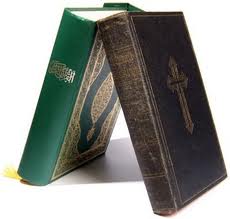
Many French voters agree. In fact, the issue of Muslim street prayers – and the broader question of the role of Islam in French society – has become a major issue ahead of the 2012 presidential elections. According to asurvey by Ifop for the France-Soir newspaper, nearly 40% of French voters agree with Len Pen's views that Muslim prayer in the streets resembles an occupation. Another opinion poll published by Le Parisien newspapershows that voters view Le Pen, who has criss-crossed the country arguing that France has been invaded by Muslims and betrayed by its elite, as the candidate best suited to deal with the growing problem of runaway Muslim immigration.
French President Nicolas Sarkozy, whose popularity was at 25% in July – worse than any predecessor less than a year ahead of a re-election bid, according to the TNS-Sofres polling group – has been spooked by Le Pen's advance in the opinion polls. He now seems determined not to allow Le Pen to monopolize the issue of Islam in France.
Sarkozy recently called Muslim prayers in the street "unacceptable" and said that the street cannot be allowed to become "an extension of the mosque." He also warned that the overflow of Muslim faithful on to the streets at prayer time when mosques are packed to capacity risks undermining the French secular tradition separating state and religion.
Interior Minister Claude Guéant on August 8 told Muslims who have been praying on the streets of Paris that they should utilize a disused barracks instead. "Praying in the street is something that is not acceptable," Guéant said. "It has to stop."
Meanwhile, France ushered in Ramadan by inaugurating a new mega-mosque for 2,000 worshipers inStrasbourg, where the Muslim population has reached 15%. Construction also continues apace of a new mega-mosque in Marseille, France's second-largest city where the Muslim population has reached 25% (or 250,000). The Grand Mosque – which at more than 8,300 square meters (92,000 square feet) will accommodate up to 7,000 worshippers in a vast prayer hall – is designed to be the biggest and most potent symbol of Islam's place in modern France.
Boubakeur, of the Grande Mosque of Paris, says the construction of even more mosques – paid for by French taxpayers – would ease the "pressure, frustration and the sense of injustice" felt by many French Muslims. "Open a mosque and you close a prison," says Boubakeur.
But Turkish Prime Minister Recep Tayyip Erdogan has implied that the construction of mosques and minarets actually is part of a strategy for the Islamization of Europe. Publicly repeating the words of a 1912 poem written by the Turkish nationalist poet Ziya Gökalp, Erdogan said: "The mosques are our barracks, the domes our helmets, the minarets our bayonets and the faithful our soldiers."
Reflecting on the retreat of Catholicism and the rise of Islam in France, Archbishop Giuseppe Bernardini, an Italian Franciscan who heads the Izmir archdiocese in Turkey, and who has lived in the Islamic world for more than 40 years, has recounted a conversation he once had with a Muslim leader, who told him: "Thanks to your democratic laws, we will invade you. Thanks to our religious laws, we will dominate you."
by Soeren Kern
hudson-ny.org
Subscribe to:
Posts (Atom)
Subscribe To


 Posts
All Comments
Posts
All Comments
Follow us by:


Copyright © Wild-Voice 2019 .All rights reserved
