Showing posts with label europa. Show all posts

Saturday, 4 July 2015

Criza din Grecia are baza biblica

Criza din Grecia a fost prezisă în Biblie. Uniunea Europeană a fost profetizată în Cartea Sfântă. Mai mult, imposibilitatea unirii tuturor statelor europene ar fi fost prezisă cu mai bine de 2500 de ani în urmă. Manuscrisele care cuprind şi profeţiile lui Daniel vorbesc despre un vis cu însemnătate istorică pe care profetul biblic Daniel l-a explicat. Este vorba despre o statuie reprezentând un împărat care are capul de aur, pieptul şi braţele din argint, pântecele şi coapsele de aramă, picioarele de fier, iar tălpile din fier şi lut.


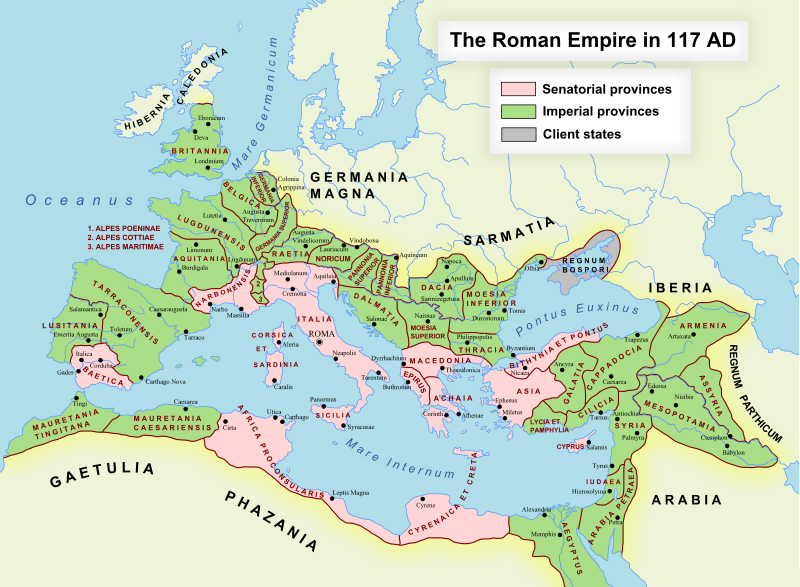
Teologii spun că părţile acestei statuete reprezintă perioade istorice şi imperii care s-au succedat de la acea dată până astăzi. Această explicaţie este găsită inclusiv în pasajele scripturistice. Astfel, conform teologilor capul de aur reprezintă perioada de domnie a imperiului Babilonian (605 - 539 î.Hr) cunoscut pentru bogăţia sa, pieptul şi braţele de argint simbolizează imperiul Medo-Persan (539 - 331 î. Hr.), iar pântecele şi coapsele de aramă vizează Grecia antică (331 - 168 î. Hr.). Aceasta a fost urmată de un imperiu de fier după cum erau şi picioarele din vis, imperiul Roman (168 î. Hr. 476 d. Hr.). 

"Viziunea din Daniel 2 este o profeţie apocaliptică cu un elemente instorice foarte clare care au loc începând din timpul profetului până la finalul istoriei. Explicaţia, găsită chiar în limbaj, timp şi loc marchează foarte clar o succesiune a evenimentelor care îl conduc pe cititor din timpul în care a trăit profetul Daniel până în zilele sfârşitului lumii. În Daniel 2, caracteristicile istorice sunt vizibile." scrie teologul John Paulien. 

Ultima parte a corpului, tălpile, sunt făcute dintr-o combinaţie de fier şi lut. Teologii spun că această ultimă împărăţie se referă la Uniunea Europeană. Asemenea lutului şi a fierului care încearcă să se unească şi nu reuşesc, tot astfel statele europene (multe teritorii aparţinând vechiului imperiu roman) încearcă astăzi să se unească, însă nu reuşesc. Mai mult, teologii sugerează că prezenta criză din Grecia este o dovadă a faptului că statele europene nu se vor putea uni după cum spune prezicerea biblică. 

"Şi degetele picioarelor, unele de fier şi altele de lut, înseamnă că regatul va fi parte tare, parte şubred. Şi după cum ai văzut fierul amestecat cu lutul, aşa se vor amesteca prin înrudiri, dar nu vor avea legătură temeinică între ele, după cum fierul nu se poate amesteca la un loc cu lutul." (Daniel 2, versetele 42-43)


"Toate teritoriile (fostului imperiu roman n.r.) nu se vor putea reuni. Dar Uniunea Europeană este doar parte din acest teritoriu. Unele dintre metodele de unificare a Europei au eşuat deja. În urma unei analize a istoriei regiunii şi a profeţiei, se pare că Dumnezeu a acţionat de fiecare dată pentru a distruge orice uniune semnificativă." scrie Laverna Patterson.

Grecia a intrat în incapacitate de plată a datoriei către FMI. Astfel riscă să iasă din Uniunea Europeană. 

Monday, 17 November 2014

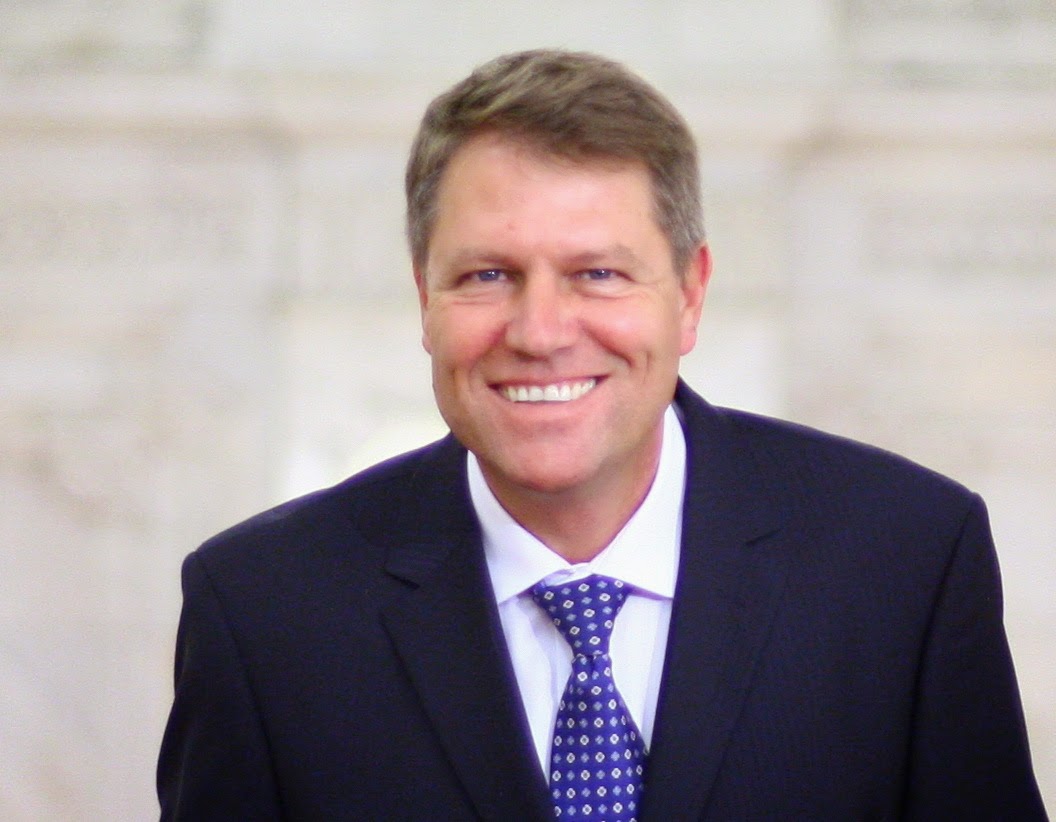
Germanizarea Romaniei - Klaus Presedinte / More on politics


Klaus Iohannis presedinte.
E un moment istoric dar sa-l intelegem corect.

Am vazut ieri si aseara ceva frumos, estetic. Am vazut o alta natiune, o alta mentalitate..un popor decis sa faca "the right thing to do", o forta a tineretului,  a online-ului si a diasporei.
In ziua de 16 noiembrie nu am fost doar romani..am fost mai mult de atat:  am fost un curent, un trend pozitiv, o revolutie civică a dreptății, un gand care a incojurat planeta cu un aer de patriotism si mandrie, de restituire a patriei mama la popor.

Sa fie de ajuns? Oare nu trebuia sa cerem mai mult? E laudabil ceea ce s-a intamplat in diaspora si am tot respectul pentru ei dar mi-e frica sa nu conteze din nou prea putin aceasta schimbare..sa nu ajungem din nou aici la viitoarele alegeri. Ni s-au pus in fata 2 rele: unul mai mic si altul mult mai rau. De ce nu am avut nici de data aceasta o varianta buna?

Am vazut o reeditate a alegerilor din 2004 respectiv 2009, cand oamenii împinși la extreme aveau de ales ca acum, intre raul cel mic si raul cel mare, intre un PSD corupt pana in maduva oaselor si un partid PD cu un aer de speranta, de noutate. Intre o baroniada si un partid frumos impodobit, cu aspiratii si idealuri apropiate romanilor. Schimbarea s-a facut, baronii au ramas.
Am vazut de asemenea, ca și-acum,  o Romanie rupta in doua si un vot decis de diaspora. O fi corect?
Atat in 2004 cat si in 2009 au votat peste 10 mil de romani. Asteptam schimbarea de la comunism încoace..la fiecare an electoral o tot asteptam.

Am crezut cu tarie multi dintre noi într-un Basescu care sa reaseze tara din nou pe sine. Am crezut într-un guvern Tarceanu, într-un guvern Boc...am vrut cu tot dinadinsul sa credem ca nu am votat de formalitate, ca nu facem pseudorevolutii, ca nu suntem manipulati, ca nu e doar o schimbare de stafeta si ca nu isi impart din nou doar intre ei ciolanul si vor arunca si plebei câte o bucatica de carne mai grasa.
Spunea împăratul Solomon in eclesiasul 2: "Căci ce va face omul care va veni după împărat? Ceeace s’a făcut și mai înainte."

In 2014 ni s-a dat de ales intre doua personaje arhicomice: Santa Klaus si Mickey Mouse.
Stim ca Mickey Mouse fura constant branzica de la buget si o imparte tovarasilor lui rontaitori. Dar sa nu uitam cine este si Santa Claus: un bărbat grăsuț, cu barbă, îmbrăcat într-o haină lungă, verde și guler de blana, care imparte alaturi de "spiridusii" lui "cadouri " noaptea. Moș Crăciun a fost asemănat cu Odin, un zeu important la popoarele germanice. Originea lui Santa Claus este de fapt una pagana : ziua de Craciun a fost suprapusa cu ziua in care se celebrau Saturnaliile romane; abia după trei secole de la apariția creștinismului, a început să se serbeze nașterea lui Isus.
!Sinterklaas (versiunea olandeză a Sfântului Nicolae) era îmbrăcat cu haine bisericești și se urca pe acoperișurile caselor, trimițându-le acestora cadouri prin horn.
Deci una peste alta e o comparație nefericita zic eu.

NU, nu am votat nici cu mickey mouse,  nici cu santa klaus. Pana cand sa tot alegem raul cel mai mic? Pana cand sa iesim in strada pentru un simplu drept fundamental? Oare astea sunt aspiratiile noastre? Atat ne dorim doar  sa il dam jos pe unul sau pe altul, sau sa il împiedicăm pe unul si să-l ridicam pe celalalt?  Oare problema e omul sau sistemul? Strigam si noi "capul lui Motoc vrem" pentru ca ne e mai la indemana si lasam sistemul sa perpetueze. Protestele si manifestatiile (desi nesustinute biblic)  reprezinta un pilon al democratiei sec.21 dar aduc putine beneficii pentru tara.

Eu unul nu mai vreau vot anti: anti-ponta, anti-basescu, anti-psd. Vreau un vot pro, in care sa se poata regasi orice cetatean care are un simt civic. Oare cat mai avem pana acolo? :). Era timp sa iasa la suprafata variante mai bune dar atat timp cat vom fi manipulati atat de mass-media, cat mai nou, mai ales de Institutiile Bisericesti, nu va fi un vot real, o alegera libera si nici o democrație moderna.
S-a ales o Romanie a lucrului bine facut. Doamne ajuta si sa nu fie doar un slogan gen : " Sa traiti bine!",  ca prea seamana ;). Pe cat de marsava a fost aceasta campanie din 2014, pe atat de lipsita de orizont.
Fara dezbateri reale, fara teme concrete, fara un plan de idei, fara o ideologie noua in afara de a-l arata pe adversar cu degetul nu cred ca poate veni progresul asteptat. E drept ca faptele conteaza mai mult ca vorbele si sa speram ca vor fi macar fapte in cei 5 ani de mandat.

Cei doi contracandidați stateau ca 2 papusi cu sfori, manuite, cu o iscusinta mai mica sau mai mare, de niste papusari de undeva de sus din umbra: una guraliva, una ironica.
Urmeaza sa descoperim papusarii.
PS: Sintagma "nu pot ei fura cat putem noi vota" se pare ca sta in picioare ( daca excludem intrebarea : cine pe cine fura).  Acuma am strigat Jos Basescu si Ponta...oare in 2019 ce vom striga? Just saying ✌


!Ca o subpostare/ tema secundara as vrea sa mai tratez aici un subiect:
Vreau sa fac o paralela (putin cam deplasata stiu) cu situatia care a fost in Ucraina si care nu e gata inca.
Campania electorala din 2014 a fost , asa cum susțin toti, una din cele mai mizerabile campanii, in care un rol important l-a jucat si Biserica.  Au fost acuze de-o parte si de alta referitoare la religia candidatilor la presedentie, dar mai mult, Biserica Ortodoxa s-a implicat extrem de mult in aceasta campanie..si se pare ca a avut si motive.

Am mai spus-o si cu alte ocazii ca toata tensiunea din Ucraina a fost bazata de fapt in principal pe religie, pe conflictul dintre Biserica Ortodoxa (Rusia)  pe de-o parte si Biserica Romano-Catolica (Europa) de cealalata parte. Ucraina incearca sa se rupa de tot de Rusia si sa treacă de partea "Europei Unite". Biserica Catolica isi cheama toate fiicele inapoi iar asta include si protestanții. Din catolicism au iesit toate sectele si religie, pentru ca Dumnezeu nu are o religie. Isus sau apostolii nu au intemeiat nici un cult. EL ne-a dat doar dreptul sa ne numim copii ai lui D-zeu si sa fim crestini (de la Cristos); nu ortodox, baptist, catolic etc ci creștin.

Ei bine ceva asemanator se poate pune in discutie si in cazul nostru de fata: aveam de ales intre un Victor Ponta (ortodox)  care favoriza apropierea de Rusia si un Klaus Iohannis (protestant)  care va apropia tara si mai mult de Europa (in mare parte catolica si ramasita a Imperiului Roman care se reintareste tot mai mult).
Germania a fost si este puterea executiva a Bisericii Catolice si a Imperiului Roman (sub Europa Unita azi) supusa Papei de la Roma. De altfel tocmai acesta a fost si motivul ruperii in doua a Germaniei in Germania de vest si cea de est..pentru ca o Germanie Unita prezenta un pericol prea mare pentru orice putere si nu vroiau o reeditare a ceea ce a facut nazismul.

Uitam de Holocaust si de toate atrocitățile facute de naziști? Vom zice ca Germania de azi nu mai e Germania de atunci, dar exista si azi ofiteri, supravietuitori din vremea Holocaustului care au participat la acele evenimente si spun si acum ca nu regreta ceea ce au facut atunci. Mai mult tot mai putina lume recunoaste existenta Holocaustului spunand ca e o inventie a evreilor. 
O fi o alta Germanie, un alt neam dar radacinile exista la fel cum nici noi nu am scapat de tot de comunism.
Ca vom avea si noi un rol in toate aceste permutari mondiale e mai putin important dar exista o tendință evidenta de rupere fata de Rusia si apropierea de Europa inclusiv a tarilor aliate ale Rusiei.

Sincer cred ca e un vot bun cel rezultat in Romania dar parca nu as vrea o Angela Merkel sa se perinde pe la Bucuresti. Germania a fost singura tara pe plus inclusiv in perioada crizei economice. Sigur ca vom zice :au fost reforme, regim de austeritate etc sau ca avem ce invata de la ei. Dar e evident ca America are un rol tot mai mic in politica mondiala si ca Germania (prin organismul Uniunea Europeana) isi impune tot mai intens punctul de vedere.

Cu toate acestea, in timp ce Europa se întărește in zona ei, Imparatul Nordului aduna si el adepti si face aliante cu tarile arabe, Iran, China, Tarile Latine etc. Rusia, desi multi o vad lipsita de putere si amenintand doar cu vorbe goale, va avea un rol important in evenimentele viitoare.

Nici Klaus nici Ponta nu reprezentau solutia cea buna pentru Romania. In conditii normale Ponta era fara doar si poate castigator al acestor alegeri...avea sprijinul multor presedinti si premieri din Europa,  iar in campanie a fost net superior lui Iohannis care practic n-a contat. In schimb pentru Iohannis și-a aratat un sprijin (mai tacit) doar Angela Merkel. 

Accept votul ca ceva pozitiv dar sa nu ne închipuim ca știm jocurile de culise si ca am castigat razboiul cu sistemul. Romanii au dat dovada de curaj si solidaritate.  Dar inclusiv in diaspora situatia e într-o zona gri in ce priveste transparenta: unii spuneau ca se vota normal, altii faceau scandal. O certitudine stim ca multi romani au fost in "excursie " sa voteze acolo, dar ca i-a trimis iohannis, ponta sau au mers din proprie inițiativă asta nu vom putea sti. Stiu situatii concrete de astfel de traseism. S-a votat de 4 ori mai mult in majoritatea tarilor in diaspora dar putine lucruri au fost îmbunătățite fata de turul 1. Deci se putea vota mai mult si in primul tur dar am venit cu prejudecățile si neincrederea din alti ani.

Avem o victorie, o unitate anti-ponta dar si o tara rupta in doua. Nu sunt si nu am fost nici pro iohannis nici pro ponta dar nici nu pot sa exult prea tare in urma rezultatului pentru ca lucrurile oricum nu merg in direcția cea buna. Prea mult bine nu putem astepta.
Acum, noua realitatea se scrie de aici incolo. Sa speram ca nu vom ajunge sa strigam si Jos Iohannis pentru ca ar fi cu adevarat un context trist.
God bless Romania!

Saturday, 25 October 2014

Ursul rusesc mormaie.| The Raging Bear

Ursul rusesc nu are nevoie de permisiunea nimanui. Un urs este puternic. El nu vrea cucerirea altor teritorii dar nici nu-si va ceda propriile interese. Fiara răcnește tot mai tare. Vremurile sunt aproape...the bible times. The end of the ending time is near.

Wednesday, 21 May 2014

Insights into Ukraine's Political Crisis| Adevarul despre interesele Rusiei

[RO] Toata lumea se asteapta ca Rusia sa fie oprita din drumul ei dar putini stiu ca acest lucru nu se va intampla.
Dimpotriva America va fi cea care va slabi si va fi redusa oarecum la tacere. Rusia sprijinita de tarile arabe, India si iata..China, va produce "mari neplaceri Americii". Cine va profita de aceste lucruri? Uniunea Europeana va fi cea care va castiga din tot acest conflict chiar daca la prima vedere nu ar parea posibil. UE nu e altceva decat Imperiul Roman refacut. De ce sustin tarile arabe o tara ca Rusia, dincolo de înțelegererile si acordurile dintre tari? Pentru ca singurul obstacol intre ei si Israel este America, sustinatorul militar si financiar nr.1 al evreilor.
Asa ca Rusia are planuri mai mari decat Ucraina si cei care se intreaba de ce nu face nimeni nimic impotriva Rusiei..se intreaba degeaba.

[EN] Even if many of you expects that Russia will eventually be stopped that won't happen very soon.
Russia will make alliances with the arab world, India and China and together they will weaken US's power.
The reason for all this is Israel: US is Israel's nr.1 allied. The US will be forced to no longer support Israel. Who will benefit from all this? Well first of all the arabs and Palestinians and second the European Union witch is nothing else than the Roman Empire rebuilt.

So I'm telling you one thing..Russia won't be stopped too soon and this whole situation is bigger than Ukraine's crisis.

Russia, China sign 'gas deal of the century…: 

Saturday, 8 October 2011

Pax Romana si Reconstructia Imperiului Roman


“Statele Unite ale Europei” – o idee veche cât Europa

Preşedintele Traian Băsescu a surprins multă lume din România atunci când a vorbit despre Statele Unite ale Europei. În realitate, ideea este veche. Mai veche decât România modernă sau chiar decât bisericile pictate din nordul Moldovei.
Oficial, istoria Uniunii Europene începe cu Tratatul de la Roma din 1957. Semnatarii acestuia, şefii de guverne din Franţa, Germania Federală, Italia, Belgia, Olanda şi Luxemburg sunt astăzi numiţi "părinţi fondatori". Puteţi vedea busturile lor - dacă nu s-or fi degradat cu totul - într-un scuar din Parcul Herăstrău din Bucureşti.
Dar ideea unei uniuni europene ( cu "U" mic) este chiar mai veche decât Statele Unite ale Americii.
Există însă o deosebire: dacă proiectul american a fost mai curând unul liberal şi civic, proiectul european s-a concentrat îndeosebi pe asigurarea păcii. Un deziderat milenar, pe care Europa l-a atins - parţial, dacă luăm în considerare războaiele din fosta Iugoslavie - de-abia în ultimii 65 de ani.
De fapt, ideea federală europeană nu este deloc nouă, ea este la fel de veche ca şi pietrele pe care le putem vedea astăzi în cetăţile greceşti. Platon a fost primul gânditor care a susţinut ideea păcii prin organizarea de confederaţii. În acea vreme, cetăţile grecesti dispuneau de instituţii religioase şi politice comune, care soluţionau diferenţele dintre cetăţi - Consiliul Amfitrionilor, un embrion al Consiliului European de azi.
În epoca romană, ideea păcii europene, Pax Romana, avea în vedere unificarea întregii Europe, dar sub dominaţia romană.
Apoi, una dintre ideile fundamentale ale creştinismului a constituit-o unitatea lumii creştine, bazată pe ideea universalismului creştin.
Unitatea europeană, în cadrul "nucleului dur" franco-german, a fost realizată pentru scurt timp sub Carol cel Mare (742/748 - 814). Cei care ajung în oraşul german Aachen, situat nu departe de graniţele ( azi, formale) cu Belgia şi Olanda, pot vedea minutata catedrală ctitorită de Carol cel Mare, unde este şi înmormântat.
În evul mediu au apărut, în diverse perioade, tot felul de idei legate de unitatea europeană, ca soluţie pentru asigurarea păcii pe frământatul continent.
Marele poet italian Dante Aligheri, în „De monarhia", (1303), preconiza o soluţie de tip federalist a Europei.Dar şi numeroşi monarhi europeni luminaţi erau animaţi de aceleaşi idei ale unei federaţii europene.
În perioada modernă, J. J. Rousseau vedea o „republică europeană", ca o cale pentru asigurarea păcii şi emanciparea popoarelor.
Napoleon I a pus campania sa e cuceriri tot sub semnul unităţii europene. „În curând, în Europa se va forma cu adevarat un singur popor si fiecare, oriunde ar calatori, s-ar gasi tot timpul în patria comună", spunea el.
Filosoful german Immanuel Kant lansează, primul, în 1785, ideea unei „Societăţi a Naţiunilor" pe baza unui „Stat de Drept" internaţional.
După primul război mondial, constituirea, la Geneva, a Societăţii Naţiunilor - al căerei preşedinte a fost, în două rânduri, strălucitul diplomat român Nicolae Titulescu - a marcat un prim pas important spre ideea europeană.
Şi gânditori romantici români, precum Nicolae Balcescu , Ion Ghica, Dumitru Brătianu , C. A. Rosseti, au susţinut la rândul lor aceaşi idée europeană.
La Congresului pacifist de la Paris din 1849, Victor Hugo a rostit celebrele cuvinte: „Va veni ziua când armele vor cadea din mâini si bombele tunurilor vor fi înlocuite cu cuvântul si cu dreptul de vot universal al popoarelor ... Şi va veni ziua când vom vedea două grupări uriaşe: Statele Unite ale Europei şi Statele Unite ale Americii dându-şi mâna prieteneasca peste ocean...".
La 7 septembrie 1929, la Geneva, în cadrul Societăţii Naţiunilor, primul ministru francez Aristide Briand a propus Adunarii generale să creeze nimic mai ăuţin decât o uniune federală europeană.Dar răspunsurile guvernelor au fost prudente, chiar negative.
Spre sfârşitul celul de-al doilea război mondial, Winston Churchill îi adreseaza ministrului de externe Anthony Eden un memorandum asupra „Statelor Unite ale Europei". Cu prilejul unei conferinte la Universitatea din Zürich, pe 19 septembrie 1946, Churchill propunea constituirea unor State Unite ale Europei, spunând: „Noi trebuie sa creăm ceva de genul Statelor Unite ale Europei. Primul pas este formarea unui Consiliu al Europei. Daca la început nu toate statele Europei vor să intre în Uniune, trebuie ca noi sa lucrăm pentru a alătura şi uni acele state care o doresc şi o vor."
Peste puţin mai mult de un deceniu, liderii a şase state europene puneau, la Roma, bazele Uniunii Europene de astăzi. Ce s-a întâmplat între timp, cunoaştem. Viitorul depinde de felul în care Europa va şti să răspundă actualei crize. 
www.adevarul.ro


Wednesday, 28 September 2011

Al patrulea Reich [ external source ]


Grecia, lipsită de suveranitate. Ce urmăresc nemții


Într-un interviu acordat presei locale, Angela Merkel a declarat că este necesar un drept de intervenţie şi sancţionare în cazul ţărilor ce nu respectă prevederile pactului de stabilitate. Aceasta nu exclude renunţarea parţială la suveranitate, mai scrie Deutsche Welle, care face trimitere directă la Grecia, prima pe lista statelor care ar putea fi “sancționate” prin restrângerea suveranității.
Dacă problema datoriilor a început să se pună în termenii aceștia și dacă negocierile pentru un nou împrumut se poartă în cheia unor condiții de acest gen, atunci este mai urâtă și mai gravă decât imaginea de până acum, în care un stat afundat în datorii are în continuare nevoie de bani, iar băncile din zona euro au expunere mare pe datoria respectivă. Vorbim despre un principiu fundamental pe care se construiește un stat. 

Există mai multe semne de întrebare ce însoțesc acest aspect al lipsirii de suveranitate: Mai întâi, cine ar lua decizia ca unui stat european să-i fie restrânsă suveranitatea? Nemții? Francezii? Se va decide la Bruxelles? FMI?


Până să se gândească la sancțiuni de genul acesta, Merkel ar trebui să-și dea seama că din punct de vedere "tehnic" şi chiar la nivel constituţional este imposibil să restrângi suveranitatea.
Un scenariu probabil: Sunt șanse ca restrângerea suveranității să reprezinte preluarea autorității de privatizare a activelor statului. Astfel, cel mai probabil, organismul care se va ocupa de procesele de privatizare nu va fi constrolat de greci ci de „nașul” care a dat banii și care a cerut restrângerea suveranității, în cazul nostru Germania. Ce garanție vor avea grecii că privatizările şi vânzarea unor active vor fi realizate corect și transparent și că nemții nu-și vor trage o serie de contracte favorabile care să le asigure posesia unor active atractive deținute inițial de greci? Niciuna...Mai pe scurt, dacă privatizările vor fi controlate de afară, vom putea vorbi de cumpărarea, la propriu, a Greciei.


Concluzia este că restrângerea suveranității este un preț mult prea mare pe care grecii ar trebui să-l plătească pentru un nou ajutor financiar.  Sunt de acord că grecii nu ar trebui să ia bani în mod gratuit  și să își facă un mod de viață din a trăi pe spatele creditorilor, însă restrângerea suveranității este totuși prea mult. Și ca să citez un forumist de pe site-ul capital.ro, am putea vorbi despre un al patrulea Reich, dacă nemții ar obține restrângerea suveranității? Poate constitui o temă de gândire.

Valentin Vioreanu | capital.ro

Thursday, 18 August 2011

Islam Overtaking Catholicism in France [ external source ]


Islamic mosques are being built more often in France than Roman Catholic churches, and there now are more practising Muslims in the country than practising Catholics.
Nearly 150 new mosques currently are under construction in France, home to the biggest Muslim community in Europe. The mosque-building projects are at various stages of completion, according to Mohammed Moussaoui, the president of the Muslim Council of France (CFCM), who provided the data in an August 2 interview with theFrench radio station RTL.
The total number of mosques in France has already doubled to more than 2,000 during just the past ten years, according to a research report "Constructing Mosques: The Governance of Islam in France and the Netherlands." France's most prominent Muslim leader, Dalil Boubakeur, who is rector of the Grand Mosque of Paris, recently called for the number of mosques in the country to be doubled again – to 4,000 – to meet growing demand.
By contrast, the Roman Catholic Church in France has built only 20 new churches during the past decade, and has formally closed more than 60 churches, many of which are destined to become mosques, according toresearch conducted by La Croix, a Roman Catholic daily newspaper based in Paris.
Although 64% of the French population (or 41.6 million of France's 65 million inhabitants) identifies itself as Roman Catholic, only 4.5% (or 1.9 million) of those actually are practising Catholics, according to the French Institute of Public Opinion (or Ifop, as it is usually called).
By way of comparison, 75% (or 4.5 million) of the estimated 6 million mostly ethnic North African and sub-Saharan Muslims in France identify themselves as "believers" and 41% (or 2.5 million) say they are "practising" Muslims, according to an in-depth research report on Islam in France published by Ifop on August 1. The report also says that more than 70% of the Muslims in France say they will be observing the Islamic holy month of Ramadan in 2011.
Taken together, the research data provides empirical evidence that Islam is well on its way to overtaking Roman Catholicism as the dominant religion in France.
As their numbers grow, Muslims in France are becoming far more assertive than ever before. A case in point: Muslim groups in France are now asking the Roman Catholic Church for permission to use its empty churches as a way to solve the traffic problems caused by thousands of Muslims who pray in the streets.
In a March 11 communiqué addressed to the Church of France, the National Federation of the Great Mosque of Paris, the Council of Democratic Muslims of France and a Muslim activist group called Collectif Banlieues Respect called on the Catholic Church – in a spirit of inter-religious solidarity, of course – to make its empty churches available to Muslims for Friday prayers, so that Muslims do not have to "pray in the streets" and be "held hostage to politics."
Every Friday, thousands of Muslims in Paris and other French cities close off streets and sidewalks (and by extension, close down local businesses and trap non-Muslim residents in their homes and offices) to accommodate overflowing crowds for midday prayers. Some mosques have also begun broadcasting sermons and chants of "Allah Akbar" via loudspeakers in the streets.
The weekly spectacles, which have been documented by dozens of videos posted on Youtube.com (herehere,herehereherehereherehere and here), have provoked anger and disbelief. But despite many public complaints, local authorities have declined to intervene because they are afraid of sparking riots.
The issue of illegal street prayers was catapulted to the top of the national political agenda in France in December 2010, when Marine Le Pen, the charismatic new leader of the far-right National Front party, denounced them as an "occupation without tanks or soldiers."
During a gathering in the east central French city of Lyon on December 10, Le Pen compared Muslims praying in the streets to Nazi occupation. She said: "For those who want to talk a lot about World War II, if it is about occupation, then we could also talk about it [Muslim prayers in the streets], because that is occupation of territory. It is an occupation of sections of the territory, of districts in which religious laws apply. It is an occupation. There are of course no tanks, there are no soldiers but it is nevertheless an occupation and it weighs heavily on local residents."
Many French voters agree. In fact, the issue of Muslim street prayers – and the broader question of the role of Islam in French society – has become a major issue ahead of the 2012 presidential elections. According to asurvey by Ifop for the France-Soir newspaper, nearly 40% of French voters agree with Len Pen's views that Muslim prayer in the streets resembles an occupation. Another opinion poll published by Le Parisien newspapershows that voters view Le Pen, who has criss-crossed the country arguing that France has been invaded by Muslims and betrayed by its elite, as the candidate best suited to deal with the growing problem of runaway Muslim immigration.
French President Nicolas Sarkozy, whose popularity was at 25% in July – worse than any predecessor less than a year ahead of a re-election bid, according to the TNS-Sofres polling group – has been spooked by Le Pen's advance in the opinion polls. He now seems determined not to allow Le Pen to monopolize the issue of Islam in France.
Sarkozy recently called Muslim prayers in the street "unacceptable" and said that the street cannot be allowed to become "an extension of the mosque." He also warned that the overflow of Muslim faithful on to the streets at prayer time when mosques are packed to capacity risks undermining the French secular tradition separating state and religion.
Interior Minister Claude Guéant on August 8 told Muslims who have been praying on the streets of Paris that they should utilize a disused barracks instead. "Praying in the street is something that is not acceptable," Guéant said. "It has to stop."
Meanwhile, France ushered in Ramadan by inaugurating a new mega-mosque for 2,000 worshipers inStrasbourg, where the Muslim population has reached 15%. Construction also continues apace of a new mega-mosque in Marseille, France's second-largest city where the Muslim population has reached 25% (or 250,000). The Grand Mosque – which at more than 8,300 square meters (92,000 square feet) will accommodate up to 7,000 worshippers in a vast prayer hall – is designed to be the biggest and most potent symbol of Islam's place in modern France.
Boubakeur, of the Grande Mosque of Paris, says the construction of even more mosques – paid for by French taxpayers – would ease the "pressure, frustration and the sense of injustice" felt by many French Muslims. "Open a mosque and you close a prison," says Boubakeur.
But Turkish Prime Minister Recep Tayyip Erdogan has implied that the construction of mosques and minarets actually is part of a strategy for the Islamization of Europe. Publicly repeating the words of a 1912 poem written by the Turkish nationalist poet Ziya Gökalp, Erdogan said: "The mosques are our barracks, the domes our helmets, the minarets our bayonets and the faithful our soldiers."
Reflecting on the retreat of Catholicism and the rise of Islam in France, Archbishop Giuseppe Bernardini, an Italian Franciscan who heads the Izmir archdiocese in Turkey, and who has lived in the Islamic world for more than 40 years, has recounted a conversation he once had with a Muslim leader, who told him: "Thanks to your democratic laws, we will invade you. Thanks to our religious laws, we will dominate you."

by Soeren Kern
hudson-ny.org

Monday, 8 August 2011

Mahmoud Ahmadinejad exclusive interview with Euronews


Iranian President Mahmoud Ahmadinajad is facing political isolation amid a brutal struggle for power in Iran. His prospects for a third term in office are uncertain as the country is crippled by international sanctions, accused of relentless human rights abuses and threatened by the regime’s nuclear ambitions. In an exclusive interview with euronews, the president took a more moderate tone, speaking about a wide range of issues including the trial of Egypt’s former president Hosni Mubarak, and Iran’s relationship with Europe.
Jon Davies, euronews: Mr president can I start with some compelling images which we saw today on Iranian TV, on TV throughout the Middle East and throughout the world. We saw former Egyptian president Hosni Mubarak, on a stretcher in a cage being accused of corruption and mass murder. What were your thoughts when you watched those pictures?
Mahmoud Ahmadinejad: I should express regret that some leaders have such a tarnished relationship with their people that they get to this point. We should express regret for the management of some nations. In order to achieve a certain level of freedom, they have to ask for the trial of their leaders. I hope that world management would revise in a manner, that world leaders will come from among people and will work for the people along with the people. We hope that there will be no clashes or fights among the people.
en: Syria is another example. Mr President. We’re seeing an ongoing uprising there as we’ve seen in many other countries in the Middle East – an ongoing and very bloody uprising too. Do you think that President Assad is handling the situation there well?
MA: “We believe that the nations have a right to have freedom; they should be free to make their choice and to live with justice. At the same time, we believe that if others would not interfere, the nations in the Middle East would be able to solve their own problems. Many of the problems that we witness today and we are used to witnessing in the past have been due to the interference of others. If there are problems in certain places, then we should try to seek the roots in past intervention in past interferences.”
en: You say that people have the right to challenge their government and we saw it here in Iran two years ago in 2009. Do you think that what we’ve seen elsewhere in the Middle East might happen here in Iran too or are you confident that everything is stable here?
MA: “What happened in Iran is not similar to what happens in other countries. A completely free election was held in Iran. It was the most free election in the world. More than 85 per cent of the people took part in the election. 40 million people voted, all those 40 millions are Iranian nationals living together. However, attacking buildings, people and cars is forbidden in all countries. It’s natural that the police and the judiciary would get involved.”
en: Yes there was an election, you’ve said that just now. Their dissatisfaction was with the result and they wanted to express their dissatisfaction with the result and didn’t they have the right to do that and continue to do that?
MA: “Yes according to our laws there are legal ways to express objection and there are legal authorities that see to complaints in the course of elections. We see that there are demonstrations in Europe as well, and we see that the police act very harshly. Those who express their views about the basic European issues are imprisoned. For example,
the issues of the regions in the world today are all based on what happened in the Second World War. Are people allowed to write the truth and the realities of the Second World War? Or can they take any measures against the prevalent systems? I’m sure they can’t, but in Iran people express their objections through legal channels and their complaints are seen to. However some scientists are now in prison for the expressing their historical views.
en: Ok, that’s a completely different line of questioning. You asked earlier on, does the opposition in Europe ever manage to topple a government? Well, just about this time last year in the UK, the Leader of the Opposition, David Cameron, did topple the government in an election and became leader. So that’s an answer to the question that you put before. If I can move on Mr President…
MA: “They are not the opposition. The opposition were those who were beaten up in the streets of London. The students who were beaten up and had bloody faces. Who listens to their statements in Europe? In Greece, Spain, Italy, who listens to people’s statements or words? There is no one there listening to them. Accept my word.
en: I’m sorry could you clarify that. The situation in Europe is much worse or the situation in Iran in 2009 is much worse?
MA: I’m just trying to explain. That is true. In Europe, the majority of the people are being fined for issues that they had no role in. The people do not determine political policies, economic policies. People don’t have any role in the economic profit-making, but they’re paying the price for it. When they object, they are beaten up, this is really bad. The people in Europe did not break telephone boxes, they just made very simple objections. I think that we should try to find the root of the problem and solve it.
en: It’s true what you say, there are a lot of people paying the price for the faults of others in Europe and the United States. I wonder if the same could be said for the people of Iran who are paying the price in their ordinary everyday lives for the imposition of sanctions on Iran which were made last year? The trade embargo, the distant foreign relations that you have with many countries outside Iran? I’m not saying all, but many. Isn’t it the ordinary people of Iran who are paying the price here in their ordinary everyday lives?
MA” Ahmadinejad: Yes, that’s the true. The Iranian people are paying the price for the erroneous policies of European leaders.
en: Not you Mr President?
MA: “These are the erroneous policies of the European leaders. We haven’t done anything wrong. It’s been 30 years now that some European leaders have been against us. Why are they truly against us? Is it because we’re free? Because we have democracy? Because we have ousted one their European friends – the former Shah? Because we are against some of the expansionist policies of some European countries? Take a look at Afghanistan and Iraq – what were their faults? I think that the policy pursued by some of the European leaders has caused problems for some European nations, as well as other nations.
en: Domestically, what’s your position now for the second half of your second term as president? Are you in a strong position here in Iran?
MA: “We’re doing our duty. We’re using every minute to serve the people.”
en: “There’s a gap growing though, isn’t there, between yourself and the parliament? It’s being seen from outside Iran. There’s a gap growing between yourself and the Supreme Leader. Does this weaken your position?
MA: “I think in a free society such things happen. There should always be discussions between parliament and the government. Is it bad to have a free government and a free parliament? The position of the leader is also clear in Iran. There are no differences. We’re a free siociety in which everyone can express his or her views. There’s no problem there. Do you realise that the parliament voted for four new ministers today? And they were all voted for by high numbers, so there is freedom in this country.
en: Is there freedom for Mirhossein Moussavi who is under house arrest? Is there freedom for Mehdi Karoubi who’s under house arrest? Do they have the freedom to express their opposition? It’s evident that they are opposed to you, but do they have the fredom to do that from their prison cell or their guarded house?
MA: “There are prisoners in all countries. Are there no prisoners in the UK?”
en: Yes Mr President, but I’m talking about the prisons and jails in this country and the ones where Mr Moussavi and Mr Karoubi are staying.
MA: “There are prisons everywhere. There are problems with the judiciary. The juduciary in Iran is independent. I don’t have the right to interfere in what judges decide. There are certain laws according to which people can interact with the judiciary. If you’re asking my personal view, I wish and I hope that there will be not even one single prisoner in the world.
en: Including here in Iran ?
MA: “In all parts of the world. In Abu Ghraib. In all hidden the prisons in Europe.”
en: What will you do Mr President, what efforts will you make, to make sure that wish that you desire for begins here in Iran with people who are in prison simply for expressing their views, which can be done in any democratic country in the world?
MA: “Nobody is in prison just for expressing their views. Under our law people are allowed to express their views. You may stay in Iran for one week and read the newspapers. The most radical criticism against the president can be seen and read in the newspapers. There are various poeple who criticise the president, without any fear. So freedom is at its highest level in Iran. I don’t want to say that we are at the ideal point, but we are much better than many other European countries. There are some common problems which can be seen all around the world. No one can claim that they’re at the most ideal point when it comes to justice. Injustice is a general issue around the world. We’re among the best in terms of justice.
en: Are you prepared to extend the same hand of friendship in the near future to the United States – a country with whom you’ve had no proper diplomatic relationship for 30 years? Also, let’s not forget a country which is the biggest economy in the world and which could well benefit the state of Iran. Is there any chance you’re going to extend the hand of friendship there any time soon?
MA: “We believe that there should be friendly relationships at the international level and that’s the basic principle. But the Americans and their administration is confused. It doesn’t know what to do. It doesn’t follow clear policies. They stopped their relationship with us. The Americans thought that if they stopped their relationship with Iran we would be destroyed. 31 years have passed since then and we’re still sitting here.”
en: With respect Mr President, with regard to the nuclear issue, which worries not only the United States, when you say one thing and appear to do something different, it doesn’t exactly engender the conditions for anybody to become more friendly and extend that hand of peace.
MA: Why? What have we done wrong?
en: Well specifically in terms of the nuclear program, you say – and I have no reason to disbelieve you….
MA: “Is nuclear activity forbidden?”
en: I’m not even saying they’re prohibited. Let me explain. Your stated aim is that your nuclear program is for peaceful means, to produce electricity and energy, and I challenge anybody to argue with that as a peaceful goal. However, there is the belief among scientists in the West, outside Iran, that you are in fact enriching uranium to such a level – 20 per cent specifically – that there’s no connection at all with peaceful production of energy for the use of a peaceful people. So what we have is that, on one hand, you are saying something in public, that you want to use it for peaceful means. On the other hand, you appear to be doing something that only has one objective, and that is to work towards a bomb.
MA: “You ask a very good question. I just felt you were very sincere in your question. Allow me to explain. Firstly, those who claim that we are moving towards military activities are not western scientists, they are western politicians. So if you put this into the context of the western hostility towards Iran…
When we say we don’t have any intention to build a bomb, we’re honest and sincere. We believe that today if someone wants to build a bomb he’s crazy and insane. This is for two reasons. One is that those who have bombs are in graver danger than those who don’t. The bombs that exist in Germany, in Belgium, in Italy and other European countries cause a great threat to all European countries. An atomic bomb is against all humans. Second, the nuclear bomb is useless and ineffective. The Zionist regime has nuclear bombs. At the same time, did it succeed in its war against the Gazans? Did its nuclear bomb give it victory in the 33 Day War against Lebanon? Were the former Soviet Union’s nuclear bombs able to save the Soviet Union from collapse?
Nuclear bombs were used 60 years ago in order to provide an upper hand in political equations, but today they have no value. Thought has value, public opinion has value, human beings have value. We believe that in the future no one will ever be able to use nuclear bombs. We believe that’s the end of the story.”
Copyright © 2011 euronews

Tuesday, 2 November 2010

Viziunea 7000 - E. Frank [e-book]

[...] În această broşură vrem să prezentăm pe scurt evenimentele actuale în lumina profeţiei biblice. Sunt aproximativ 6000 de ani de când primii oameni au văzut pentru prima dată lumina acestei lumi. Socotit în mare, de la Adam până la Avraam au trecut 2000 de ani, de la Avraam până la Hristos 2000 de ani, şi de la naşterea lui Hristos, începutul socotirii timpului nostru, tot 2000 de ani. Pe bună dreptate ne întrebăm dacă trecerea nu doar într-un alt secol, ci şi într-alt mileniu, nu va aduce ceva extraordinar şi în istoria omenirii.
Speculaţiile asupra acestui timp s-au înmulţit de la intrarea în noul mileniu. Experţii prevăd un tablou obscur pentru viitorul apropiat, în special în ceea ce priveşte Orientul Mijlociu. Da, există chiar unii, ca acel deputat al congresului din S.U.A., care a declarat că noi suntem poate prima generaţie care trebuie să se teamă că va fi ultima din civilizaţia prezentă. Se vorbeşte deschis despre escatologie şi despre infernul apocaliptic, care ar putea să izbucnească în scurt timp peste pământ. Evident, şi opinia publică este îngrijorată de ceea ce se va întâmpla în viitorul apropiat. Depindem noi de văzători în privinţa acestor teme aşa de importante? Trebuie să-i consultăm pe filozofi şi să-i interpretăm? Sau poate să-i vizităm pe ghicitori şi astrologi? Trebuie să ne întoarcem la Nostradamus sau la alţi auto-intitulaţi „ profeţi ” ca să găsim sfaturi şi să le explicăm predicţiile? Sau putem găsi răspunsuri adevărate şi sigure la toate aceste întrebări în Sfânta Scriptură? Da, cu siguranţă, căci este scris: „ avem Cuvântul proorociei făcut şi mai tare; la care bine faceţi că luaţi aminte, ca la o lumină care străluceşte într-un loc întunecos, până se va crăpa de ziuă şi va răsări luceafărul de dimineaţă în inimile voastre. ” (2 Petru 1:19).
O informare actuală din Sfânta Scriptură este necesară şi ar trebui să fie binevenită pentru fiecare om care vrea să afle sincer şi deschis despre lucrurile care se întâmplă acum. Dumnezeu, care este Atotştiutor, a putut să lase scris deja la începutul timpului, ceea ce se va întâmpla pânăla sfârşitul timpului. Oamenii scriu istoria pe baza evenimentelor deja împlinite. Dumnezeu a scris dinainte întreaga istorie a omenirii şi istoria mântuirii care se desfăşoară până la formarea noului cer şi al noului pământ, până când timpul se revarsă din nou în veşnicie. Evenimentele şi succesiunea lor sunt descrise cu claritate în Sfânta Scriptură. Ele sunt ireversibile şi iminente.
În Viziunea 7000 vrem să atragem atenţia mai întâi asupra lucrurilor care vor veni negreşit asupra noastră în viitorul apropiat şi apoi să arătăm calea de scăpare, înainte să vină judecata nimicitoare: „ Căci ziua aceea va veni ca un laţ peste toţi locuitorii pământului ” (Luca 21:34-46). În ceea ce priveşte desfăşurarea actuală, există într-adevăr o orientare clară din Sfânta Scriptură pe baza semnelor timpului: „Tot aşa şi voi, când veţi vedea toate aceste lucruri, să ştiţi că Fiul Omului este aproape, este chiar la uşi ” (Matei 24:33). Şi chiar dacă se pare că de 2000 de ani nu a mai intervenit nimic deosebit direct din cer şi oamenii nu cred că Dumnezeu intervine în istorie, totuşi se va întâmpla pentru că este prezis în Cuvântul lui Dumnezeu. [...]


www.evanghelia.ro

Sunday, 31 October 2010

Nazi victims want EU to put pressure on Vatican Bank over looted assets [ News ]

Holocaust survivors from the former Yugoslavia have accused the Vatican Bank of helping Nazi allies launder their stolen valuables and asked the European Commission to investigate their claims, the news agency ‘Bloomberg’ reports. “We are requesting the commission open an inquiry into allegations of money laundering of Holocaust victim assets by financial organs associated with, or which are agencies of, the Vatican City State,” Jonathan Levy, a Washington-based attorney for the survivors and their heirs, wrote in a letter dated to the EU commissioner for economic and monetary affairs, Olli Rehn, seen by ‘Bloomberg’ reporters.
The request follows a decade-long lawsuit in US courts on behalf of Holocaust survivors and their heirs from the former Yugoslavia and Ukraine in which plaintiffs alleged that the Vatican Bank, officially known as the Institute for Works of Religion (IOR), had laundered assets stolen from Jews, Gypsies and Serbs killed or captured by Nazi-backed regime of wartime Croatia. The Vatican has repeatedly denied the charges. A spokesperson for Rehn was quoted by ‘Bloomberg’ as confirming that the Commission had received Levy’s letter and contacted Vatican authorities about it. Vatican spokesman Federico Lombardi declined to comment on the matter.
A lawsuit for nearly US$ 2 billion in restitution was dismissed in December 2009 by an appeals court in San Francisco on grounds that the Vatican Bank enjoyed immunity under the US Foreign Service Immunities Act, which may prevent foreign governments from facing lawsuits in the United States. However, Levy argues that the European Commission should have the authority to probe the IOR. Under the agreement between the Vatican and the EU, the former pledged to implement EU laws against money laundering, counterfeiting and fraud, in return for using the euro as legal tender with the Vatican City State.
According to ‘Bloomberg’, Rome prosecutors have also sought to show that the IOR is covered under European law. Last month, they seized € 23 million (US$ 32 million) from an Italian account held by the IOR as they opened a probe into alleged violations of money-laundering laws by the Vatican Bank.
Located inside Vatican City, the IOR is run by a professional CEO who reports directly to a committee of cardinals, and ultimately to the Pope. The bank was set up in 1942 by Pope Pius XII with the purpose of providing "for the safekeeping and administration of movable and immovable property transferred or entrusted to it by physical or juridical persons and intended for works of religion or charity." It is not a department of the Roman Curia and falls outside the central administrative structure of the Roman Catholic Church.


worldjewishcongress.org


. . . . . . . . . . . . . . . . . . . . . . . . . . . . . . . . . . . . . . . . . . . . . . . . . . . . . . . . . . . . . . . . . . . . . .


FOLLOW US

Follow us by:


::: Wild-Voice.Blogspot.com :::


Copyright © Wild-Voice 2019 .All rights reserved


Creative Commons License