
Showing posts with label religie. Show all posts
Showing posts with label religie. Show all posts
Friday, 27 November 2020


Sunday, 13 May 2018
Wednesday, 13 April 2016

Saturday, 14 November 2015
Has the Catholic Church endorsed ISLAM? DECLARATION ON THE RELATION OF THE CHURCH TO NON-CHRISTIAN RELIGIONS
What the Catholic Church actually said about Islam
at the Second Vatican Council in 1964 and 1965
The Church has also a high regard for the Muslims.They worship God, who is one, living and subsistent, merciful and almighty,the Creator of heaven and earth, who has also spoken to men. Over the centuries many quarrels and dissensions have arisen between Christians and Muslims. Christians and Muslims.The sacred Council now pleads with all to forget the past, and urges that a sincere effort be made to achieve mutual understanding;for the benefit of all men, let them together preserve and promote peace,liberty, social justice and moral values.liberty, social justice and moral values. The plan of salvation also includes those who acknowledge the Creator, in the first place amongst whom are the Moslems:these profess to hold the faith of Abraham, and together with usthey adore the one, merciful God, mankind's judge on the last day.
                     CHAPTER II THE PEOPLE OF GOD

   9. At all times and in every race, anyone who fears God and does what
   is right has been acceptable to him (cf. Acts 10:35). He has, however,
   willed to make men holy and save them, not as individuals without any
   bond or link between them, but rather to make them into a people who
   might acknowledge him and serve him in holiness. He therefore chose
   the Israelite race to be his own people and established a covenant
   with it. He gradually instructed this people -- in its history
   manifesting both himself and the decree of his will -and made it holy
   unto himself. All these things, however, happened as a preparation and
   figure of that new and perfect covenant which was to be ratified in
   Christ, and of the fuller revelation which was to be given through the
   Word of God made flesh. "Behold the days are coming, says the Lord,
   when I will make a new covenant with the house of Israel and the house
   of Judah. . . I will put my law within them, and I will write it upon
   their hearts, and they shall be my people . . . For they shall all
   know me from the least of them to the greatest, says the Lord" (Jer.
   31:31-34). Christ instituted this new covenant, namely the new
   covenant in his blood (cf. 1 Cor. 11: 25 ); he called a race made up
   of Jews and Gentiles which would be one, not according to the flesh,
   but in the Spirit, and this race would be the new People of God. For
   those who believe in Christ, who are reborn, not from a corruptible
   seed, but from an incorruptible one through the word of the living God
   (cf. 1 Pet. 1:23), not from flesh, but from water and the Holy Spirit
   (cf. Jn. 3:56), are finally established as "a chosen race, a royal
   priesthood, a holy nation . . . who in times past were not a people,
   but now are the People of God" (1 Pet. 2:910).

   [....]

   [The document goes on to discuss all those outside the Catholic
   Church, their degree of closeness to the Church, and the amount
   of truth they possess.]

   All men are called to this catholic unity which prefigures and promotes
   universal peace. And in different ways to it belong, or are related:
   the Catholic faithful, others who believe in Christ, and finally all
   mankind, called by God's grace to salvation.

   14. This holy Council first of all turns its attention to the Catholic
   faithful. Basing itself on scripture and tradition, it teaches that
   the Church, a pilgrim now on earth, is necessary for salvation: the
   one Christ is mediator and the way of salvation; he is present to us
   in his body which is the Church. He himself explicitly asserted the
   necessity of faith and baptism (cf. Mk. 16:16; Jn. 3:5), and thereby
   affirmed at the same time the necessity of the Church which men enter
   through baptism as through a door. Hence they could not be saved who,
   knowing that the Catholic Church was founded as necessary by God
   through Christ, would refuse either to enter it, or to remain in it.

   Fully incorporated into the Church are those who, possessing the
   Spirit of Christ, accept all the means of salvation given to the
   Church together with her entire organization, and who -- by the bonds
   constituted by the profession of faith, the sacraments, ecclesiastical
   government, and communion -- are joined in the visible structure of
   the Church of Christ, who rules her through the Supreme Pontiff and
   the bishops. Even though incorporated into the Church, one who does
   not however persevere in charity is not saved. He remains indeed in
   the bosom of the Church, but "in body" not "in heart.''[12] All
   children of the Church should nevertheless remember that their exalted
   condition results, not from their own merits, but from the grace of
   Christ. If they fail to respond in thought, word and deed to that
   grace, not only shall they not be saved, but they shall be the more
   severely judged.[13]

   Catechumens who, moved by the Holy Spirit, desire with an explicit
   intention to be incorporated into the Church, are by that very
   intention joined to her. With love and solicitude mother Church
   already embraces them as her own.

   15. The Church knows that she is joined in many ways to the baptized
   who are honored by the name of Christian, but who do not however
   profess the Catholic faith in its entirety or have not preserved unity
   or communion under the successor of Peter.[14] For there are many who
   hold sacred scripture in honor as a rule of faith and of life, who
   have a sincere religious zeal, who lovingly believe in God the Father
   Almighty and in Christ, the Son of God and the Saviour,[15] who are
   sealed by baptism which unites them to Christ, and who indeed
   recognize and receive other sacraments in their own Churches or
   ecclesiastical communities. Many of them possess the episcopate,
   celebrate the holy Eucharist and cultivate devotion of the Virgin
   Mother of God.[16] There is furthermore a sharing in prayer and
   spiritual benefits; these Christians are indeed in some real way
   joined to us in the Holy Spirit for, by his gifts and graces, his
   sanctifying power is also active in them and he has strengthened some
   of them even to the shedding of their blood. And so the Spirit stirs
   up desires and actions in all of Christ's disciples in order that all
   may be peaceably united, as Christ ordained, in one flock under one
   shepherd.[17] Mother Church never ceases to pray, hope and work that
   this may be achieved, and she exhorts her children to purification and
   renewal so that the sign of Christ may shine more brightly over the
   face of the Church.

   16. Finally, those who have not yet received the Gospel are related to
   the People of God in various ways.[18] There is, first, that people to
   which the covenants and promises were made, and from which Christ was
   born according to the flesh (cf. Rom. 9 :4-5): in view of the divine
   choice, they are a people most dear for the sake of the fathers, for
*  the gifts of God are without repentance (cf. Rom. 11:29-29). But the
*  plan of salvation also includes those who acknowledge the Creator, in
*  the first place amongst whom are the Moslems: these profess to hold
*  the faith of Abraham, and together with us they adore the one,
*  merciful God, mankind's judge on the last day. Nor is God remote from
   those who in shadows and images seek the unknown God, since he gives
   to all men life and breath and all things (cf. Acts 17:2528), and
   since the Savior wills all men to be saved (cf. 1 Tim. 2:4). Those
   who, through no fault of their own, do not know the Gospel of Christ
   or his Church, but who nevertheless seek God with a sincere heart,
   and, moved by grace, try in their actions to do his will as they know
   it through the dictates of their conscience -- those too many achieve
   eternal salvation.[19] Nor shall divine providence deny the assistance
   necessary for salvation to those who, without any fault of theirs,
   have not yet arrived at an explicit knowledge of God, and who, not
   without grace, strive to lead a good life. Whatever good or truth is
   found amongst them is considered by the Church to be a preparation for
   the Gospel[20] and given by him who enlightens all men that they may
   at length have life. But very often, deceived by the Evil One, men
   have become vain in their reasonings, have exchanged the truth of God
   for a lie and served the world rather than the Creator (cf. Rom. 1:21
   and 25). Or else, living and dying in this world without God, they are
   exposed to ultimate despair. Hence to procure the glory of God and the
   salvation of all these, the Church, mindful of the Lord's command,
   "preach the Gospel to every creature" (Mk. 16:16) takes zealous care
   to foster the missions.

   17. As he had been sent by the Father, the Son himself sent the
   apostles (cf. Jn. 20:21) saying, "go, therefore, and make disciples of
   all nations, baptizing them in the name of the Father, and of the Son,
   and of the Holy Spirit, teaching them to observe all that I have
   commanded you; and behold I am with you all days even unto the
   consummation of the world" (Mt. 28:18-20). ...
The Muslims are there, sandwiched between the Jews and other religions. But all this document recognizes, even with its flowery language, is the following:1. Muslims acknowledge the Creator.
2. Muslims profess to hold the faith of Abraham (i.e., they claim that they have the same faith Abraham had).
3. Like Catholics, Muslims adore (i.e., worship) God, and regard Him as one, merciful, and judging.
No mention of Muhammad, the Qur'an, or what "Islam" teaches, only what "Muslims" at present believe. And, from my knowledge of the language of Church documents like this, I would not argue that "Muslims" is meant to include every single person who calls himself a Muslim, but only the mass of Muslims in general.
    DECLARATION ON THE RELATION OF THE CHURCH TO NON-CHRISTIAN RELIGIONS

                               Nostra Aetate

                              October 28 1965

   1. In this age of ours, when men are drawing more closely together and
   the bonds of friendship between different peoples are being
   strengthened the Church examines with greater care the relation which
   she has to non-Christian religions. Ever aware of her duty to foster
   unity and charity among individuals, and even among nations, she
   reflects at the outset on what men have in common and what tends to
   promote fellowship among them.

   All men form but one community. This is so because all stem from the
   one stock which God created to people the entire earth (cf. Acts
   17:26), and also because all share a common destiny, namely God. His
   providence, evident goodness, and saving designs extend to all men
   (cf. Wis. 8:1: Acts 14:17: Rom. 2:6 7: I Tim. 2:4) against the day
   when the elect are gathered together in the holy city which is
   illumined by the glory of God, and in whose splendor all peoples will
   walk(cf. Apoc 21:23 ff.).

   Men look to their different religions for an answer to the unsolved
   riddles of human existence. The problems that weigh heavily on the
   hearts of men are the same today as in the ages past. What is man?
   What is the meaning and purpose of life? What is upright behavior, and
   what is sinful? Where does suffering originate, and what end does it
   serve? How can genuine happiness be found? What happens at death? What
   is judgment? What reward follows death? And finally, what is the
   ultimate mystery, beyond human explanation, which embraces our entire
   existence, from which we take our origin and towards which we tend?

   2. Throughout history even to the present day, there is found among
   different peoples a certain awareness of a hidden power, which lies
   behind the course of nature and the events of human life. At times
   there is present even a recognition of a supreme being or still more
   of a Father. This awareness and recognition results in a way of life
   that is imbued with a deep religious sense. The religions which are
   found in more advanced civilizations endeavor by way of well-defined
   concepts and exact language to answer these questions. Thus in
   Hinduism men explore the divine mystery and express it both in the
   limitless riches of myth and the accurately defined insights of
   philosophy. They seek release from the trials of the present life by
   ascetical practices, profound meditation and recourse to God in
   confidence and love. Buddhism in its various forms testifies to the
   essential inadequacy of this changing world. It proposes a way of life
   by which men can with confidence and trust, attain a state of perfect
   liberation and reach supreme illumination either through their own
   efforts or by the aid of divine help. So. too, other religions which
   are found throughout the world attempt in their own ways to calm the
   hearts of men by outlining a program of life covering doctrine, moral
   precepts and sacred rites.

   The Catholic Church rejects nothing of what is true and holy in these
   religions. She has a high regard for the manner of life and conduct,
   the precepts and doctrines which, although differing in many ways from
   her own teaching, nevertheless often reflect a ray of that truth which
   enlightens all men. Yet she proclaims and is in duty bound to proclaim
   without fail, Christ who is the way, the truth and the life (Jn. 1:6).
   In him, in whom God reconciled all things to himself (2 Cor. 5:18-19),
   men find the fullness of their religious life.

   The Church therefore, urges her sons to enter with prudence and
   charity into discussion and collaboration with members of other
   religions. Let Christians, while witnessing to their own faith and way
   of life, acknowledge, preserve and encourage the spiritual and moral
   truths found among non-Christians, also their social life and culture.

*  3. The Church has also a high regard for the Muslims. They worship
*  God, who is one, living and subsistent, merciful and almighty, the
*  Creator of heaven and earth,[1] who has also spoken to men. They
*  strive to submit themselves without reserve to the bidden decrees of
*  God, just as Abraham submitted himself to God's plan, to whose faith
*  Muslims eagerly link their own. Although not acknowledging him as God,
*  they worship Jesus as a prophet, his virgin Mother they also honor,
*  and even at times devoutly invoke. Further, they await the day of
*  judgment and the reward of God following the resurrection of the dead.
*  For this reason they highly esteem an upright life and worship God,
*  especially by way of prayer, alms-deeds and fasting.
*
*  Over the centuries many quarrels and dissensions have arisen between
*  Christians and Muslims. The sacred Council now pleads with all to
*  forget the past, and urges that a sincere effort be made to achieve
*  mutual understanding; for the benefit of all men, let them together
*  preserve and promote peace, liberty, social justice and moral values.

   4. Sounding the depths of the mystery which is the Church, this sacred
   Council remembers the spiritual ties which link the people of the New
   Covenant to the stock of Abraham.

   The Church of Christ acknowledges that in God's plan of salvation the
   beginning of her faith and election is to be found in the patriarchs.
   Moses and the prophets. She professes that all Christ's faithful, who
   as men of faith are sons of Abraham (cf. Gal. 3:7), are included in
   the same patriarch's call and that the salvation of the Church is
   mystically prefigured in the exodus of God's chosen people from the
   ....

   [1. Cf. St. Gregory VII, Letter 21 to Anzir (Nacir), King of
   Mauretania (PL, 148, col. 450 ff.).]
So here the Muslims appear, after the Buddhists and before the Jews. Because this document is concerned specifically with non-Christian religions, it talks more about Muslims than Lumen Gentium does. Nevertheless, all it claims about Muslims is the following:1. The Catholic Church has a high regard for Muslims. (This "regard" is genuine, but it should not be exaggerated, since Church documents are always written in a polite diplomatic language wherein even a power-hungry king who has just plundered papal lands can be referred to as an "august and pacific ruler".)
2. Muslims worship God. (More so than in Lumen Gentium, the Church seems to declare as a fact here that Muslims regard God as one, living, subsistent, merciful, almighty, and as having "spoken to men". Note that the last phrase means only that "They worship God, ... who has spoken to men." There is no recognition of Muhammad or the Qur'an necessarily implied here.)
3. Muslims try to submit to God's will, which is hidden, just as Abraham submitted.
4. Muslims eagerly link their faith to that of Abraham. (I.e., they claim their faith is the same as Abraham's.)
5. Muslim do not acknowledge Jesus as God, but do worship him as a prophet. (Here "worship" would seem to be a flowery term denoting a reverence or adoration less than what one would give to a deity.)
6. Muslims also honor and sometimes devoutly invoke Mary. (The sentence also implies that Muslims accept Mary's virginity.)
7. Muslims believe in a day of judgment and the reward of God following the resurrection of the dead.
8. Muslims highly esteem an upright life.
9. Muslims worship God, especially by way of prayer, alms-deeds and fasting.
10. Muslims and Christians have quarreled many times.
Friday, 21 August 2015
Does the Pope serve a schizophrenic God? Pope Francis says the Bible and the Koran are the Same
The recent visit to the Blue Mosque in turkey to pray, the kissing of the
Koran, the announcement that Islam is opposed to all violence and allowing
Muslim prayers in the Vatican are all signs of apostasy, but much worse
they are the kinds of signs that many Catholics will perceive as a
greenlight to fully accept the Islamic faith on an equal par with
Christianity and the Bible.
Koran, the announcement that Islam is opposed to all violence and allowing
Muslim prayers in the Vatican are all signs of apostasy, but much worse
they are the kinds of signs that many Catholics will perceive as a
greenlight to fully accept the Islamic faith on an equal par with
Christianity and the Bible.
Any connection to Islam and its Qu’ran is clearly part of an apostasy and idolatry (Rev Michael Bresciani)

The one world religion nonsense of the liberals across the globe just got a boost from Pope Francis. At the same time the truth and the plenary verbal inspiration of the scriptures has taken a serious hit, at least among the 1.2 billion Roman Catholics of the world.
Most of mainstream biblically based Christianity is still reeling from the Pope’s recent entrance into the uber-green panicky nonsense about global warming posing a threat to the very future existence of the human race.
Scriptures say basic message of the Koran is false and is an “other gospel”
We have a Pope who seems totally ignorant of the one quarter of the bible that lays out the future of man in clear and precise prophecies which are pre-written history, not suspect science, speculation or religious tripe.
A lot of time is spent on labeling non-Catholics as independents, but it takes little wisdom to recognize the semantic twisting of such an effort. It would be both accurate and far more honest to say that both Catholics and bible believing Christians are completely – ‘dependent.’ Catholics depend of the Pope for authority and biblically based Christians depend on the scriptures alone.
This simple truth is the reason why we cannot follow the Pope down the apostasy trail to the kind of error that will cost the lives of many people when the axe of the world’s last dictator (antichrist) begins to fall.
Here are some of the scriptures that we depend on rather than the Pope’s encyclicals or Pontifical statements. These passages are strict warnings against the attempt to lump together the writings of ancient or modern pagan and idolatrous religions of the world – much more, they are a strict warning not to follow the falsehoods the Pope is putting forth.
“Jesus saith unto him, I am the way, the truth, and the life: no man cometh unto the Father, but by me.” (Jn 14: 6)
“But though we, or an angel from heaven, preach any other gospel unto you than that which we have preached unto you, let him be accursed.” (Ga 1: 8)
“Be it known unto you all, and to all the people of Israel, that by the name of Jesus Christ of Nazareth, whom ye crucified, whom God raised from the dead, even by him doth this man stand here before you whole. This is the stone which was set at nought of you builders, which is become the head of the corner. Neither is there salvation in any other: for there is none other name under heaven given among men, whereby we must be saved.” (Ac 4: 10-12)
“He that believeth on the Son hath everlasting life: and he that believeth not the Son shall not see life; but the wrath of God abideth on him.” (Jn 3: 36)
Does the Pope serve a schizophrenic God?
Islam and Christianity are so completely incompatible that the only way the Pope could get any traction on his new assertions is to have God pronounced as a feather brained, double minded delusionary, suffering from dementia praecox.
When a Christian shares the gospel message with an unbeliever they are invited to come to repentance of sin and new life, but they are never forced or coerced against their will. They alone must open the door. To wit:
“Behold, I stand at the door, and knock: if any man hear my voice, and open the door, I will come in to him, and will sup with him, and he with me.” (Rev 3: 20)
When Muslims share, they are given leave to kill those who will not accept or believe in their religion. To wit:
“Fight and kill the disbelievers wherever you find them, take them captive, harass them, lie in wait and ambush them using every stratagem of war.” (Qur’an 9: 5)
A comparison of these two verses alone leave us in amazement and raise yet another question – has the Pope ever read the Scriptures or the Koran – at all?
God’s house is not divided – so exactly who has dementia praecox?
If, as the Pope says, Allah and Christ are the same entity, then why did Jesus say – “Every kingdom divided against itself is brought to desolation; and a house divided against a house falleth?” (Lk 11: 17)
Let’s review.
The Pope’s “same entity” is calling for the death of unbelievers in one part of the world, which as we see from day to day, includes Christians, but across the pond he is calling for loving our enemies and showing them kindness and forgiveness.
The best wisdom of God and man arrives at the same place, either God is schizophrenic or the Pope has gone astray. This answers, yet once again, the question of why bible believing Christians will only adhere to the words of scriptures. We do not hate or disdain the Pope, but in the end, it will not be his words that will scrutinize our lives. To wit:
“I am come a light into the world, that whosoever believeth on me should not abide in darkness. And if any man hear my words, and believe not, I judge him not: for I came not to judge the world, but to save the world. He that rejecteth me, and receiveth not my words, hath one that judgeth him: the word that I have spoken, the same shall judge him in the last day.” (Jn 12: 46-48)
Our God is not flighty, and never opposes himself. As for the Pope, it can be seen that this is not the case. Advising his 1.2 billion followers to put the Koran on the same level as the bible may be the most incongruous and completely ridiculous thing any Pope has said in all of history. Christians and unbelievers alike should be warned that this contradiction must never be taken seriously.
“…what fellowship hath righteousness with unrighteousness? and what communion hath light with darkness? And what concord hath Christ with Belial? or what part hath he that believeth with an infidel? And what agreement hath the temple of God with idols? for ye are the temple of the living God; as God hath said, I will dwell in them, and walk in them; and I will be their God, and they shall be my people.” (2 Co 6: 14-16)
Wednesday, 8 July 2015
Musulmanii vor sa construiasca cea mai mare moschee din Europa la Bucuresti
Pe un teren de langa Romexpo, Muftiatul Cultului Musulman din Romania va construi, cu bani de la statul turc, un centru cultural grandios. Moschee, biblioteca, sali de curs si spatii de cazare vor constitui un „lacas al pacii“ pentru comunitatea musulmana.
Un centru cultural grandios se va ridica in inima Bucurestiului, pe o suprafata de 11.000 metri patrati. Edificiul va apartine Muftiatului Cultural Musulman din Romania, care a primit terenul prin Hotarare de Guvern, la finele lunii mai. „Vom construi cea mai mare moschee dintr-o capitala europeana. Faptul ca terenul ne-a fost atribuit noua, comunitatii musulmane, de catre Guvern, vorbeste de la sine despre respectul si intelegerea etnica din Romania“, afirma muftiul Iusuf Murat, liderul spiritual al musulmanilor,

Alegerea orasului pentru fondarea acestui centru nu este intamplatoare. Bucurestiul si-a dublat aproape numarul de musulmani, in ultimii ani aici ajungand sa traiasca aproape 10.000 persoane de aceasta religie. Circa jumatate dintre ei sunt cetateni straini, veniti cu afaceri, la studii, prin casatorii sau cu alte interese. In Dobrogea, unde traieste majoritatea comunitatii musulmane (estimata per total la 70.000 persoane), nu exista pericolul unor tulburari etnice, venite din interiorul tarii sau din afara ei. La Bucuresti, insa, s-au manifestat deja actiuni ale unor elemente despre care Serviciile Secrete au cunostinta. In Capitala nu exista decat 4 mici moschei, cum este cea din Piata Eroii Revolutiei.
Pe lângă moscheea pe care muftiatul o plănuieşte a fi cea mai mare dintr-o capitală europeană (exceptând Istanbulul), în centrul musulman vor funcţiona o bibliotecă ştiinţifică în care să se regăsească publicaţii autorizate, precum şi săli de curs în care imamii să predice învăţătura Coranului.
„Biblioteca va conţine cărţi ştiinţifice şi religioase, fără interpretări, scrise în mai multe limbi. Nu vor fi cărţi ideologice, cum s-a întâmplat, în care se vorbeşte foarte urât despre civilizaţia occidentală şi despre parteneri cum ar fi NATO. Nu este posibil aşa ceva! Muftiatul nu acceptă ca în limba ţării noastre să fie traduse asemenea cărţi. Pentru că niciuna dintre aceste entităţi criticate de propagandişti nu este împotriva Islamului. Cărţile din centrul nostru vor fi pentru cercetare, pentru studiu, pentru elevi şi studenţi, indiferent de naţie, care vor să cunoască adevărata valoare a Islamului. Vom elimina astfel tentaţia tinerilor de a merge la moschei neautorizate înfiinţate de tot felul de fundaţii, unde fac propagandă ideologii musulmani şcoliţi în instituţii fundamentaliste din alte state. Tinerii musulmani vor avea posibilitatea să îşi însuşească în mod corect învăţăturile Coranului. Islamul nu înseamnă prozelitism, Islamul este religia păcii“, explică muftiul Murat.
Ideea construirii la Bucuresti a celei mai mari moschei din Europa si a unei universitati musulmane pentru 6.000 de studenti reprezinta un risc pentru securitatea nationala, a afirmat duminica fostul presedinte Traian Basescu.
„Avem un premier care sta pitit pe la Istanbul. (…) Dar a luat decizia cu moscheea, ceea ce ne face sa ne gandim ca a fost operat la cap, nu la picior. E o poveste care daca n-ar fi tragica ar fi comica. In momentul in care islamismul se extinde catre Balcani (…), prim-ministrul nostru (…) hotaraste sa aprobe constructia celei mai mari moschei din Europa, pe langa care sa functioneze o universitate pentru 6.000 de studenti. Nu exista risc mai mare de securitate nationala decat sa aduci studenti musulmani in Romania si de aici sa-i si exporti prin Europa (…) Cred ca astfel de decizii sunt cel putin nesabuite, daca nu antinationale”, a spus Basescu in discursul tinut la sedinta reprezentantilor organizatiilor judetene ale PMP din regiunea Sud Muntenia, desfasurata in localitatea argeseana Budeasa.

Seful Cultului Musulman din Romania, Muurat Iusuf, a declarat luni, intr-o conferinta de presa, la Constanta, ca este consternat de afirmatiile fostului presedinte Traian Basescu, potrivit caruia construirea la Bucuresti a celei mai mari moschei din Europa si a unei universitati musulmane reprezinta un risc pentru securitatea nationala.
Victor Ponta: „Multumesc Muftiului Muurat Iusuf (cetatean al Romaniei, seful Cultului Musulman din Romania) pentru precizarile de bun-simt! Regret si imi pare rau ca exista inca in tara noastra iresponsabili care se joaca cu lucruri atat de sensibile si importante cum sunt pacea, respectul si solidaritatea interconfesionala!”
Istoria se repetă
Cea mai mare moschee din România se află la Constanţa, în zona peninsulară a oraşului, şi are o istorie extraordinară. Piatra de temelie a fost pusă la 24 iunie 1910, la dorinţa Regelui Carol I, în semn de preţuire pentru „loiala comunitate musulmană“. Lăcaşul de cult nu are doar valoare spirituală, ci şi tehnică: este prima construcţie din beton armat din România. La inaugurarea de la 31 mai 1913, la care au fost prezenţi Regelui Carol I şi Regina Elisabeta, s-a petrecut un moment emblematic: moscheea a fost botezată „Carol I“, arătând recunoştinţa musulmanilor pentru domnitorul care le-a făcut un asemenea dar. Numele-simbol a fost păstrat până în zilele noastre.
Semnificaţia aparte
Un astfel de centru musulman există şi în alte capitale europene, cum ar fi Londra. Muftiatul atrage însă atenţia asupra particularităţii viitorului edificiu de la Bucureşti. „Moscheea în sine va fi cea mai mare dintr-o capitală a Europei, exceptând Istanbulul. Iar terenul pe care a fost construit centrul din Londra a fost cumpărat de comunitatea musulmană, pe când terenul din Bucureşti este dat comunităţii de către Guvern, ceea ce este un gest de o puternică semnificaţie“, arată muftiul Iusuf Murat.
Wednesday, 22 April 2015
Public School Teaching Kids “Allah is the One True God"
LA Public School Teaching Kids “Allah is the One True God”
Monday, 23 March 2015
Ateii si homosexualii - niste invalizi mintali ( Paula Iacob )
Celebra avocata Paula Iacob doreste ca religia sa fie studiata in scoli. Ea considera ca frica de Dumnezeu este importanta, de aceea nu accepta nici casatoria intre acelasi sex.
Paula Iacob a declarat ca ateii si homosexualii au o problema mintala si nu accepta ca religia sa fie studiata in scoli.
“Imi fac groaza povestile de homosexualitate la care se gandeste cu dor si drag deputatul Cernea, care lupta si cere sa nu mai fie nicio religie. Sa fie! Pentru ca la religie n-am invatat sa stau toata ziua in biserica. Desi eram intr-o scoala catolica unde aveam capela nu mergeam decat cand aveam teza sau o chestie sa-l rog pe Dumnezeu saa ma ajute sa ma descurc. Dar am invatat la religie sa nu fur, sa nu fiu rea, sa nu iau sotul altei pesoane… Multe le inveti la religie, pentru ca principiile religiei crestine sunt de fapt multe principii de drept. Si atunci de ce sa nu fie orele de religie din care copilul invata si sa aiba in plus o credinta.Ii socotesc niste invalizi mintali pe atei. Pentru ca un om care n-are in clipa mortii un gand, sau cand stie ca e in pericol de moarte, daca nu are un gand bun catre Cel de Sus, caruia ii spui “Doamne ai grija de mine!”, pentru ca oamenii nu mai pot avea grija de tine, acesti atei sunt oameni cu un suflet indoit, sau cu o jumatate de suflet, cu o jumatate de inteligenta chiar.Daca imi va arata domnul Cernea primul homosexual care a nascut dupa o relatie cu altul, atunci eu voi fi mult mai putin vehementa in sustinerea mea”, a spus Paula Iacob

Wednesday, 11 February 2015
Romania celor 18.300 de biserici
În România, bisericile apar ca ciupercile după ploaie, în vreme ce spitalele se închid sau ajung într-o stare deplorabilă.
Potrivit statisticilor, în România sunt, la nivelul anului 2013, 18.300 de lăcaşuri de cult, 4.700 de şcoli generale şi 425 de spitale. De exemplu, în judeţul Sălaj, este o biserică la 475 de locuitori (460 de biserici), iar în judeţul Tulcea (), la extrema cealaltă, o biserică la 2.760 de locuitori (73 de biserici). Cu toate acestea, judeţul cu cele mai multe biserici din România este Cluj (833). În acelaşi timp, sunt judeţe în care este un pat de spital la 300 de persoane şi o şcoală la 3.000 de locuitori.

Judeţul Hunedoara are peste 600 de biserici, potrivit informaţiilor publicate de Secretariatul de Stat pentru Culte. Numărul lor a crescut după anul 1990, în timp ce numărul unităţilor de învăţământ s-a redus, o dată cu declinul demografic. În Hunedoara, potrivit statisticilor prezentate de Secretariatul de Stat pentru Culte, numărul bisericilor este de 629, cele mai multe fiind de cult ortodox. Deva înregistrează 17 biserici, Hunedoara are 19 biserici, iar Petroşani 12 biserici. Raportat la o populaţie de 480.000 de locuitori, în judeţ există un lăcaş de cult la 760 de locuitori. Numărul bisericilor a crescut după 1990.
Vasluiul este unul dintre judeţele cu cele mai puţine unităţi sanitare din ţară, însă fruntaş la număr de lăcaşe de cult. Nu mai puţin de 125.000 de vasluieni sunt nevoiţi să împartă un singur spital, în timp ce o biserică este arondată la fiecare 655 de locuitori. În prezent în judeţul Vaslui mai sunt funcţionale doar trei spitale generaliste: Spitalul Judeţean de Urgenţă, Spitalul Municipal Elena Beldiman Bârlad şi Spitalul Municipal Dimitrie Castroianu Huşi. Acestora i se mai adaugă şi Spitalul de Psihiatrie de la Murgeni.
Cele mai recente date statistice arată că judeţul Buzău are opt spitale, dintre care două sunt private. În schimb, în judeţ sunt un număr de 537 de biserici, distribuite în toate localităţile.
Cei 432.054 locuitori ai judeţului Buzău, potrivit ultimului recensământ, au la dispoziţie doar opt spitale în care pot primi asistenţă medicală. Este vorba despre Spitalul Judeţean de Urgenţă, cu secţiile exterioare - Maternitatea şi Boli Infecţioase, Spitalul CFR, secţie exterioară a spitalului Regionalei CF Galaţi, Spitalul de Psihiatrie şi pentru Măsuri de Siguranţă Sapoca, cu secţia exterioară de la Ojasca, Spitalul Municipal Râmnicul Sărat, Spitalul Orăşenesc Nehoiu, Spitalul de Boli Cronice Smeeni şi spitalele private SC Sf. Sava SRL Buzău şi SC Ecomed SRL Vintilă Vodă.
Judeţul Neamţ este recunoscut pentru cea mai mare densitate de mănăstiri şi schituri ortodoxe din ţară. La o populaţie de 470.000 de locuitori, raportul este disproporţionat între lăcaşurile de cult existente în judeţ şi numărul de spitale sau de şcoli. Conform datelor oficiale după ultimul recensământ al populaţiei (octombrie 2011), populaţia judeţului Neamţ era de 470.766 de locuitori, în scădere cu 83.750 de persoane faţă de anul 2002, când populaţia era de 554.516 locuitori. Chiar şi cu această scădere înregistrată din cauze demografice (scăderea natalităţii, migraţia forţei de muncă, etc), judeţul Neamţ este al patrulea ca populaţie din regiunea Nord-Est, după Iaşi, Bacău şi Suceava, şi al 17-lea din ţară.
Oamenii din judeţul Constanţa sunt foarte credincioşi. Cel puţin asta este senzaţia pe care o are cineva care aude că în ultimii 25 au fost construite aproape 100 lăcaşuri de cult. Paradoxal, nu au apărut decât trei spitale şi acelea sunt private. Statul nu a construit nicio unitate medicală nouă. Populaţia judeţului Constanţa este în scădere. O dovedesc statisticile întocmite în urma recensămintelor organizate în ultimii 25 ani. Cifrele din 2011 indicau că în judeţ sunt 684.082 persoane. Paradoxal, numărul bisericilor şi mănăstirilor a crescut.
Raportul numărului de şcoli, spitale şi biserici în Alba este net în favoarea lăcaşelor de cult. Statistic, în judeţ funcţionează în prezent circa 600 de biserici şi mănăstiri, 525 de unităţi şcolare şi doar 9 unităţi medicale. Zeci de şcoli s-au desfiinţat în ultimii 10 ani, precum şi 3 spitale.
Dacă în privinţa şcolilor şi unităţilor medicale statisticile sunt clare, în ceea ce priveşte bisericile şi mănăstirile din judeţul Alba situaţia este oarecum incertă. Un număr aproximativ indică existenţa a circa 600 de biserici şi mănăstiri, număr foarte ridicat în raport cu cel al şcolilor şi mai ales cu al spitalelor
În Vâlcea, opulenţa aşezămintelor monahale de zeci de milioane de euro contrastează puternic cu sărăcia lucie în care trăiesc vâlcenii din mai multe localităţi. De exemplu, în Racoviţa-una din cele mai sărace localităti, sunt zece biserici şi mânăstiri. Patru din lăcaşurile de cult de aici au fost construite de afaceristul Frank Timiş, cunoscut şi ca părintele “Roşiei Montana”. În Racoviţa, o comună cu 1 800 de locuitori, au fost construite începând cu 2008 nu mai puţin de patru mânăstiri, toate ctitorii ale omului de afaceri Frank Timiş. Lăcaşurile de cult au răsărit într-un timp record în satele Racoviţa, Gruiu Lupului, Blănoiu şi Copăceni, pe Valea Băiaşului.
Judeţul Braşov are 428 de lăcaşuri de cult, 604 de unităţi de învăţământ şi 11 spitale funcţionale. Dacă în ultimii ani numărul şcolilor şi al spitalelor a scăzut, numărul de biserici a crescut. Potrivit recensământului din 2011, judeţul Braşov are o populaţie de 549.217 locuitori cu 94.044 mai puţini decât erau în 1992. În Braşov există 428 de lăcaşuri de cult dintre care doar 119 sunt clasificate ca monumente istorice şi au o vechime de peste 100 de ani. O treime dintre lăcaşurile de cult s-au construit după 1990. Acum, la Braşov există o biserică la 1283 de locuitori.
Datele statistice arată că judeţul Sibiu are doar 9 spitale, din care 6 sunt în municipiul reşedinţă de judeţ şi doar 3 în judeţ, la Mediaş, Agnita şi Cisnădie. În schimb, în judeţ sunt aproape 300 de biserici, de regulă cel puţin una în fiecare localitate. Locuitorii judeţului Sibiu au la dispoziţie doar 9 spitale în care pot primi asistenţă medicală, iar 6 dintre acestea funcţionează în municipiul Sibiu. Este vorba despre Spitalul Clinic Judeţean de Urgenţă Sibiu, Spitalul de Pediatrie, Spitalul TBC, Spitalul de Neuropsihiatrie, Spitalul Militar şi Spitalul CFR.
Aradul are un număr ridicat de biserici şi mănăstiri, însă nu acelasşi lucru se poate spune despre şcolile, grădiniţele sau spitalele existente pe raza judeţului. Numărul lăcaşurilor de cult care există în judeţul Arad este de 631, conform datelor Ministerului Culturii. Având în vedere că populaţia judeţului este de 430.000, înseamnă că un lăcaş de cult deserveşte 681 de persoane.
Dintre aceste lăcaşuri de cult cam o treime aparţin cultului ortodox. În ceea ce priveşte Biserica Ortodoxă Arad, doar Protopopiatul Aradului are peste o sută de lăcaşuri de cult, cel al Ineului – 48, al Lipovei – 52 şi al Sebişului 14 lăcaşuri de cult subordonate.
Călăraşiul ocupă un loc fruntaş în topul localităţilor cu cele mai multe biserici, perioada de maximă înflorire fiind cunoscută în “epoca” fostului primar Nicolae Dragu, om cu frică de Dumnezeu şi deschis la pungă. Judeţul din inima Bărăganului e codaş însă la unităţi medicale: cinci spitale, dintre care unul de pshiatrie, funcţionează în toată zona. În 2010, în plină criză financiară, Dragu a reuşit performanţa de a trece prin Consiliul Local o hotărâre prin care a dat din bugetul municipiului 925.000 lei pentru sprijinul a 12 parohii. „Eu cred că nu e rău să construim biserici, trebuie să contracarăm faptul că există 200 de baruri în Călăraşi”, îşi justifica Dragu gestul la vremea respectivă.
O serie de statistici oficiale demonstrează încă o dată ceea ce ştiam deja. Ialomiţa se aliniază în rândul judeţelor ţării unde numărul bisericilor este mai mare decât al şcolilor sau spitalelor. Alte cifre arată mulţi dintre ialomiţeni sunt analfabeţi funcţionali, suferă de afecţiuni cronice, însă merg regulat să spovedească sau să se împărtăşească. Pe site-ul biserici.org se regăsesc o serie de statistici oficiale cu privire la numărul monumentelor de cult existente în judeţul Ialomiţa. Potrivit sursei citate, în judeţ există un număr de 194 de biserici, 180 dintre acestea fiind de rit ortodox, restul de alte religii.
Al treilea cel mai populat judeţ din ţară, Prahova, are un raport disproporţionat între numărul de locuitori şi cel al spitalelor şi bisericilor care deservesc locuitorii. Aşa se face că judeţul are un spital la 42.383 de locuitori şi o biserică la 1.926 de persoane Datele statistice din Prahova arată că judeţul este al treilea cel mai populat din ţară, cu o densitate importantă a populaţiei, după Bucureşti şi Iaşi. Proporţia nu se menţine însă şi din punctul de vedere al distribuţiei serviciilor. Astfel, doar 18 spitale, majoritatea clasificate cu gradul V, cel mai scăzut din punctul de vedere al treptei de competenţe, asigură serviciile de sănătate pentru populaţie, ceea ce face ca proporţia locuitori / unităţi medicale să fie de un spital la 42.383 de locuitori.
La 1 februarie 2015, în judeţul Vrancea sunt 520 de şcoli, 402 biserici şi doar cinci spitale. Numai în Focşani, nuărul bisericilor este dublu cât al unităţilor şcolare. La 1 februarie 2015, în Vrancea se regăsesc 520 de unităţi de învăţământ preuniversitar, respectiv grădiniţe, şcoli generale şi licee în care învaţă 51.193 de elevi, 8838 fiind preşcolari. Totodată, în învăţământ predau 5000 de cadre didactice. Cu alte cuvinte, în medie fiecare şcoală este populată de aproximativ 100 de elevi şi zece cadre didactice.
Statistica comparativă pentru judeţul Iaşi arată că numărul de biserici nou-construite creşte de la un an la altul, în timp ce "populaţia şcolară" scade cu câteva mii de persoane anual. Potrivit unei statistici realizate în cursul anului 2014, numărul total de biserici creştin-ortodoxe la nivelul judeţului Iaşi era de 637, în condiţiile unei populaţii totale de 858.200 de locuitori, dintre care aproximativ 730.000 de confesiune ortodoxă. Asta ar însemna că în judeţul Iaşi există câte o biserică la 1.146 de credincioşi majoritari.
"De unde această obsesie cu numărul de biserici? Ura este singura explicaţie" se arată pe site-ul Arhiepiscopiei Argeşului şi Muscelului. Şi, totuşi, între şcoli, spitale şi biserici, ca mai toate judeţele, Argeşul stă cel mai bine la capitolul lăcaşe de cult. Avem doar un spital la 43.409 argeşeni, o unitate de învăţământ la fiecare 6.261 de persoane şi un lăcaş de cult la cca. 1.500 de locuitori. Argeşul numără 102 unităţi de învăţământ preuniversitar (şcoli, grădiniţe şi licee) plus două universităţi, la 651.148 de persoane, cât numără populaţia judeţului. Statistic, aceste cifre se traduc printr-o unitate de învăţământ la fiecare 6.261 de persoane.
Fără doar şi poate că numărul bisericilor care există în Maramureş nu poate concura cu cel al şcolilor şi al spitalelor care există în judeţ. Nici ca număr şi nici ca sume de bani care sunt alocate fie de la bugetul primăriei, fie de la Consiliul Judeţean. Există zone în Maramureş, cum este oraşul Borşa, unde există o adevărată competiţie între oameni pentru ridicarea de biserici. La Borşa există în momentul de faţă un număr de 29 de biserici, la 27.000 de locuitori, biserici în care s-au investit milioane de euro. Episcopia Maramureşului şi Sătmarului numără un număr de 385 parohii rurale şi 88 urbane la finele lui 2014.
După 1990, construcţia de biserici ortodoxe a luat amploare. În Timişoara, numărul bisericilor s-a dublat de la Revoluţie şi până în prezent, fiind construite 12 lăcaşe de cult, plus alte şase capele. Judeţul Timiş figurează în vârful clasamentului naţional când vine vorba de numărul de biserici. Există numai puţin de 641 de biserici. Numărul lor ar putea să inducă în eroare lumea, însă el se datorează şi numărului important de confesiuni. Înainte de unirea Banatului cu România, a existat un număr impresionant de biserici romano-catolice, reformate, lutherane, greco-catolice sau ortodoxe, moştenite din perioada administraţiei austro-ungare.
În judeţul Bacău, în ultimii 25 de ani, au luat fiinţă peste 150 de noi lăcaşuri de cult, în mare parte, ortdodoxe. Totodată, numărul elevilor şi al profesorilor, potrivit unor statistici, s-a redus cu peste 40%. Băcăuanii s-au întors la „credinţă“, dacă este să luăm în considerare numărul mare de noi biserici înfiinţate. Potrivit Secretariatului de Stat pentru Culte, judeţul Bacău are 666 de lăcaşuri de cult, majoritatea, ortodoxe, din care aproape jumătate s-au construit şi modernizat de la Revoluţie până în prezent.
(adevarul.ro)
Potrivit statisticilor, în România sunt, la nivelul anului 2013, 18.300 de lăcaşuri de cult, 4.700 de şcoli generale şi 425 de spitale. De exemplu, în judeţul Sălaj, este o biserică la 475 de locuitori (460 de biserici), iar în judeţul Tulcea (), la extrema cealaltă, o biserică la 2.760 de locuitori (73 de biserici). Cu toate acestea, judeţul cu cele mai multe biserici din România este Cluj (833). În acelaşi timp, sunt judeţe în care este un pat de spital la 300 de persoane şi o şcoală la 3.000 de locuitori.
Judeţul Hunedoara are peste 600 de biserici, potrivit informaţiilor publicate de Secretariatul de Stat pentru Culte. Numărul lor a crescut după anul 1990, în timp ce numărul unităţilor de învăţământ s-a redus, o dată cu declinul demografic. În Hunedoara, potrivit statisticilor prezentate de Secretariatul de Stat pentru Culte, numărul bisericilor este de 629, cele mai multe fiind de cult ortodox. Deva înregistrează 17 biserici, Hunedoara are 19 biserici, iar Petroşani 12 biserici. Raportat la o populaţie de 480.000 de locuitori, în judeţ există un lăcaş de cult la 760 de locuitori. Numărul bisericilor a crescut după 1990.
Vasluiul este unul dintre judeţele cu cele mai puţine unităţi sanitare din ţară, însă fruntaş la număr de lăcaşe de cult. Nu mai puţin de 125.000 de vasluieni sunt nevoiţi să împartă un singur spital, în timp ce o biserică este arondată la fiecare 655 de locuitori. În prezent în judeţul Vaslui mai sunt funcţionale doar trei spitale generaliste: Spitalul Judeţean de Urgenţă, Spitalul Municipal Elena Beldiman Bârlad şi Spitalul Municipal Dimitrie Castroianu Huşi. Acestora i se mai adaugă şi Spitalul de Psihiatrie de la Murgeni.
Cele mai recente date statistice arată că judeţul Buzău are opt spitale, dintre care două sunt private. În schimb, în judeţ sunt un număr de 537 de biserici, distribuite în toate localităţile.
Cei 432.054 locuitori ai judeţului Buzău, potrivit ultimului recensământ, au la dispoziţie doar opt spitale în care pot primi asistenţă medicală. Este vorba despre Spitalul Judeţean de Urgenţă, cu secţiile exterioare - Maternitatea şi Boli Infecţioase, Spitalul CFR, secţie exterioară a spitalului Regionalei CF Galaţi, Spitalul de Psihiatrie şi pentru Măsuri de Siguranţă Sapoca, cu secţia exterioară de la Ojasca, Spitalul Municipal Râmnicul Sărat, Spitalul Orăşenesc Nehoiu, Spitalul de Boli Cronice Smeeni şi spitalele private SC Sf. Sava SRL Buzău şi SC Ecomed SRL Vintilă Vodă.
Judeţul Neamţ este recunoscut pentru cea mai mare densitate de mănăstiri şi schituri ortodoxe din ţară. La o populaţie de 470.000 de locuitori, raportul este disproporţionat între lăcaşurile de cult existente în judeţ şi numărul de spitale sau de şcoli. Conform datelor oficiale după ultimul recensământ al populaţiei (octombrie 2011), populaţia judeţului Neamţ era de 470.766 de locuitori, în scădere cu 83.750 de persoane faţă de anul 2002, când populaţia era de 554.516 locuitori. Chiar şi cu această scădere înregistrată din cauze demografice (scăderea natalităţii, migraţia forţei de muncă, etc), judeţul Neamţ este al patrulea ca populaţie din regiunea Nord-Est, după Iaşi, Bacău şi Suceava, şi al 17-lea din ţară.
Oamenii din judeţul Constanţa sunt foarte credincioşi. Cel puţin asta este senzaţia pe care o are cineva care aude că în ultimii 25 au fost construite aproape 100 lăcaşuri de cult. Paradoxal, nu au apărut decât trei spitale şi acelea sunt private. Statul nu a construit nicio unitate medicală nouă. Populaţia judeţului Constanţa este în scădere. O dovedesc statisticile întocmite în urma recensămintelor organizate în ultimii 25 ani. Cifrele din 2011 indicau că în judeţ sunt 684.082 persoane. Paradoxal, numărul bisericilor şi mănăstirilor a crescut.
Raportul numărului de şcoli, spitale şi biserici în Alba este net în favoarea lăcaşelor de cult. Statistic, în judeţ funcţionează în prezent circa 600 de biserici şi mănăstiri, 525 de unităţi şcolare şi doar 9 unităţi medicale. Zeci de şcoli s-au desfiinţat în ultimii 10 ani, precum şi 3 spitale.
Dacă în privinţa şcolilor şi unităţilor medicale statisticile sunt clare, în ceea ce priveşte bisericile şi mănăstirile din judeţul Alba situaţia este oarecum incertă. Un număr aproximativ indică existenţa a circa 600 de biserici şi mănăstiri, număr foarte ridicat în raport cu cel al şcolilor şi mai ales cu al spitalelor
În Vâlcea, opulenţa aşezămintelor monahale de zeci de milioane de euro contrastează puternic cu sărăcia lucie în care trăiesc vâlcenii din mai multe localităţi. De exemplu, în Racoviţa-una din cele mai sărace localităti, sunt zece biserici şi mânăstiri. Patru din lăcaşurile de cult de aici au fost construite de afaceristul Frank Timiş, cunoscut şi ca părintele “Roşiei Montana”. În Racoviţa, o comună cu 1 800 de locuitori, au fost construite începând cu 2008 nu mai puţin de patru mânăstiri, toate ctitorii ale omului de afaceri Frank Timiş. Lăcaşurile de cult au răsărit într-un timp record în satele Racoviţa, Gruiu Lupului, Blănoiu şi Copăceni, pe Valea Băiaşului.
Judeţul Braşov are 428 de lăcaşuri de cult, 604 de unităţi de învăţământ şi 11 spitale funcţionale. Dacă în ultimii ani numărul şcolilor şi al spitalelor a scăzut, numărul de biserici a crescut. Potrivit recensământului din 2011, judeţul Braşov are o populaţie de 549.217 locuitori cu 94.044 mai puţini decât erau în 1992. În Braşov există 428 de lăcaşuri de cult dintre care doar 119 sunt clasificate ca monumente istorice şi au o vechime de peste 100 de ani. O treime dintre lăcaşurile de cult s-au construit după 1990. Acum, la Braşov există o biserică la 1283 de locuitori.
Datele statistice arată că judeţul Sibiu are doar 9 spitale, din care 6 sunt în municipiul reşedinţă de judeţ şi doar 3 în judeţ, la Mediaş, Agnita şi Cisnădie. În schimb, în judeţ sunt aproape 300 de biserici, de regulă cel puţin una în fiecare localitate. Locuitorii judeţului Sibiu au la dispoziţie doar 9 spitale în care pot primi asistenţă medicală, iar 6 dintre acestea funcţionează în municipiul Sibiu. Este vorba despre Spitalul Clinic Judeţean de Urgenţă Sibiu, Spitalul de Pediatrie, Spitalul TBC, Spitalul de Neuropsihiatrie, Spitalul Militar şi Spitalul CFR.
Aradul are un număr ridicat de biserici şi mănăstiri, însă nu acelasşi lucru se poate spune despre şcolile, grădiniţele sau spitalele existente pe raza judeţului. Numărul lăcaşurilor de cult care există în judeţul Arad este de 631, conform datelor Ministerului Culturii. Având în vedere că populaţia judeţului este de 430.000, înseamnă că un lăcaş de cult deserveşte 681 de persoane.
Dintre aceste lăcaşuri de cult cam o treime aparţin cultului ortodox. În ceea ce priveşte Biserica Ortodoxă Arad, doar Protopopiatul Aradului are peste o sută de lăcaşuri de cult, cel al Ineului – 48, al Lipovei – 52 şi al Sebişului 14 lăcaşuri de cult subordonate.
Călăraşiul ocupă un loc fruntaş în topul localităţilor cu cele mai multe biserici, perioada de maximă înflorire fiind cunoscută în “epoca” fostului primar Nicolae Dragu, om cu frică de Dumnezeu şi deschis la pungă. Judeţul din inima Bărăganului e codaş însă la unităţi medicale: cinci spitale, dintre care unul de pshiatrie, funcţionează în toată zona. În 2010, în plină criză financiară, Dragu a reuşit performanţa de a trece prin Consiliul Local o hotărâre prin care a dat din bugetul municipiului 925.000 lei pentru sprijinul a 12 parohii. „Eu cred că nu e rău să construim biserici, trebuie să contracarăm faptul că există 200 de baruri în Călăraşi”, îşi justifica Dragu gestul la vremea respectivă.
O serie de statistici oficiale demonstrează încă o dată ceea ce ştiam deja. Ialomiţa se aliniază în rândul judeţelor ţării unde numărul bisericilor este mai mare decât al şcolilor sau spitalelor. Alte cifre arată mulţi dintre ialomiţeni sunt analfabeţi funcţionali, suferă de afecţiuni cronice, însă merg regulat să spovedească sau să se împărtăşească. Pe site-ul biserici.org se regăsesc o serie de statistici oficiale cu privire la numărul monumentelor de cult existente în judeţul Ialomiţa. Potrivit sursei citate, în judeţ există un număr de 194 de biserici, 180 dintre acestea fiind de rit ortodox, restul de alte religii.
Al treilea cel mai populat judeţ din ţară, Prahova, are un raport disproporţionat între numărul de locuitori şi cel al spitalelor şi bisericilor care deservesc locuitorii. Aşa se face că judeţul are un spital la 42.383 de locuitori şi o biserică la 1.926 de persoane Datele statistice din Prahova arată că judeţul este al treilea cel mai populat din ţară, cu o densitate importantă a populaţiei, după Bucureşti şi Iaşi. Proporţia nu se menţine însă şi din punctul de vedere al distribuţiei serviciilor. Astfel, doar 18 spitale, majoritatea clasificate cu gradul V, cel mai scăzut din punctul de vedere al treptei de competenţe, asigură serviciile de sănătate pentru populaţie, ceea ce face ca proporţia locuitori / unităţi medicale să fie de un spital la 42.383 de locuitori.
La 1 februarie 2015, în judeţul Vrancea sunt 520 de şcoli, 402 biserici şi doar cinci spitale. Numai în Focşani, nuărul bisericilor este dublu cât al unităţilor şcolare. La 1 februarie 2015, în Vrancea se regăsesc 520 de unităţi de învăţământ preuniversitar, respectiv grădiniţe, şcoli generale şi licee în care învaţă 51.193 de elevi, 8838 fiind preşcolari. Totodată, în învăţământ predau 5000 de cadre didactice. Cu alte cuvinte, în medie fiecare şcoală este populată de aproximativ 100 de elevi şi zece cadre didactice.
Statistica comparativă pentru judeţul Iaşi arată că numărul de biserici nou-construite creşte de la un an la altul, în timp ce "populaţia şcolară" scade cu câteva mii de persoane anual. Potrivit unei statistici realizate în cursul anului 2014, numărul total de biserici creştin-ortodoxe la nivelul judeţului Iaşi era de 637, în condiţiile unei populaţii totale de 858.200 de locuitori, dintre care aproximativ 730.000 de confesiune ortodoxă. Asta ar însemna că în judeţul Iaşi există câte o biserică la 1.146 de credincioşi majoritari.
"De unde această obsesie cu numărul de biserici? Ura este singura explicaţie" se arată pe site-ul Arhiepiscopiei Argeşului şi Muscelului. Şi, totuşi, între şcoli, spitale şi biserici, ca mai toate judeţele, Argeşul stă cel mai bine la capitolul lăcaşe de cult. Avem doar un spital la 43.409 argeşeni, o unitate de învăţământ la fiecare 6.261 de persoane şi un lăcaş de cult la cca. 1.500 de locuitori. Argeşul numără 102 unităţi de învăţământ preuniversitar (şcoli, grădiniţe şi licee) plus două universităţi, la 651.148 de persoane, cât numără populaţia judeţului. Statistic, aceste cifre se traduc printr-o unitate de învăţământ la fiecare 6.261 de persoane.
Fără doar şi poate că numărul bisericilor care există în Maramureş nu poate concura cu cel al şcolilor şi al spitalelor care există în judeţ. Nici ca număr şi nici ca sume de bani care sunt alocate fie de la bugetul primăriei, fie de la Consiliul Judeţean. Există zone în Maramureş, cum este oraşul Borşa, unde există o adevărată competiţie între oameni pentru ridicarea de biserici. La Borşa există în momentul de faţă un număr de 29 de biserici, la 27.000 de locuitori, biserici în care s-au investit milioane de euro. Episcopia Maramureşului şi Sătmarului numără un număr de 385 parohii rurale şi 88 urbane la finele lui 2014.
După 1990, construcţia de biserici ortodoxe a luat amploare. În Timişoara, numărul bisericilor s-a dublat de la Revoluţie şi până în prezent, fiind construite 12 lăcaşe de cult, plus alte şase capele. Judeţul Timiş figurează în vârful clasamentului naţional când vine vorba de numărul de biserici. Există numai puţin de 641 de biserici. Numărul lor ar putea să inducă în eroare lumea, însă el se datorează şi numărului important de confesiuni. Înainte de unirea Banatului cu România, a existat un număr impresionant de biserici romano-catolice, reformate, lutherane, greco-catolice sau ortodoxe, moştenite din perioada administraţiei austro-ungare.
În judeţul Bacău, în ultimii 25 de ani, au luat fiinţă peste 150 de noi lăcaşuri de cult, în mare parte, ortdodoxe. Totodată, numărul elevilor şi al profesorilor, potrivit unor statistici, s-a redus cu peste 40%. Băcăuanii s-au întors la „credinţă“, dacă este să luăm în considerare numărul mare de noi biserici înfiinţate. Potrivit Secretariatului de Stat pentru Culte, judeţul Bacău are 666 de lăcaşuri de cult, majoritatea, ortodoxe, din care aproape jumătate s-au construit şi modernizat de la Revoluţie până în prezent.
(adevarul.ro)
Monday, 17 November 2014
Germanizarea Romaniei - Klaus Presedinte / More on politics
Klaus Iohannis presedinte.
E un moment istoric dar sa-l intelegem corect.
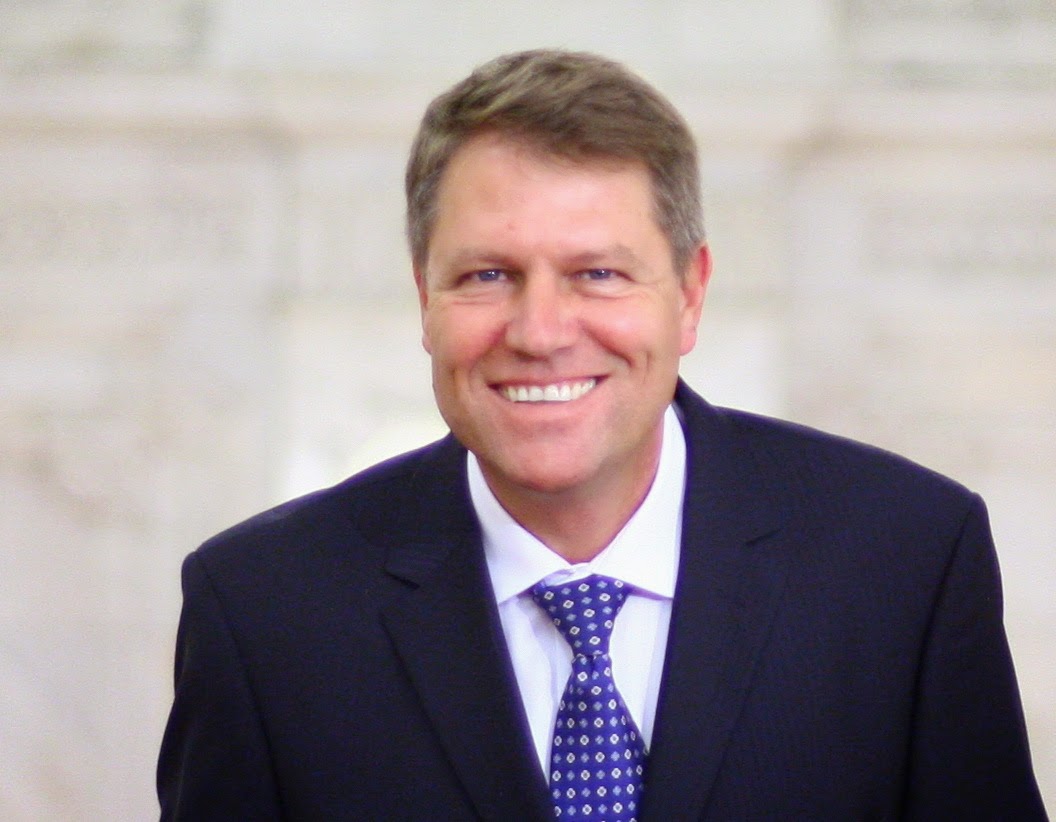
Am vazut ieri si aseara ceva frumos, estetic. Am vazut o alta natiune, o alta mentalitate..un popor decis sa faca "the right thing to do", o forta a tineretului, a online-ului si a diasporei.
In ziua de 16 noiembrie nu am fost doar romani..am fost mai mult de atat: am fost un curent, un trend pozitiv, o revolutie civică a dreptății, un gand care a incojurat planeta cu un aer de patriotism si mandrie, de restituire a patriei mama la popor.
In ziua de 16 noiembrie nu am fost doar romani..am fost mai mult de atat: am fost un curent, un trend pozitiv, o revolutie civică a dreptății, un gand care a incojurat planeta cu un aer de patriotism si mandrie, de restituire a patriei mama la popor.
Sa fie de ajuns? Oare nu trebuia sa cerem mai mult? E laudabil ceea ce s-a intamplat in diaspora si am tot respectul pentru ei dar mi-e frica sa nu conteze din nou prea putin aceasta schimbare..sa nu ajungem din nou aici la viitoarele alegeri. Ni s-au pus in fata 2 rele: unul mai mic si altul mult mai rau. De ce nu am avut nici de data aceasta o varianta buna?
Am vazut o reeditate a alegerilor din 2004 respectiv 2009, cand oamenii împinși la extreme aveau de ales ca acum, intre raul cel mic si raul cel mare, intre un PSD corupt pana in maduva oaselor si un partid PD cu un aer de speranta, de noutate. Intre o baroniada si un partid frumos impodobit, cu aspiratii si idealuri apropiate romanilor. Schimbarea s-a facut, baronii au ramas.
Am vazut de asemenea, ca și-acum, o Romanie rupta in doua si un vot decis de diaspora. O fi corect?
Atat in 2004 cat si in 2009 au votat peste 10 mil de romani. Asteptam schimbarea de la comunism încoace..la fiecare an electoral o tot asteptam.
Atat in 2004 cat si in 2009 au votat peste 10 mil de romani. Asteptam schimbarea de la comunism încoace..la fiecare an electoral o tot asteptam.
Am crezut cu tarie multi dintre noi într-un Basescu care sa reaseze tara din nou pe sine. Am crezut într-un guvern Tarceanu, într-un guvern Boc...am vrut cu tot dinadinsul sa credem ca nu am votat de formalitate, ca nu facem pseudorevolutii, ca nu suntem manipulati, ca nu e doar o schimbare de stafeta si ca nu isi impart din nou doar intre ei ciolanul si vor arunca si plebei câte o bucatica de carne mai grasa.
Spunea împăratul Solomon in eclesiasul 2: "Căci ce va face omul care va veni după împărat? Ceeace s’a făcut și mai înainte."
Spunea împăratul Solomon in eclesiasul 2: "Căci ce va face omul care va veni după împărat? Ceeace s’a făcut și mai înainte."
In 2014 ni s-a dat de ales intre doua personaje arhicomice: Santa Klaus si Mickey Mouse.
Stim ca Mickey Mouse fura constant branzica de la buget si o imparte tovarasilor lui rontaitori. Dar sa nu uitam cine este si Santa Claus: un bărbat grăsuț, cu barbă, îmbrăcat într-o haină lungă, verde și guler de blana, care imparte alaturi de "spiridusii" lui "cadouri " noaptea. Moș Crăciun a fost asemănat cu Odin, un zeu important la popoarele germanice. Originea lui Santa Claus este de fapt una pagana : ziua de Craciun a fost suprapusa cu ziua in care se celebrau Saturnaliile romane; abia după trei secole de la apariția creștinismului, a început să se serbeze nașterea lui Isus.
!Sinterklaas (versiunea olandeză a Sfântului Nicolae) era îmbrăcat cu haine bisericești și se urca pe acoperișurile caselor, trimițându-le acestora cadouri prin horn.
Deci una peste alta e o comparație nefericita zic eu.
Stim ca Mickey Mouse fura constant branzica de la buget si o imparte tovarasilor lui rontaitori. Dar sa nu uitam cine este si Santa Claus: un bărbat grăsuț, cu barbă, îmbrăcat într-o haină lungă, verde și guler de blana, care imparte alaturi de "spiridusii" lui "cadouri " noaptea. Moș Crăciun a fost asemănat cu Odin, un zeu important la popoarele germanice. Originea lui Santa Claus este de fapt una pagana : ziua de Craciun a fost suprapusa cu ziua in care se celebrau Saturnaliile romane; abia după trei secole de la apariția creștinismului, a început să se serbeze nașterea lui Isus.
!Sinterklaas (versiunea olandeză a Sfântului Nicolae) era îmbrăcat cu haine bisericești și se urca pe acoperișurile caselor, trimițându-le acestora cadouri prin horn.
Deci una peste alta e o comparație nefericita zic eu.
NU, nu am votat nici cu mickey mouse, nici cu santa klaus. Pana cand sa tot alegem raul cel mai mic? Pana cand sa iesim in strada pentru un simplu drept fundamental? Oare astea sunt aspiratiile noastre? Atat ne dorim doar sa il dam jos pe unul sau pe altul, sau sa il împiedicăm pe unul si să-l ridicam pe celalalt? Oare problema e omul sau sistemul? Strigam si noi "capul lui Motoc vrem" pentru ca ne e mai la indemana si lasam sistemul sa perpetueze. Protestele si manifestatiile (desi nesustinute biblic) reprezinta un pilon al democratiei sec.21 dar aduc putine beneficii pentru tara.
Eu unul nu mai vreau vot anti: anti-ponta, anti-basescu, anti-psd. Vreau un vot pro, in care sa se poata regasi orice cetatean care are un simt civic. Oare cat mai avem pana acolo? :). Era timp sa iasa la suprafata variante mai bune dar atat timp cat vom fi manipulati atat de mass-media, cat mai nou, mai ales de Institutiile Bisericesti, nu va fi un vot real, o alegera libera si nici o democrație moderna.
S-a ales o Romanie a lucrului bine facut. Doamne ajuta si sa nu fie doar un slogan gen : " Sa traiti bine!", ca prea seamana ;). Pe cat de marsava a fost aceasta campanie din 2014, pe atat de lipsita de orizont.
Fara dezbateri reale, fara teme concrete, fara un plan de idei, fara o ideologie noua in afara de a-l arata pe adversar cu degetul nu cred ca poate veni progresul asteptat. E drept ca faptele conteaza mai mult ca vorbele si sa speram ca vor fi macar fapte in cei 5 ani de mandat.
Fara dezbateri reale, fara teme concrete, fara un plan de idei, fara o ideologie noua in afara de a-l arata pe adversar cu degetul nu cred ca poate veni progresul asteptat. E drept ca faptele conteaza mai mult ca vorbele si sa speram ca vor fi macar fapte in cei 5 ani de mandat.
Cei doi contracandidați stateau ca 2 papusi cu sfori, manuite, cu o iscusinta mai mica sau mai mare, de niste papusari de undeva de sus din umbra: una guraliva, una ironica.
Urmeaza sa descoperim papusarii.
PS: Sintagma "nu pot ei fura cat putem noi vota" se pare ca sta in picioare ( daca excludem intrebarea : cine pe cine fura). Acuma am strigat Jos Basescu si Ponta...oare in 2019 ce vom striga? Just saying ✌
(Citiți si : http://www.biziday.ro/2014/11/17/de-acord-este-un-moment-istoric-sa-fim-siguri-ca-l-am-inteles-corect/ )
!Ca o subpostare/ tema secundara as vrea sa mai tratez aici un subiect:
Vreau sa fac o paralela (putin cam deplasata stiu) cu situatia care a fost in Ucraina si care nu e gata inca.
Campania electorala din 2014 a fost , asa cum susțin toti, una din cele mai mizerabile campanii, in care un rol important l-a jucat si Biserica. Au fost acuze de-o parte si de alta referitoare la religia candidatilor la presedentie, dar mai mult, Biserica Ortodoxa s-a implicat extrem de mult in aceasta campanie..si se pare ca a avut si motive.
Vreau sa fac o paralela (putin cam deplasata stiu) cu situatia care a fost in Ucraina si care nu e gata inca.
Campania electorala din 2014 a fost , asa cum susțin toti, una din cele mai mizerabile campanii, in care un rol important l-a jucat si Biserica. Au fost acuze de-o parte si de alta referitoare la religia candidatilor la presedentie, dar mai mult, Biserica Ortodoxa s-a implicat extrem de mult in aceasta campanie..si se pare ca a avut si motive.
Am mai spus-o si cu alte ocazii ca toata tensiunea din Ucraina a fost bazata de fapt in principal pe religie, pe conflictul dintre Biserica Ortodoxa (Rusia) pe de-o parte si Biserica Romano-Catolica (Europa) de cealalata parte. Ucraina incearca sa se rupa de tot de Rusia si sa treacă de partea "Europei Unite". Biserica Catolica isi cheama toate fiicele inapoi iar asta include si protestanții. Din catolicism au iesit toate sectele si religie, pentru ca Dumnezeu nu are o religie. Isus sau apostolii nu au intemeiat nici un cult. EL ne-a dat doar dreptul sa ne numim copii ai lui D-zeu si sa fim crestini (de la Cristos); nu ortodox, baptist, catolic etc ci creștin.
Ei bine ceva asemanator se poate pune in discutie si in cazul nostru de fata: aveam de ales intre un Victor Ponta (ortodox) care favoriza apropierea de Rusia si un Klaus Iohannis (protestant) care va apropia tara si mai mult de Europa (in mare parte catolica si ramasita a Imperiului Roman care se reintareste tot mai mult).
Germania a fost si este puterea executiva a Bisericii Catolice si a Imperiului Roman (sub Europa Unita azi) supusa Papei de la Roma. De altfel tocmai acesta a fost si motivul ruperii in doua a Germaniei in Germania de vest si cea de est..pentru ca o Germanie Unita prezenta un pericol prea mare pentru orice putere si nu vroiau o reeditare a ceea ce a facut nazismul.
Germania a fost si este puterea executiva a Bisericii Catolice si a Imperiului Roman (sub Europa Unita azi) supusa Papei de la Roma. De altfel tocmai acesta a fost si motivul ruperii in doua a Germaniei in Germania de vest si cea de est..pentru ca o Germanie Unita prezenta un pericol prea mare pentru orice putere si nu vroiau o reeditare a ceea ce a facut nazismul.
Uitam de Holocaust si de toate atrocitățile facute de naziști? Vom zice ca Germania de azi nu mai e Germania de atunci, dar exista si azi ofiteri, supravietuitori din vremea Holocaustului care au participat la acele evenimente si spun si acum ca nu regreta ceea ce au facut atunci. Mai mult tot mai putina lume recunoaste existenta Holocaustului spunand ca e o inventie a evreilor.
O fi o alta Germanie, un alt neam dar radacinile exista la fel cum nici noi nu am scapat de tot de comunism.
Ca vom avea si noi un rol in toate aceste permutari mondiale e mai putin important dar exista o tendință evidenta de rupere fata de Rusia si apropierea de Europa inclusiv a tarilor aliate ale Rusiei.
Ca vom avea si noi un rol in toate aceste permutari mondiale e mai putin important dar exista o tendință evidenta de rupere fata de Rusia si apropierea de Europa inclusiv a tarilor aliate ale Rusiei.
Sincer cred ca e un vot bun cel rezultat in Romania dar parca nu as vrea o Angela Merkel sa se perinde pe la Bucuresti. Germania a fost singura tara pe plus inclusiv in perioada crizei economice. Sigur ca vom zice :au fost reforme, regim de austeritate etc sau ca avem ce invata de la ei. Dar e evident ca America are un rol tot mai mic in politica mondiala si ca Germania (prin organismul Uniunea Europeana) isi impune tot mai intens punctul de vedere.
Cu toate acestea, in timp ce Europa se întărește in zona ei, Imparatul Nordului aduna si el adepti si face aliante cu tarile arabe, Iran, China, Tarile Latine etc. Rusia, desi multi o vad lipsita de putere si amenintand doar cu vorbe goale, va avea un rol important in evenimentele viitoare.
Nici Klaus nici Ponta nu reprezentau solutia cea buna pentru Romania. In conditii normale Ponta era fara doar si poate castigator al acestor alegeri...avea sprijinul multor presedinti si premieri din Europa, iar in campanie a fost net superior lui Iohannis care practic n-a contat. In schimb pentru Iohannis și-a aratat un sprijin (mai tacit) doar Angela Merkel.
Accept votul ca ceva pozitiv dar sa nu ne închipuim ca știm jocurile de culise si ca am castigat razboiul cu sistemul. Romanii au dat dovada de curaj si solidaritate. Dar inclusiv in diaspora situatia e într-o zona gri in ce priveste transparenta: unii spuneau ca se vota normal, altii faceau scandal. O certitudine stim ca multi romani au fost in "excursie " sa voteze acolo, dar ca i-a trimis iohannis, ponta sau au mers din proprie inițiativă asta nu vom putea sti. Stiu situatii concrete de astfel de traseism. S-a votat de 4 ori mai mult in majoritatea tarilor in diaspora dar putine lucruri au fost îmbunătățite fata de turul 1. Deci se putea vota mai mult si in primul tur dar am venit cu prejudecățile si neincrederea din alti ani.

Avem o victorie, o unitate anti-ponta dar si o tara rupta in doua. Nu sunt si nu am fost nici pro iohannis nici pro ponta dar nici nu pot sa exult prea tare in urma rezultatului pentru ca lucrurile oricum nu merg in direcția cea buna. Prea mult bine nu putem astepta.
Acum, noua realitatea se scrie de aici incolo. Sa speram ca nu vom ajunge sa strigam si Jos Iohannis pentru ca ar fi cu adevarat un context trist.
God bless Romania!
God bless Romania!
Tuesday, 11 November 2014

Tuesday, 15 April 2014
Monday, 24 March 2014
Cel mai religios sat din lume
Localitatea prahoveana Valea Plopului nu are apa curenta sau canalizare, dar are o biserica la fiecare 10 familii, in total 28 de lacase de cult.
Toate cele 28 de biserici au fost ridicate de acelasi preot, care spune ca oamenii vin in numar mare la biserici pentru ca lacasele sunt aproape de casele lor. Prin “aproape” se intelege ca din orice punct al satului oamenii au de mers doar un minut pana la cea mai apropiata biserica.
In ciuda numarului neobisnuit de mare de biserici, preotul se gandeste sa mai construiasca si altele. In anul 2007, Jurnalul National scria ca satul Valea Plopului avea, la acea vreme, 26 de biserici. Media era atunci de o biserica la fiecare 11 familii din sat. Alte doua au fost construite intre timp.
Desi nu au apa curenta si canalizare, localnicii sunt multumiti, spunand ca “scutul” credintei i-a ferit de necazuri.
Monday, 13 January 2014
Standardul lui Dumnezeu vs standardul oamenilor
Un creștin trebuie sa fie cel mai echilibrat om din lume.
Religia nu aduce echilibru; credinta in Dumnezeu si in Cuvantul Sau face acest lucru.
Orice om, fie el religios sau nu, are un anumit cod moral, o capacitate de discernamant intre bine si rau, un standard de moralitate. Omul a primit aceasta calitate in gradina Eden ( ,,veți fi ca Dumnezeu și veți cunoaște binele și răul“ - genesa 3:5). Fiecare poate alege conform standardului sau de moralitate, dar oare corespund standardele noastre propriii cu standardul lui Dumnezeu?
Daca pentru o persoana un lucru poate fi rau, pentru o alta poate fi bun, datorita standardului sau propriu, personal.
Datorita faptului ca standardul lui Dumnezeu nu este recunoscut de toti oamenii, acestia si-au creat un set propriu de reguli, un cod moral propriu construit pe baza altor standarde proprii. Dar oare corespund întotdeauna aceste legi si reguli cu standardul lui Dumnezeu?
Si aici apare diferenta dintre creștini si restul lumii. Un creștin trebuie sa apeleze întotdeauna la standardul lui Dumnezeu. ( cuvântul lui Dumnezeu). Suntem noi pe aceeasi lungime de unda cu El?
Foarte multi uita de poruncile si legile lui Dumnezeu si fac dupa cum cred ei de cuviinta, sau adopta un sistem mai permisiv, mai lejer, si ajung sa nu mai faca deosebirea lucrurilor. Atunci ceva e in neregula. S-a depasit standardul lui Dumnezeu prin extiderea propriului sau sistem de reguli.
Un creștin cu adevărat echilibrat si in voia placuta a lui Dumnezeu este atunci cand standardul lui Dumnezeu este acelasi cu al lui.
Dar pentru un religios nu poate avea loc acest lucru deoarece standardul lui va fi aliniat cu cel al bisericii din care face parte. Un om religios nu poate avea echilibru intr-o mlastina religioasa, in care predomina confuzionismul si regulile unei biserici sau organizații religioase. E greu sa găsești si sa păstrezi calea in Babilon. Isus l-a așteptat pe orbul vindecat afara din templu ca sa-i arate calea mântuirii. Doar afara din orice tabără, din orice sistem religios putem avea: liniste sufleteasca, pace interioara, sa-l urmam pe Isus si sa lasam pe duhul sfant sa ne echilibreze atat pe plan spiritual cat si pe plan firesc.
Nu suntem fanatici dar nici nu ne alaturam lumii si placerilor acesteia, nici nu luam aluat amestecat. Trebuie sa fim cumpătați in toate lucrurile, dar decat sa fim părtași la o lucrare de faradelege, mai bine sa fim considerati fanatici sau nebuni.
Important e sa fim vazuti si plăcuți de Domnul!
Subscribe to:
Posts (Atom)
Subscribe To


 Posts
All Comments
Posts
All Comments
Follow us by:


Copyright © Wild-Voice 2019 .All rights reserved
